
Reviewed · RIO CLIMBING & RAPPELLING
Climb Rio de Janeiro: Rock Climbing Tailored for All Levels
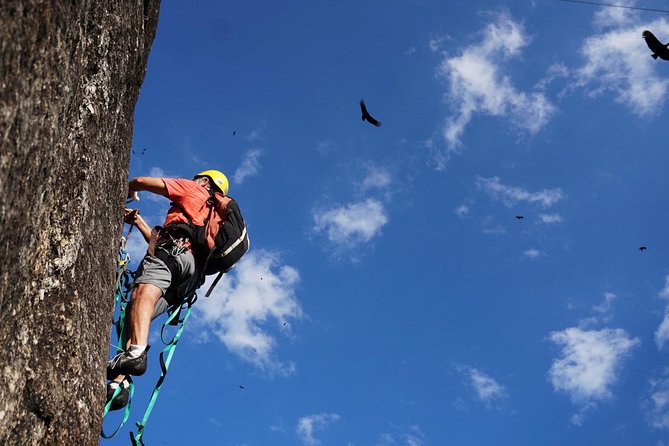
Rio’s Sugarloaf Mountain is more than a photo stop. On this tour, you use your hands and feet to climb its rock face, with Guanabara Bay, the beaches, and Rio’s famous granite peaks spread around you. You get up to two hours on the rock, not just a quick lesson at ground level.
I like the small setup: only two people per instructor. I also like the range of routes, from top-rope climbing for first-timers to multi-pitch routes for experienced climbers. The main catch is that this is a weather-dependent outdoor activity, and the $127.42 price is a serious spend for roughly three hours.
In This Review
- Key points to know before you climb
- Climbing Sugarloaf instead of only photographing it
- What happens at the Urca meeting point
- Getting ready with the right equipment
- Picking between top-rope and multi-pitch climbing
- Up to two hours on the rock
- The views, the cable car, and the return
- How the $127.42 price holds up
- Who will enjoy this climb most
- Cancellation and practical planning
- Should you book the Sugarloaf climbing tour?
- FAQ
- Where does the rock climbing tour start?
- How long does the experience last?
- Is the activity suitable for beginners?
- What equipment is included?
- Is the cable car ticket included?
- What happens if bad weather cancels the climb?
Key points to know before you climb
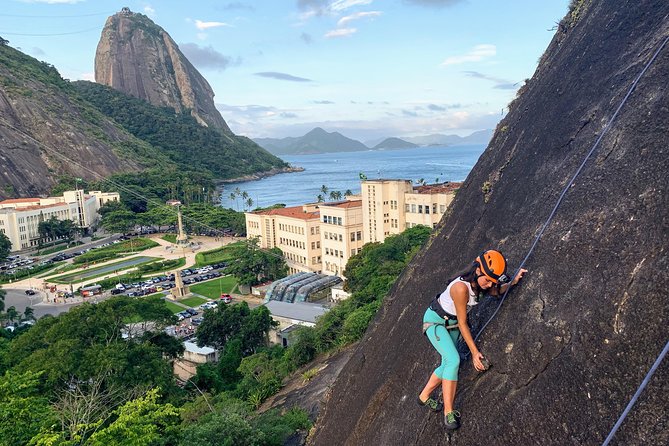
- Sugarloaf is the setting: You climb in the Urca area with broad views of Rio, the bay, and the mountain itself.
- Your route matches your ability: Beginners can choose top-rope or an introductory multi-pitch option, while stronger climbers can request more advanced multi-pitch climbing.
- The group stays small: One instructor works with no more than two people, giving you more direct coaching and belay time.
- Certified bilingual instruction is included: Guides such as Victor and Adilio have helped first-time outdoor climbers feel secure and well prepared.
- The cable car descent is covered when applicable: If your route is on Sugarloaf, the ticket down to Morro da Urca is included.
- Plan for weather changes: Poor conditions can cancel the outing, with a new date or full refund offered.
Climbing Sugarloaf instead of only photographing it
Most people see Sugarloaf from below, from a cable car, or from one of Rio’s many viewpoints. This outing gives you a different way to meet the mountain. You are not simply looking at the granite dome. You are attached to a rope, learning how to move over real rock, while the city opens out below you.
That mix of sport and scenery is the reason to book. The climb takes place in Urca, one of Rio’s most memorable settings. The available routes can place you close to views of the beach and Sugarloaf, making even the early practice work feel worthwhile.
You should keep your expectations practical. This is not a full-day climbing course, and the active climbing time is up to two hours within a tour lasting about three hours. The remaining time is used for meeting, fitting equipment, instruction, route preparation, and the descent process.
For an active introduction to Rio, that is a good use of half a day. For a serious climber hoping to spend all day on several long routes, it may feel brief.
More climbing and rappelling routes:
- Climb Sugarloaf: A Thrilling Adventure to Rio’s Postcard Peak
★ 5.0 · 79 reviews - Trail and Rappel on Morro Dois Irmãos
★ 5.0 · 77 reviews - Sugarloaf Mountain Climbing Trail
★ 5.0 · 73 reviews
What happens at the Urca meeting point
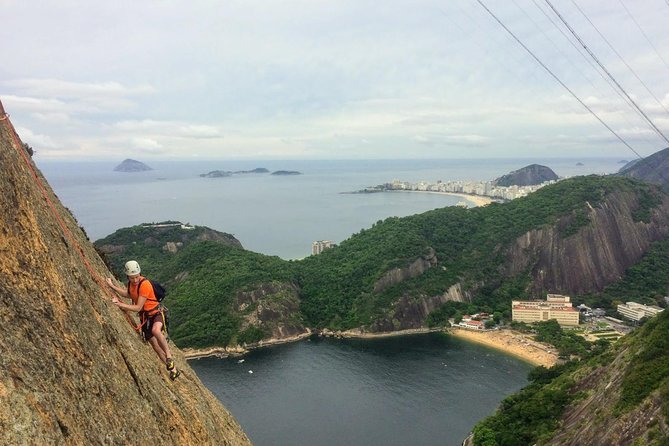
You meet at Praça General Tibúrcio, 75, in Urca. The activity also finishes at this meeting point, which keeps the start and end simple. The location is near public transportation, another useful point if you are arranging the climb around a day of sightseeing.
Urca matters because it puts you close to the Sugarloaf climbing area without sending you across the city to a remote trailhead. Once you meet your guide, the first task is to identify the right route for your experience. Be clear about what you have done before. Indoor climbing, outdoor climbing, top-rope experience, lead climbing, and multi-pitch climbing are different skills, and the route should reflect that.
The experience provider, Itaway Ecotours, assigns a certified bilingual rock climbing instructor. Victor and Adilio are two guides connected with this experience. Victor has worked with first-time outdoor climbers, including people who had never climbed outside before. Adilio has guided climbs in Spanish and is described as friendly and helpful.
You should not expect a large group briefing. This is a private activity, and the working ratio is no more than two climbers for each instructor. That ratio is one of the strongest practical features here. You have more room to ask questions, practice the systems, and receive corrections without waiting behind a crowd.
Getting ready with the right equipment
The price includes individual equipment: climbing shoes, a harness, a helmet, and a belay or rappel device. It also includes the shared technical gear needed for the route, such as the rope, quickdraws, and anchor-building equipment.
That matters because bringing climbing equipment to Brazil would be awkward and expensive. You still need to arrive prepared with suitable personal items, since snacks and bottled water are not included. The supplied information does not specify a clothing list, so ask the operator for current advice before you go.
The guide will explain the gear and the climbing plan before you leave the ground. If you are new to outdoor climbing, this is where the small group becomes especially useful. You can learn how the rope system works, how to move safely, and how to communicate with the instructor before the route becomes more demanding.
One useful detail from the experience is that the instruction is not treated as an afterthought. First-time climbers have practiced near the rock with the beach and Sugarloaf in view before beginning the main climb. That helps you get comfortable with the equipment and the setting rather than being rushed straight onto a route.
Picking between top-rope and multi-pitch climbing
The route is chosen after the guide assesses your past climbing experience. Select the tour option that best matches your ability when booking, then give the instructor an honest picture of your skills at the start.
Top-rope climbing is the clearest fit for first-time climbers and beginners. The rope is arranged through an anchor above the climbing section, and the guide manages the belay from below. You still climb the rock yourself, but the setup is designed for learning the basics and building confidence.
If you have climbed indoors but have not climbed outside, top-rope is likely the sensible starting point unless the guide recommends another option. Outdoor rock feels different from a gym wall. The holds are not color-coded, the surface is irregular, and route finding can take more thought. A calm introduction is more valuable than choosing a route that looks impressive on paper.
Multi-pitch climbing is available for beginner, intermediate, and advanced levels. The term means the route is split into sections, with the climbers and guide managing more than one pitch. The level still matters. A beginner multi-pitch route is not the same challenge as an advanced one, so the instructor’s assessment is important.
For experienced climbers, the advanced options provide a better reason to book than a basic tourist climbing session. You can ask about route level and expected demands before committing. The available information does not name the exact routes or grades, so do not book expecting a particular climb unless Itaway confirms it directly.
A different side of the city, same few days:
- Rio de Janeiro: 6-Stop Highlights of Rio with Lunch
★ 4.4 · 5,157 reviews - Christ the Redeemer Entry Ticket by Corcovado Train
★ 4.4 · 4,476 reviews - Rio de Janeiro: Rocinha Favela Walking Tour with Local Guide
★ 4.8 · 3,052 reviews - Rio: Christ the Redeemer, Sugarloaf, Selaron & BBQ Lunch
★ 4.5 · 2,428 reviews
Up to two hours on the rock
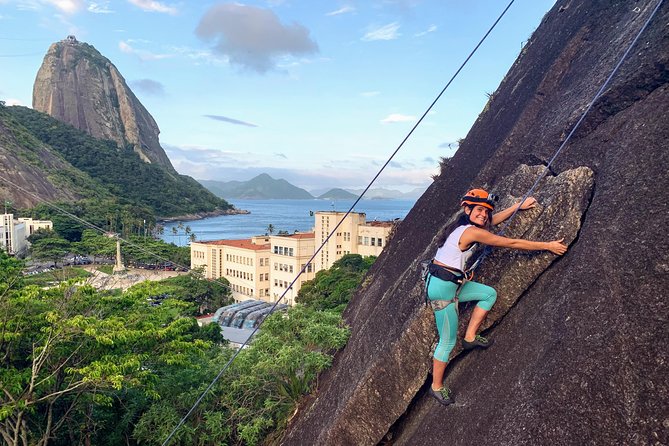
The tour lasts about three hours, with up to two hours devoted to climbing. That is enough time for instruction and a meaningful route, but the exact amount of climbing will depend on your level, the route selected, preparation, and conditions.
A beginner may spend more of the session learning movement, rope handling, and safety commands. That is not wasted time. Good instruction makes the climb feel controlled, and several people who were new to outdoor climbing found the guidance reassuring and clear.
An experienced climber may spend less time on basic teaching and more time moving through a multi-pitch route. Still, the phrase up to two hours matters. It is a maximum, not a promise that every outing will use the full period on the wall.
The setting does much of the work. You practice in front of views of the beach and Sugarloaf, then gain a changing view as you climb. Even if your route is short, you are doing something active in a place most visitors only see from a distance.
The views, the cable car, and the return
Sugarloaf climbing offers a visual reward that is different from riding the cable car. Instead of looking at the rock from a cabin, you are close to its surface and moving through it. The experience can make Rio’s geography easier to understand because you see the mountain, water, beach, and city from the same route.
If the climb is on Sugarloaf Mountain, the package includes a cable car descent ticket to Morro da Urca. This is a practical inclusion. After climbing, you do not have to treat the return ticket as an extra surprise, and the cable car gives you another way to take in the setting.
The wording matters, though. The cable car ticket is included if climbing Sugarloaf, so confirm how it applies to your selected route. The activity ends back at the meeting point in Urca, keeping the final logistics straightforward.
You should bring water even though bottled water is not included. Snacks are also your responsibility. A three-hour outdoor activity may not require a full meal, but arriving without water would be an easy mistake to avoid.
How the $127.42 price holds up
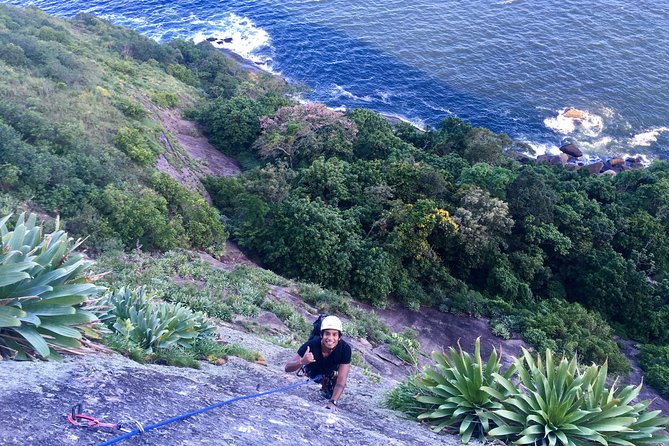
At $127.42 per person, this is not a cheap way to see Sugarloaf. You are paying more than you would for a standard viewpoint visit, and you are only receiving about three hours of activity.
The value improves if you need equipment and instruction. The price includes climbing shoes, helmet, harness, belay or rappel device, rope, quickdraws, and anchor gear. It also includes a certified bilingual guide and, when relevant, the cable car descent ticket. Renting this equipment separately and arranging a qualified guide would not be simple for a short visit.
The two-to-one instructor ratio also changes the calculation. You are not paying for a large group where the guide gives a talk and then waits for everyone to take a turn. You get a more personal lesson and more direct attention. That is especially useful if you are making your first outdoor climb.
I would see the price as reasonable for someone who values instruction, safety support, and a private format. It is less compelling if you mainly want a quick scenic activity or already own all your equipment and need little guidance.
Tips are not included. A tip of 10 to 20 percent of the trip cost is typical for guides, so include that in your budget if the instruction and service meet your expectations.
Who will enjoy this climb most
This activity suits several kinds of people:
- First-time climbers who want a guided introduction rather than an indoor wall
- Indoor climbers ready to try outdoor rock
- Intermediate climbers looking for a small-group route in Rio
- Advanced climbers who want a more demanding multi-pitch option
- Active couples or friends who prefer a private outing
- Visitors who want a physical activity with major city views
It is also a good choice for two people traveling together. With only two climbers per instructor, you can share the experience without being folded into a large public group.
I would think twice if you dislike heights, want a relaxed sightseeing tour, or need a guaranteed schedule in poor weather. The activity requires good conditions. If weather cancels it, you receive the choice of another date or a full refund, but that may still disrupt a tightly planned Rio itinerary.
The booking record shows that the experience is often reserved about five days ahead. That is not a rule, but it is a useful planning clue. If you have fixed travel dates, booking earlier gives you more room to move the activity if the weather turns bad.
Cancellation and practical planning
You can cancel at least 24 hours before the local start time for a full refund. Changes or cancellations made inside that window are not accepted and are not refunded.
The confirmation arrives at booking. The activity is near public transportation, and most people can participate. The information provided does not list special accessibility arrangements, so contact Itaway Ecotours directly if you have mobility, medical, or equipment concerns.
Pick the morning or afternoon departure that fits your schedule. Morning may leave more of the day open, while an afternoon climb can work well after other sightseeing, but the exact choice should also take your wider plans and the weather forecast into account.
Do not forget to tell the operator your real climbing background. Saying that you have climbed indoors once is different from having outdoor lead or multi-pitch experience. The safest and most enjoyable route is the one that matches your current ability, not your most ambitious past attempt.
Should you book the Sugarloaf climbing tour?
Book it if you want to experience Rio actively and you value close instruction. The combination of Sugarloaf, a certified bilingual guide, provided equipment, and a two-to-one ratio gives this short tour real substance. Victor and Adilio are named guides associated with the experience, and the instruction is suited to people who may be nervous about their first outdoor climb.
Skip it if your main goal is a low-cost view, a long climbing day, or a fixed outing that cannot tolerate bad weather. At $127.42, the activity makes the most sense when you will use the gear, coaching, and private format.
For the right person, this is a memorable way to meet Rio’s most recognizable mountain. You get the views, but you also earn them one handhold at a time.
FAQ
Where does the rock climbing tour start?
It starts at Praça Gen. Tibúrcio, 75, in Urca, Rio de Janeiro, Brazil.
How long does the experience last?
The tour lasts approximately three hours, including up to two hours of rock climbing.
Is the activity suitable for beginners?
Yes. Top-rope climbing is offered for first-time climbers and beginners. Beginner, intermediate, and advanced multi-pitch options are also available.
What equipment is included?
Individual equipment includes climbing shoes, a harness, a helmet, and a belay or rappel device. Shared equipment includes rope, quickdraws, and anchor-building gear.
Is the cable car ticket included?
A cable car descent ticket to Morro da Urca is included if you are climbing Sugarloaf Mountain.
What happens if bad weather cancels the climb?
You will be offered a different date or a full refund. You can also cancel at least 24 hours before the start time for a full refund.
Just added around Rio
- Rocinha Jeep Tour: A Journey into the Soul of the Favela!★ 3.8 · 3 reviews
- Tijuca National Park and all its wonders!★ 5.0 · 3 reviews
- Rio: Best Dive Experience All Inclusive Scuba Diving Package★ 5.0 · 3 reviews
- Rio de Janeiro: Doors-off 30-min helicopter tour★ 5.0 · 3 reviews
- Rio de Janeiro: Hang gliding adventure★ 3.7 · 3 reviews
- Pedra Bonita Trail: The easiest trail with a beautiful view of Rio★ 4.6 · 3 reviews
- Rio de Janeiro Secluded Beaches: Hike+Swim Prainha & Grumari★ 5.0 · 3 reviews
- Unforgettable Boat Party★ 5.0 · 3 reviews
Rio Climbing & Rappelling, compared.

Climb Sugarloaf: A Thrilling Adventure to Rio’s Postcard Peak
Read our review →



Sugarloaf – Hike and Easy Climb Sugarloaf’s Coast
Read our review →Browse the lists this tour appears in