
Reviewed · RIO SURF LESSONS
Rio de Janeiro: Surflessons and surfcoach.
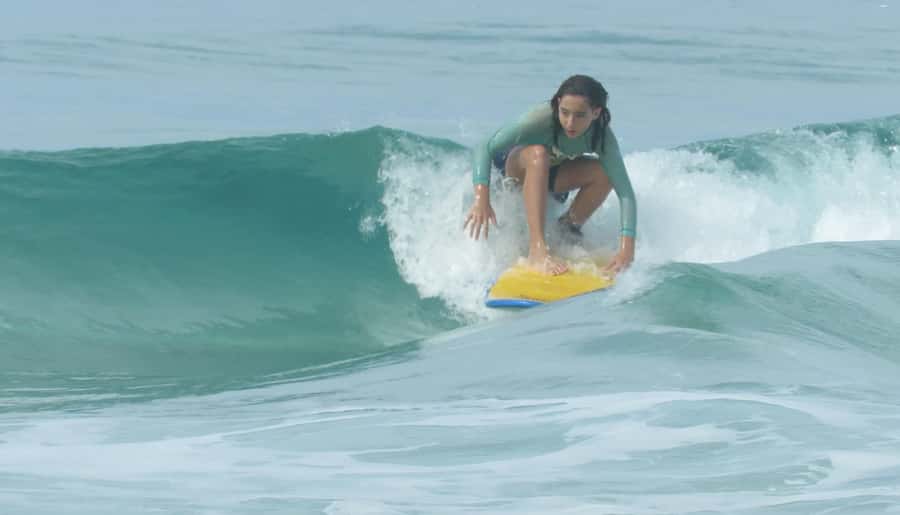
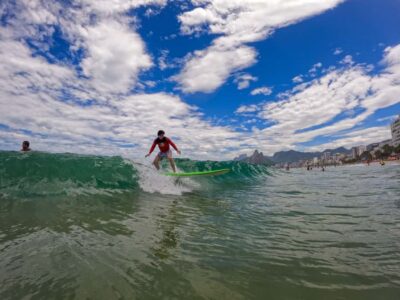
Rio surfing here is more than a quick lesson on a foam board. CADES matches the session to your level, studies the waves with you, and puts you in the water with a trained coach. Beginners work through the basics, while stronger surfers can train at a selected break and review filmed footage afterward.
I like the small groups of five or fewer and the fact that equipment, wetsuits, showers, and transfers between the CADES base and surf spot can be included. I also like the patience of Henry, the named instructor praised in the booking feedback, especially if you are starting from scratch.
The main thing to check is the timing. The beginner plan adds up to about 65 minutes, and the advanced plan with video review takes about 80 minutes, even though the activity is advertised as one hour. The water time is clear, but ask CADES how your booked slot is counted.
In This Review
- Key points to know before you paddle out
- Starting at CADES, then choosing the right kind of session
- The beginner lesson: 10 minutes to warm up and 50 minutes in the water
- The intermediate and advanced plan: a training session with footage
- Why reading the waves together is useful
- The CADES base and the equipment package
- Is $90 a fair price for one hour?
- Languages, group size, and who should book
- Booking details that affect your day
- Should you book the CADES surf lesson?
- FAQ
- How long does the surf experience last?
- Is the experience suitable for beginners?
- Is surfing equipment included?
- Are transfers included?
- What languages are spoken by the instructors?
- How many people are in each group?
- What should I bring?
Key points to know before you paddle out
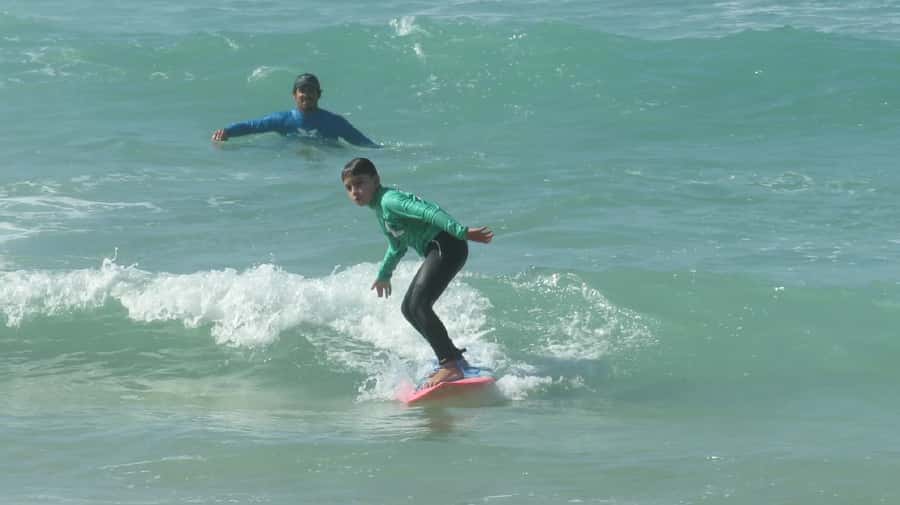
- Henry’s patient teaching: Henry is specifically praised for patience, a useful quality when standing on a board takes several tries.
- A lesson built around the day’s waves: You do not simply follow a fixed beach script. The class includes a joint look at the sea and the conditions.
- Filming for stronger surfers: Intermediate and advanced participants can use recorded images and a 20-minute video review to work on technique.
- CADES has more than changing space: The base includes bathrooms, showers, an activity room, and a skateboard surf simulator track.
- Useful help with local logistics: Transfers from the CADES space to the selected surf spot are provided when needed, though transport to the meeting point is extra.
- Good language choice: Instruction is available in Portuguese, Spanish, and English, and the group size is capped at five.
Starting at CADES, then choosing the right kind of session
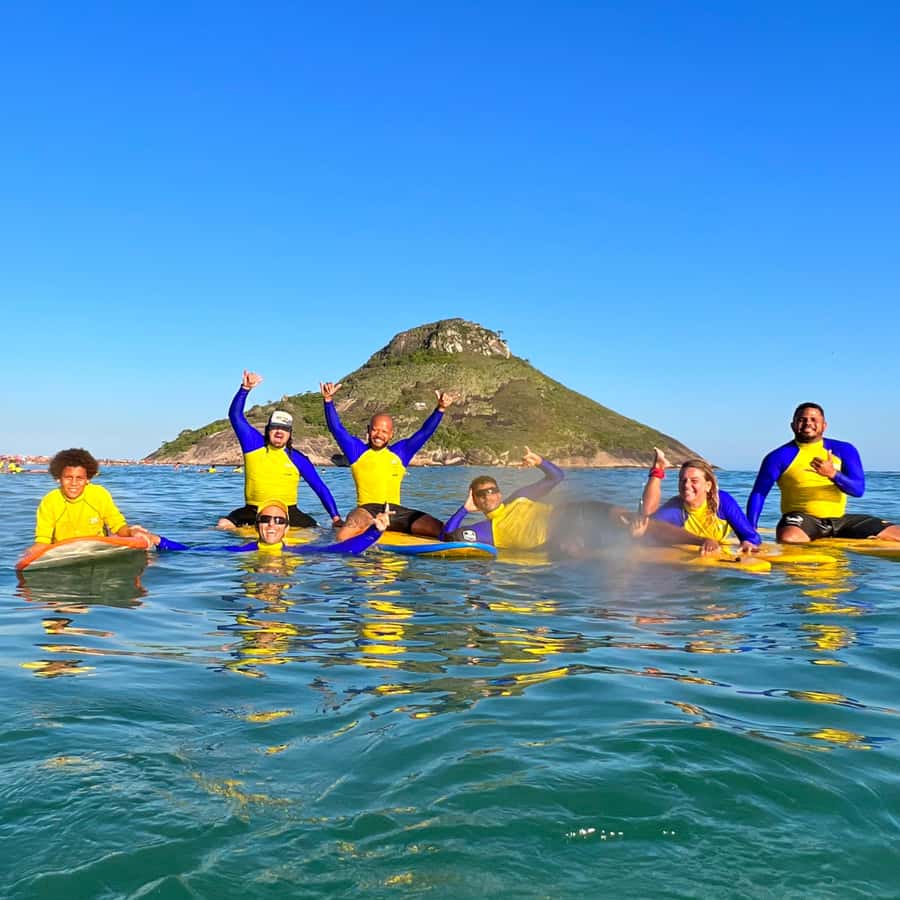
Your meeting point is the CADES headquarters at the location supplied with your booking. That base matters because it gives you a practical place to prepare, change, shower, and handle the land-based part of the lesson without trying to organize everything on the sand.
You can book this for any level, but the lesson follows two different tracks. If you are new to surfing, you begin with a standard teaching session. If you already surf, the coach turns the time into a more focused training session built around your goals.
That distinction is important. A beginner needs clear instructions, repetition, and calm guidance. An intermediate or advanced surfer usually gets more from specific corrections, filmed movement, and a close look at how technique matches the waves available that day.
CADES also provides the board, leash, wetsuit, and wax. You do not need to assemble a kit before arriving. Bring beachwear, a change of clothes, water, and clothes that can get dirty. The last item may sound odd for a beach activity, but it is worth following the advice so you do not worry about your clothing around boards, wax, and the base.
More surf lessons on the city beaches:
- Rio Surf Experience!
★ 5.0 · 85 reviews - Rio Surf Experience
★ 4.9 · 37 reviews - Surf lessons: in Arpoador in Ipanema.
★ 4.7 · 35 reviews
The beginner lesson: 10 minutes to warm up and 50 minutes in the water
The beginner schedule starts with a 10-minute warm-up. This gives you time to prepare your body before handling the board and trying to catch a wave. It also helps set the pace for the session, particularly if you are not used to balancing on moving water.
After the warm-up, you and the instructor spend about five minutes looking at the sea and waves together. This is one of the best parts of the plan because it connects the instruction to the actual conditions in front of you. You are not learning surfing as a set of abstract rules. You are learning how to read the water you will use that day.
The main practical section lasts about 50 minutes. You work with the supplied board, leash, wetsuit, and wax while the instructor guides your attempts. The information does not promise a particular number of rides or a guaranteed first stand-up, so keep your expectations sensible. Your progress will depend on your starting point and the conditions.
The strongest benefit for a first-timer is the close format. With no more than five participants, the coach has a better chance of seeing your position, timing, and balance than on a crowded mass lesson. It is still a group class, so you will not have uninterrupted one-to-one attention, but the limit keeps it from feeling like a large beach class.
Henry’s patience is worth noting here. One German booking comment singles him out as a very patient teacher and recommends the experience for people who want to learn. That is a practical clue for beginners who feel nervous about falling, missing waves, or needing several explanations.
The intermediate and advanced plan: a training session with footage
More experienced surfers meet the coach at the surf spot selected for training. The coach and surfer first spend about 10 minutes looking at the peak, the waves, and the goals for the session.
This opening is more specific than a basic lesson briefing. You can use it to identify what you want to improve, such as your positioning, turns, timing, or general control, but the supplied details do not promise a fixed set of drills. The useful point is that the coach sets the session around the conditions and the objectives.
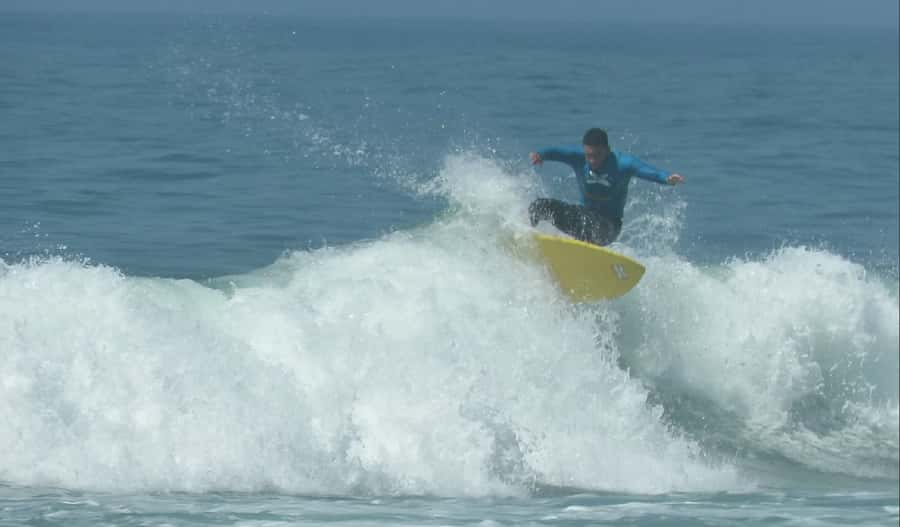
The water portion lasts about 50 minutes. CADES records images of the activity, giving you something concrete to examine instead of relying only on memory. For an intermediate or advanced surfer, that can make the coaching more useful because you can see what your body and board are doing from the outside.
At the end, you receive about 20 minutes of video analysis at the CADES space or at the place where the training happened. This is a real difference between the two formats. Beginners focus on getting comfortable and learning core movements, while stronger surfers get a chance to connect advice with visible examples from their own session.
The complete advanced schedule adds up to roughly 80 minutes: 10 minutes of initial analysis, 50 minutes in the water, and 20 minutes of video review. The advertised duration is one hour, so confirm the exact schedule when you book. The listed duration may refer to the main activity period rather than the full coaching and analysis time.
Why reading the waves together is useful
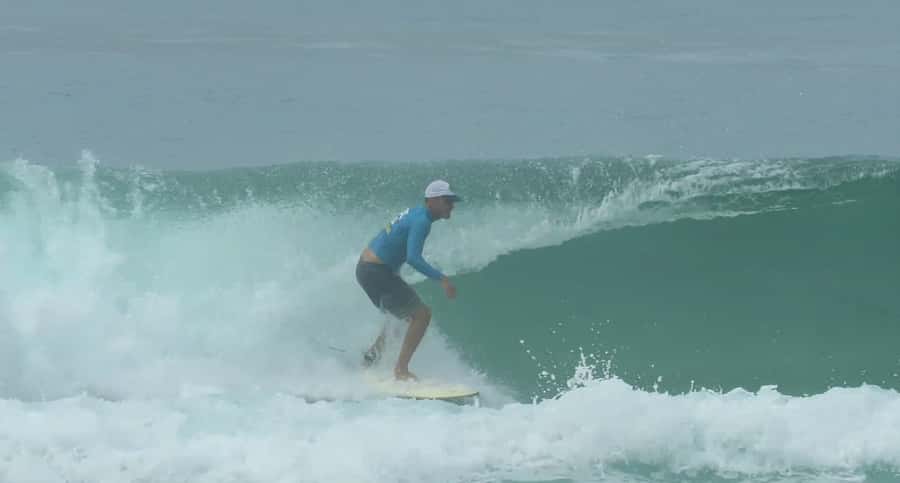
Surfing is not just standing on a board. The quality, shape, and timing of waves change, and a lesson is more useful when the coach explains what you are looking at before you paddle out.
The beginner plan gives around five minutes to analyze the sea and waves. The performance plan gives around 10 minutes to study the peak, the wave pattern, and the goals. Those short talks may be especially valuable if you are visiting Rio and do not know the local surf spot.
I like this approach because it makes the lesson feel connected to the beach rather than copied from a standard training sheet. You are given a way to think about the session, not only a list of body movements.
Still, do not read too much into the phrase best waves in the state of Rio de Janeiro. Conditions change, and the exact surf spot is not named in the supplied details. CADES says it chooses the best conditions of the day, but you should ask where you will go and how the choice is made if the location matters to your plans.
A different side of the city, same few days:
- Rio de Janeiro: 6-Stop Highlights of Rio with Lunch
★ 4.4 · 5,157 reviews - Christ the Redeemer Entry Ticket by Corcovado Train
★ 4.4 · 4,476 reviews - Rio de Janeiro: Rocinha Favela Walking Tour with Local Guide
★ 4.8 · 3,052 reviews - Rio: Christ the Redeemer, Sugarloaf, Selaron & BBQ Lunch
★ 4.5 · 2,428 reviews
The CADES base and the equipment package
The base includes bathrooms and showers, which are small but valuable comforts after a saltwater session. You also get access to an activity room and a skateboard surf simulator training track, adding a land-based element to the experience.
The simulator does not appear to be a separate scheduled lesson, so do not assume it is part of your one-hour coaching time. Its presence is still useful if you want to spend time around surf training before or after the water session, but confirm what is available during your booking.
The equipment package covers the board, leash, wetsuit, and wax. That makes the $90 price easier to assess because you are not paying for coaching and then hiring the main gear separately.
Transfers between the CADES base and the surf spot are included when necessary. Transport to the meeting point is not included, and the cost depends on the distance. This is one expense to settle before booking, especially if you are staying far from the headquarters.
Meals are also not included. The supplied estimate is about $10 per person per meal. Since the activity itself is short, food may not affect your plans much, but it is useful to know if you are arranging a longer beach day around the lesson.
Is $90 a fair price for one hour?
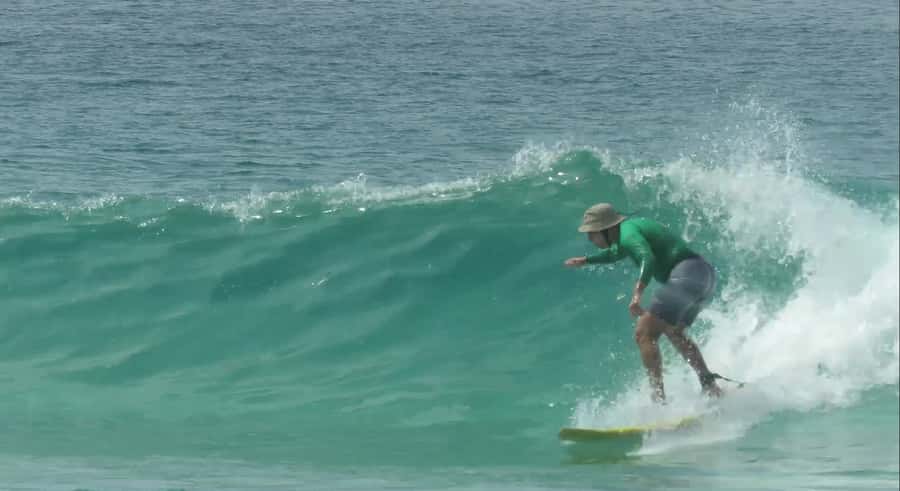
At $90 per person, this is not the cheapest way to spend an hour at the beach. The value depends on what you need.
For a beginner, the price includes instruction, all equipment, a wetsuit, a small group, and use of the CADES facilities. If you would otherwise need to rent a board and wetsuit and find a lesson separately, the package becomes more reasonable.
For an intermediate or advanced surfer, the price has a different logic. You are paying for a coach who helps set goals, records the session, and spends about 20 minutes reviewing the footage. That makes it closer to a compact coaching appointment than a casual surf rental.
The price is less attractive if you already have equipment, do not need instruction, or only want to try standing on a board once. It is also important to confirm the session length because the advertised one-hour duration does not match the detailed beginner and performance schedules exactly.
The rating shown for the activity is 5 out of 5 from three verified bookings. That is a very small sample, so I would treat it as encouraging rather than final proof. The strongest specific praise is for Henry’s patience, while another participant simply describes the experience as excellent. Those comments support the teaching side, but they cannot tell you what the surf conditions will be on your date.
Languages, group size, and who should book
Instruction is offered in English, Portuguese, and Spanish. That gives you a fair chance of discussing technique and safety in a language you understand well. If you have a preferred language, choose it when arranging the session.
The group limit is five participants. This suits people who want personal help but do not require a fully private coach. Families and mixed-ability groups can ask about arrangements, since the activity is offered to all ages and levels, but the supplied details do not explain how different abilities are combined.
I would recommend this most strongly to:
- A first-time surfer who wants a patient instructor and supplied gear.
- An intermediate surfer who wants a short training session rather than free surfing.
- An advanced surfer who values footage and technical feedback.
- A visitor who wants help selecting the best available surf conditions that day.
- Anyone who prefers a small group to a large commercial beach class.
I would hesitate if you need a named beach, a guaranteed wave size, a fully private lesson, or a strict one-hour total from arrival to departure. Those points are not clearly set out.
Booking details that affect your day
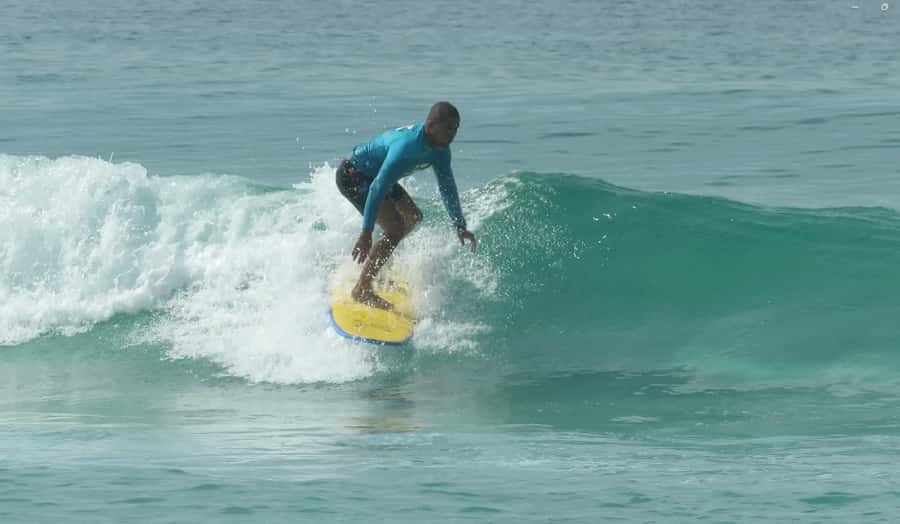
You can cancel up to 24 hours before the activity for a full refund. You can also reserve now and pay later, which helps if your Rio schedule depends on weather or other plans.
The experience is listed as wheelchair accessible, though the details do not explain which parts of the beach, base, or water setup are adapted. If access needs are important to you, contact CADES before booking so you can confirm the practical arrangements.
Check availability for starting times because the session does not list one fixed daily departure. You should also allow enough time for transport if CADES needs to move you between its base and the surf spot.
Bring water and dry clothes. Beachwear is required, and clothes that can get dirty are sensible. The equipment is supplied, but personal comfort items and transport to the meeting point remain your responsibility.
Should you book the CADES surf lesson?
Book it if you want structured coaching, a small group, and gear included, especially if you are a beginner or an intermediate surfer hoping to improve. The patient instruction associated with Henry and the option for filmed analysis give this experience more substance than a simple board rental.
For advanced surfers, the video review is the main reason to consider it. For beginners, the wave reading, warm-up, and 50 minutes of water practice are the useful core.
Before paying $90, ask CADES to confirm the meeting point transport cost, the exact surf spot, and how the one-hour duration applies to your chosen format. If those details fit your plans, this is a practical Rio surf session with real coaching rather than a quick photo opportunity.
FAQ
How long does the surf experience last?
The advertised duration is one hour. The beginner schedule lists a 10-minute warm-up, five minutes of sea and wave analysis, and 50 minutes of water practice. The technical training schedule lists 10 minutes of preparation, 50 minutes in the water, and 20 minutes of video analysis, so confirm the timing with CADES.
Is the experience suitable for beginners?
Yes. CADES offers beginner lessons as well as training for intermediate and advanced surfers. The beginner session includes a warm-up, joint wave analysis, and practical water instruction.
Is surfing equipment included?
Yes. The package includes a surfboard, leash, wetsuit, and wax.
Are transfers included?
Transfers between the CADES headquarters and the surf spot are included when necessary. Transport to the meeting point is not included, and its cost depends on the distance.
What languages are spoken by the instructors?
Instruction is available in Portuguese, Spanish, and English.
How many people are in each group?
The group is limited to five participants.
What should I bring?
Bring a change of clothes, water, beachwear, and clothes that can get dirty.
Just added around Rio
- Rocinha Jeep Tour: A Journey into the Soul of the Favela!★ 3.8 · 3 reviews
- Tijuca National Park and all its wonders!★ 5.0 · 3 reviews
- Rio: Best Dive Experience All Inclusive Scuba Diving Package★ 5.0 · 3 reviews
- Rio de Janeiro: Doors-off 30-min helicopter tour★ 5.0 · 3 reviews
- Rio de Janeiro: Hang gliding adventure★ 3.7 · 3 reviews
- Pedra Bonita Trail: The easiest trail with a beautiful view of Rio★ 4.6 · 3 reviews
- Rio de Janeiro Secluded Beaches: Hike+Swim Prainha & Grumari★ 5.0 · 3 reviews
- Unforgettable Boat Party★ 5.0 · 3 reviews
Rio Surf Lessons, compared.

Surf lessons with local instructors in Copacabana/ipanema!
Read our review →Browse the lists this tour appears in