
Reviewed · SELARóN STEPS & SANTA TERESA
Rio Downtown Tour with Selaron Metropolitan Cathedral and more
Rio’s downtown story comes in quick, colorful chapters: a gold-filled monastery, a pyramid-shaped cathedral, the tiled Selarón Steps, and the grand arches of Lapa. This three-hour city tour is built for seeing a lot in one afternoon, not for lingering at every stop.
I like the small-group format, capped at 19 people, and the hotel pickup from Copacabana, Ipanema, or Leblon. I also like that the guide adds the history behind the buildings instead of leaving you to guess what you are seeing. The trade-off is simple: traffic and a packed route can turn some stops into brief photo visits.
In This Review
- Key points at a glance
- Why this short Rio tour works
- Starting from Zona Sul at 1:30 pm
- Seeing Maracanã without going inside
- A drive through Rio’s civic center
- São Bento Monastery and the quietest stop
- The Metropolitan Cathedral’s huge interior
- Lapa, the Carioca Aqueduct, and Selarón Steps
- Rua do Lavradio and a glimpse of local street life
- Passing Flamengo, Botafogo, and the waterfront
- The pace, group size, and guide make the difference
- Is $74.50 a fair price?
- Who should book this downtown circuit?
- Should you book it?
- FAQ
- How long does the Rio Downtown Tour last?
- What time does the tour start?
- Where does the tour begin and end?
- Which hotels qualify for pickup?
- Is Maracanã Stadium admission included?
- Is admission to São Bento Monastery included?
- How large is the tour group?
- Can I cancel for a full refund?
Key points at a glance

- São Bento Monastery: Spend about 30 minutes inside one of Rio’s most richly decorated religious buildings, with admission included.
- Metropolitan Cathedral: See the striking cone-shaped structure and its four huge stained-glass windows.
- Selarón Steps: Get a 30-minute stop at Rio’s famous mosaic staircase, one of the tour’s most memorable sights.
- Maracanã and Lapa: Photograph the stadium and Carioca Aqueduct without paying for stadium entry.
- Downtown coverage: Pass Central Railway Station, historic palaces, Campo de Santana, Tiradentes Square, Avenida Chile, and Aterro do Flamengo.
- Easy logistics: Ride in an air-conditioned minivan, starting at 1:30 pm and ending back at the meeting point or your selected hotel.
Why this short Rio tour works
Rio is spread between beaches, hills, bays, and a large central district. If you spend your whole visit around Copacabana and Ipanema, you can miss the city’s churches, civic buildings, old streets, and major public spaces. This tour gives you a fast orientation to that other side of Rio.
The route is especially useful after you have seen Christ the Redeemer and Sugarloaf Mountain. Those famous sights explain Rio’s setting. This downtown trip explains more of the city’s public life, architecture, religious traditions, Carnival culture, and national history.
I would think of it as a moving introduction, not a full walking tour. You ride through much of the center, get out at the main stops, hear background from the guide, and return to the Zona Sul before the afternoon is gone.
More of Santa Teresa and the Selaron Steps:
- Rio: Christ the Redeemer, Sugarloaf, Selaron & BBQ Lunch
★ 4.5 · 2,428 reviews - Rio de Janeiro: Christ, Selaron Steps, and Tijuca Park Tour
★ 4.7 · 857 reviews - Santa Teresa, Lapa, and Cinelândia with Tram Ride and Selarón Steps
★ 4.5 · 274 reviews
Starting from Zona Sul at 1:30 pm
Pickup is available at selected hotels in Copacabana, Ipanema, and Leblon. The listed meeting point is the Hilton Rio de Janeiro Copacabana on Avenida Atlântica, and the tour ends back at the meeting point.
The exact pickup process matters in Rio, where traffic can slow a vehicle even over a short distance. Be ready at the stated time and confirm your hotel details when booking. One past departure had a pickup delay of almost an hour, so I would not schedule a flight, dinner reservation, or timed attraction immediately after the tour.
The minivan is air-conditioned, a practical feature in Rio’s heat. The group limit is 19 people, though some departures may be much smaller. One past outing had only two people, while another had four English speakers. A smaller group gives you a better chance to ask questions or adjust a stop when conditions change.
Seeing Maracanã without going inside
The first major sight is Maracanã Stadium, opened in 1950 for the World Cup. It remains one of Brazil’s best-known sports venues, with room for more than 78,000 people, and it has also hosted major music events.
The tour does not include stadium entry. Instead, you make a quick outside stop near the Bellini statue for photographs. That is enough for a useful first look, but not enough if you want the stadium interior, museum displays, or a detailed football visit.
The distinction is important when comparing tours. Here, Maracanã is part of a broad city circuit. You are paying for context and a photo opportunity, not a stadium experience.
You may also pass the Sambadrome, the purpose-built parade avenue associated with Rio Carnival. It can be thrilling during Carnival events, but an empty parade complex is much less exciting. The guide may explain its role, though you should expect a brief exterior view rather than a scheduled event.
A drive through Rio’s civic center
From Maracanã, the vehicle heads along Avenida Presidente Vargas. This stretch gives you a sense of how Rio’s modern traffic corridors cut through older districts.
You pass Central Railway Station, Duque de Caxias Palace, and Itamaraty Palace. These buildings help place Rio within Brazil’s political and transportation story, even if you only see them from the vehicle.
The route also brings views of Campo de Santana, Tiradentes Square, and Avenida Chile. These are not long walking stops, so listen closely as the guide points them out. A good guide turns this part of the drive into a useful lesson rather than dead time.
This is where guide quality matters most. Guides such as Monica, Victoria, Arthur, Sabina, and Vincent Thomas have been praised for clear explanations, warm delivery, and strong knowledge of Rio’s history and architecture. Your assigned guide may be different, but the experience depends heavily on how well the guide connects these places.
A different side of the city, same few days:
- Rio de Janeiro: 6-Stop Highlights of Rio with Lunch
★ 4.4 · 5,157 reviews - Christ the Redeemer Entry Ticket by Corcovado Train
★ 4.4 · 4,476 reviews - Rio de Janeiro: Rocinha Favela Walking Tour with Local Guide
★ 4.8 · 3,052 reviews - Rio De Janeiro: Half-Day Rocinha Favela Walking Tour
★ 4.7 · 2,272 reviews
São Bento Monastery and the quietest stop
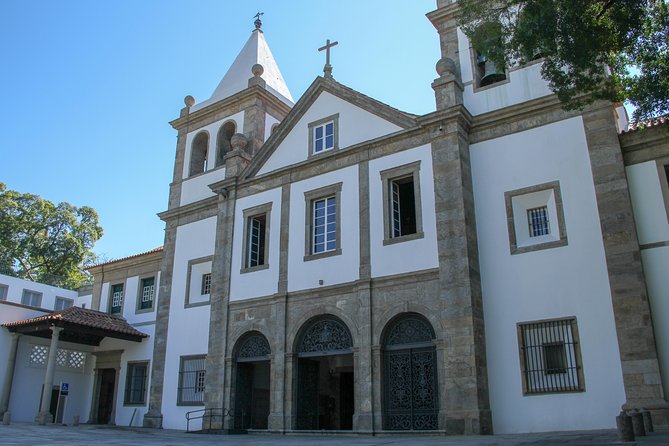
Mosteiro de São Bento, or St. Benedict Monastery, is one of the tour’s best stops. Founded by Benedictine monks from Bahia in 1590, it remains an active abbey beside St. Benedict College.
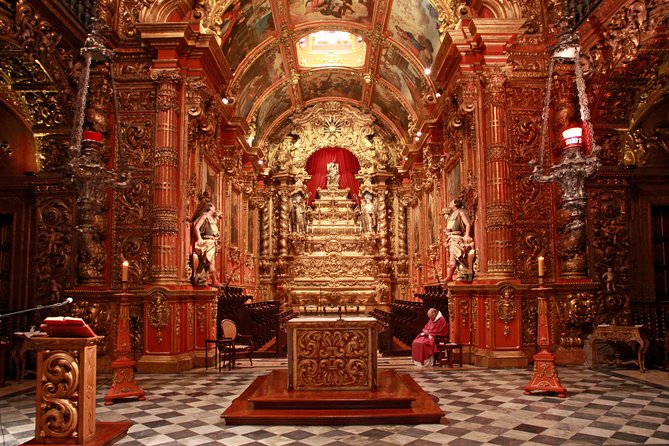
You have about 30 minutes inside, with admission included. That is a welcome amount of time because the exterior does not prepare you for the interior decoration. The original Mannerist design includes three entrance arches, a triangular gable, and twin towers topped by pyramid-shaped spires. Inside, the tiled porch and nineteenth-century iron gates add older layers to the building.
The monastery is also a useful contrast to the open streets and traffic outside. If you enjoy church art, architecture, and quiet historic spaces, this may be your favorite stop. If your main goal is street life and colorful photographs, the visit may feel more subdued than Lapa or Selarón.
The tour gives you enough time to look around, but not enough for a slow architectural study. Stay near the guide and pay attention to any instructions about where you can walk or take photographs.
The Metropolitan Cathedral’s huge interior
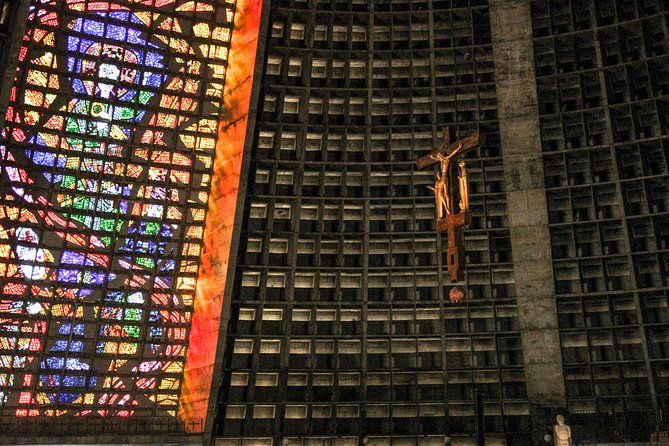
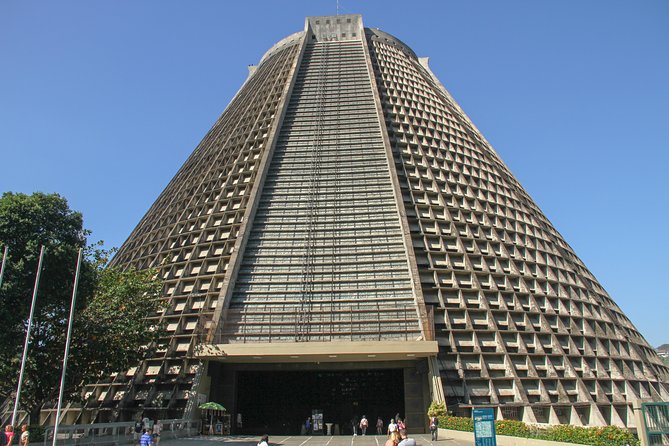
The Metropolitan Cathedral of Saint Sebastian looks nothing like a traditional European church. Its cone-shaped design was inspired by the Mayan pyramids of Mexico, with the form intended to suggest closeness to God.
Inside, four floor-to-ceiling stained-glass windows rise toward a cross near the top. The scale is the point. Even a short visit lets you take in the unusual shape, strong vertical lines, and filtered light.
Admission is free, and the scheduled stop lasts about 30 minutes. That makes the cathedral one of the better time-to-value stops on the route. You get a real interior visit without an added ticket or a long queue.
The acoustics are another feature, though a three-hour sightseeing circuit is not a concert visit. If the cathedral is open and calm during your stop, stand for a moment and let the sound of the space register. The guide can add the context that makes the bold design easier to understand.
Lapa, the Carioca Aqueduct, and Selarón Steps
Lapa brings the route’s most recognizable street scenes. The Carioca Aqueduct, usually called the Lapa Arches, was built to carry water and later became the bridge for the Santa Teresa tramway. Its repeated white arches are one of Rio’s clearest visual symbols.
The tour includes a look at the arches, but the schedule does not promise a long stop there. You may get out for photographs, or see them as part of the drive through Lapa. If the arches are your main goal, ask the guide how much time is available before leaving the vehicle.
The Escadaria Selarón is more hands-on and usually more rewarding. Chilean-born artist Jorge Selarón began repairing the worn staircase outside his home in 1990. He used blue, green, and yellow tiles at first, then expanded the work with ceramics, mirrors, and fragments from many places.
You get about 30 minutes here, with no admission charge. That is enough to climb part of the stairs, study the small tile details, and take photographs. It is not enough to explore every section at a relaxed pace, especially if the steps are crowded.
I would remember the location and return later if you have extra time. One past participant did exactly that, finding the steps to be the favorite point of the tour. The stop works well for first-time orientation, but a separate visit lets you slow down and look closely.
Rua do Lavradio and a glimpse of local street life
Rua do Lavradio is scheduled for about 20 minutes. The street is known for antique shops, bars, and restaurants, and it hosts a street fair on the first weekend of each month.
This stop adds a different mood after the churches and civic buildings. You see a commercial side of Lapa, with small tables and market stalls filling the area when the street fair is taking place.
Do not expect a full meal or a long shopping break. Twenty minutes is enough to walk a short section, take in the atmosphere, and note places you might return to. If your tour falls on the first weekend of the month, the fair may give the stop more energy. The schedule alone does not guarantee that the fair will be operating on your date.
Passing Flamengo, Botafogo, and the waterfront
The route returns toward the southern districts along Aterro do Flamengo, the broad park created on land reclaimed from Guanabara Bay. Its gardens were designed by Roberto Burle Marx, one of Brazil’s best-known landscape designers.
You may see the Church of Outeiro da Glória, the Monument to the Fallen in World War II, and the Museum of Modern Art. These are part of the drive-by section rather than long, separate visits.
Botafogo also appears on the route. The beachfront district sits between several hills and connects the central sights with Copacabana. Fort Copacabana is included in the tour information as a Rio point of interest, but no dedicated stop duration or interior visit is specified, so do not book this expecting time inside the fort or Army Museum.
This final section helps you connect downtown with the bayfront districts. It is scenic in a broad city-view sense, but the vehicle may move quickly and traffic can affect how much you see.
The pace, group size, and guide make the difference
The tour is advertised at about three hours, with some departures lasting three to four hours. That sounds generous until you count the route: Maracanã, the Sambadrome, several government buildings, São Bento, the cathedral, Lapa, Selarón, Rua do Lavradio, Flamengo, Botafogo, and the return drive.
You should expect a fast pace with several short exterior views. The monastery, cathedral, Selarón Steps, and Rua do Lavradio have listed stop times. Other sights may be seen from the vehicle or receive only a quick photo stop.
Traffic is the wildcard. One guide and driver team, Arthur and Andre, received special praise for handling Rio’s difficult roads while keeping the route moving. Another departure suffered a long pickup delay and very short visits at several points. Rain can also change the feel of the afternoon, and the operator has offered a second tour in at least one weather-related case.
The guide’s language skills matter, too. English-speaking departures have been described as clear and easy to follow, with guides adapting the route when an empty stadium offered little to see. If you want a flexible, deeply detailed walking experience, this may feel too compressed. If you want orientation in limited time, the same pace is an advantage.
Is $74.50 a fair price?
At $74.50 per person, the cost is not simply for entrance tickets. Only the monastery lists included admission, while the cathedral, Selarón Steps, and Rua do Lavradio are free. Maracanã entry is not included.
You are mainly paying for the air-conditioned vehicle, hotel pickup and return, a professional guide, and the ability to cover distant parts of Rio in one organized loop. For a first visit, that can be good value. Public transport or separate taxis could cost less, but they would require more planning and would not give you one continuous explanation of the city.
The price makes more sense if you are staying in Zona Sul, have only one afternoon, or want to combine many sights without navigating Rio’s traffic yourself. It makes less sense if you already know downtown, prefer long visits inside museums, or plan to return independently to Lapa and Selarón.
The 4.8 rating from 32 submitted ratings and a 94 percent recommendation figure suggest strong overall satisfaction, but the lower-rated experience is worth taking seriously. Pickup timing, rain, traffic, and the guide assigned to your vehicle can shape the day.
Who should book this downtown circuit?
I would recommend it to first-time visitors who already plan to see Rio’s headline mountain and beach sights. It is also a good choice for solo visitors who want company, couples with limited time, and families who prefer a vehicle to a long afternoon on foot.
It suits you best if you value breadth over depth. You will see far more than you could comfortably cover alone in three hours, and the guide can connect buildings, neighborhoods, Carnival, religion, and national history.
I would choose another format if your priority is Maracanã stadium entry, a long visit at the Selarón Steps, or detailed time inside every church and museum. You may still enjoy the circuit, but you should treat those sights as introductions rather than complete visits.
Free cancellation is available up to 24 hours before the 1:30 pm start. Children age five and under can ride free with identification while sitting on a lap. Most people can participate, but confirm the pickup point and timing before you commit your afternoon.
Should you book it?
Book this tour if you want a practical first look at downtown Rio and do not want to manage the city’s traffic on your own. São Bento Monastery, the Metropolitan Cathedral, and Selarón Steps give the afternoon real substance, while Maracanã, Lapa, and Aterro do Flamengo fill in the larger picture.
Skip it if you want a slow, highly focused visit to one district. For everyone else, the tour offers a useful snapshot of Rio beyond the beaches, with the best results coming when you accept the quick pace and save your favorite stop, most likely Selarón, for a return visit.
FAQ
How long does the Rio Downtown Tour last?
The tour lasts about three hours. Some departures may take three to four hours, depending on traffic and conditions.
What time does the tour start?
The listed start time is 1:30 pm.
Where does the tour begin and end?
The listed meeting point is the Hilton Rio de Janeiro Copacabana at Avenida Atlântica, 1020. The activity ends back at the meeting point, and hotel pickup and drop-off are available from selected hotels.
Which hotels qualify for pickup?
Pickup is offered at selected hotels in Copacabana, Ipanema, and Leblon. You should confirm your hotel when booking.
Is Maracanã Stadium admission included?
No. The tour does not go inside Maracanã Stadium. It makes a quick exterior stop near Bellini’s statue for photographs.
Is admission to São Bento Monastery included?
Yes. Admission to São Bento Monastery is included, with about 30 minutes scheduled there.
How large is the tour group?
The maximum group size is 19 people. Some departures may be smaller.
Can I cancel for a full refund?
Yes. You can cancel at least 24 hours before the local start time for a full refund. Cancellations or changes made less than 24 hours before the start are not accepted for a refund.
Just added around Rio
- Rocinha Jeep Tour: A Journey into the Soul of the Favela!★ 3.8 · 3 reviews
- Tijuca National Park and all its wonders!★ 5.0 · 3 reviews
- Rio: Best Dive Experience All Inclusive Scuba Diving Package★ 5.0 · 3 reviews
- Rio de Janeiro: Doors-off 30-min helicopter tour★ 5.0 · 3 reviews
- Rio de Janeiro: Hang gliding adventure★ 3.7 · 3 reviews
- Pedra Bonita Trail: The easiest trail with a beautiful view of Rio★ 4.6 · 3 reviews
- Rio de Janeiro Secluded Beaches: Hike+Swim Prainha & Grumari★ 5.0 · 3 reviews
- Unforgettable Boat Party★ 5.0 · 3 reviews
Selarón Steps & Santa Teresa, compared.

Christ the Redeemer, Sugarloaf, Selaron & BBQ Lunch
Read our review →

Santa Teresa, Lapa, and Cinelândia with Tram Ride and Selarón Steps
Read our review →

Corcovado, Sugarloaf Mountain, and Selarón Steps 6-Hour Tour
Read our review →
Ancient Rio and Santa Teresa Tour with Hotel pick-up and drop-off
Read our review →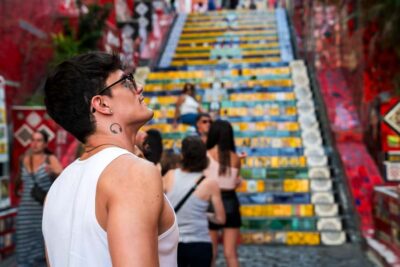
Christ the Redeemer & Selarón Steps Half-Day Tour
Read our review →
Christ the Redeemer and Escadaria Selarón Half-Day Tour
Read our review →Browse the lists this tour appears in