
Reviewed · SAMBA & LAPA NIGHTS
Samba Night in Pedra do Sal with 1 free caipirinha
Pedra do Sal is not a staged dinner show. It is a real Monday-night samba gathering in Rio’s old port district, where drums, dancing, street life, and Afro-Brazilian traditions meet. I like the walk through Little Africa before the music begins, and I like that guide Bruno explains the area’s past instead of dropping you straight into a party. You also get a complimentary caipirinha, a small but welcome touch.
The main consideration is physical: this is a four-hour walking-and-dancing evening in an old neighborhood, and it is not suitable for wheelchair users or people with mobility impairments. You will need comfortable shoes, a willingness to walk, and enough energy to keep going after 7:30 PM.
In This Review
- Key points to know before you book
- Why Pedra do Sal is more than a night out
- Meeting at Largo de São Francisco da Prainha at 7:30 PM
- Walking through Saúde and Little Africa
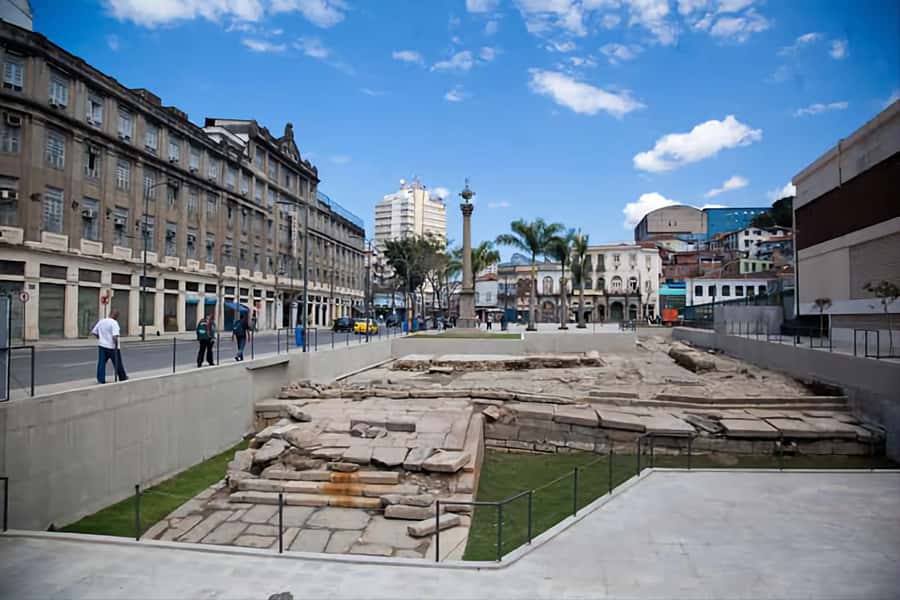
- Cais do Valongo and the port’s difficult past
- Arriving at Pedra do Sal on Monday night
- The caipirinha and what is not included
- What Bruno adds to the evening
- Practical details that shape the experience
- Who will get the most from this samba night
- Should you book the Pedra do Sal experience?
- FAQ
- Where does the tour start?
- What time does the experience begin?
- How long does the activity last?
- Which languages does the guide speak?
- Is a caipirinha included?
- Are hotel transfers or meals included?
- Is the tour suitable for wheelchair users?
Key points to know before you book
- Start in Rio’s old port district: Meet at Largo de São Francisco da Prainha, the main square near Pedra do Sal.
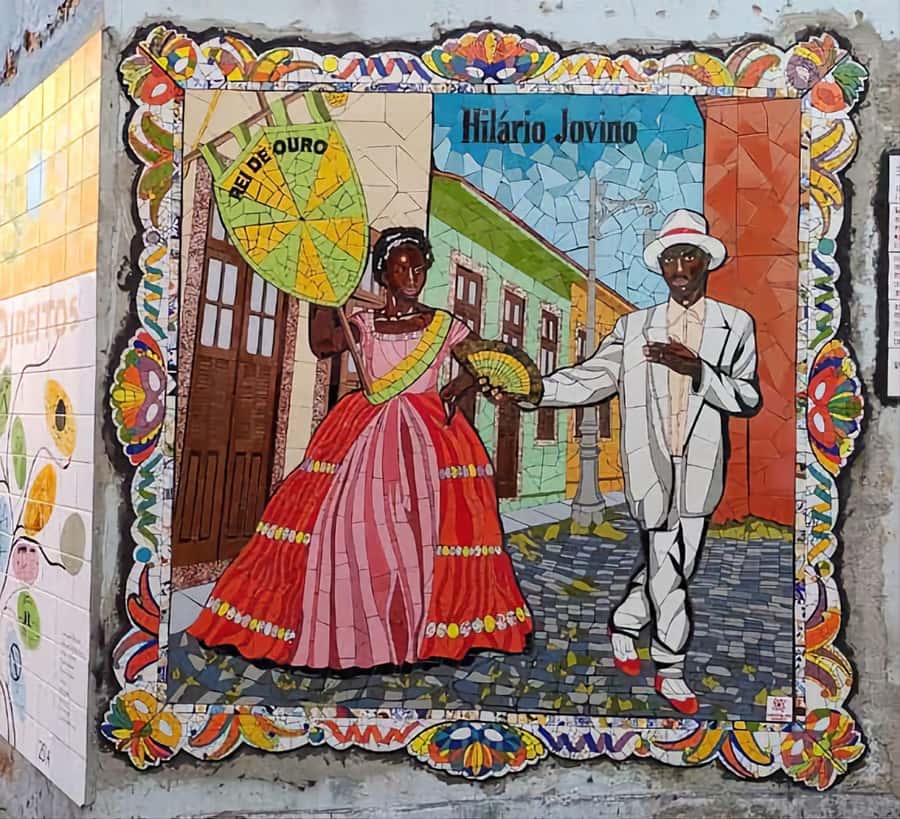
- Walk through Little Africa: The tour explains how African culture shaped Rio’s music, religion, and community life.
- Visit Cais do Valongo: See the UNESCO World Heritage site that recalls the port’s painful role in the Atlantic slave trade.
- Hear local stories from Bruno: He guides in English, Spanish, and Portuguese and keeps the evening personal and easygoing.
- Finish with live Monday samba: Pedra do Sal fills with drums, dancing, cold drinks, and local energy.
- One caipirinha is included: You receive a welcome drink, while meals and hotel transfers are not included.
Why Pedra do Sal is more than a night out
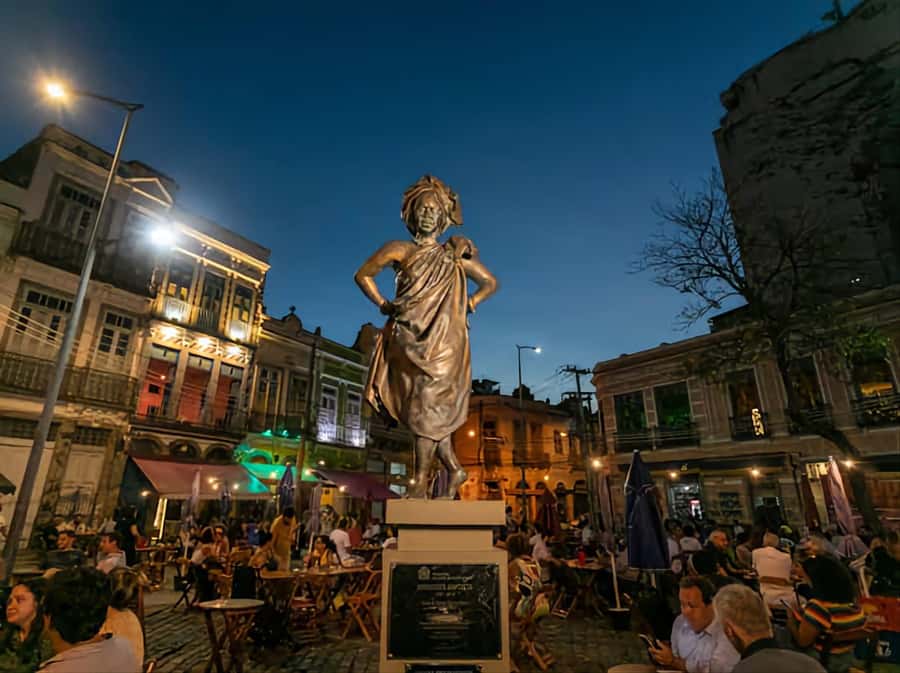
Rio is often sold through beaches, viewpoints, and Carnival. Those are worthwhile, but they do not tell the whole story of the city. This experience points you toward the port area, where African traditions helped shape the music, faith, food, and social life that define much of Rio today.
The evening begins with context, then moves into celebration. That order matters. You first learn why the neighborhood carries such weight, then you hear the samba in the place where those traditions remain part of everyday life.
I especially like this format for first-time visitors who want something more grounded than a large performance venue. At Pedra do Sal, the music takes place in the street, and the atmosphere comes from local participation rather than stage effects. You are there to watch, listen, and, if the mood takes you, dance.
The experience has a perfect score from 12 published ratings, with repeated praise for Bruno’s friendliness, Spanish skills, care with the group, and ability to explain the neighborhood. That does not remove the need to plan sensibly, but it does point to the guide as a major part of the evening.
More samba and nights in Lapa:
- Rio de Janeiro: Beginner Samba Lesson in Ipanema
★ 4.9 · 1,071 reviews - Rio: Pub Crawl in Lapa with Cachaça Tasting and Live Samba
★ 4.7 · 881 reviews - Rio: Carnival Backstage Tour at Samba City with Cocktail
★ 4.6 · 520 reviews
Meeting at Largo de São Francisco da Prainha at 7:30 PM
Your meeting point is Largo de São Francisco da Prainha, a square close to Pedra do Sal. This is useful because you do not begin with a long transfer from a hotel or a confusing ride across town. You meet in the port district and start walking from there.
Hotel pickup and drop-off are not included, so you must arrange your own way to the square. Check the meeting instructions carefully before leaving, and allow enough time to arrive. Once the group gathers, the evening is done on foot and returns to the same general starting point.
The start time also shapes the experience. At 7:30 PM, Rio’s daytime heat has eased, and the tour leads into the livelier part of Monday night. Still, bring sun protection if you will be out earlier in the day, and wear shoes that can handle several hours on foot.
The tour is offered in English, Spanish, and Portuguese. Bruno has received specific praise for speaking excellent Spanish and for helping people who booked close to the start time. If you prefer a guide who can switch comfortably between languages, that is a useful advantage.
Walking through Saúde and Little Africa
The first substantial part of the night is a guided walk through Saúde, one of the historic areas around Rio’s port. You spend about two hours learning how the district became tied to Afro-Brazilian culture and how that influence continues through music and religion.
This section is not just a prelude to the samba. It gives you a way to read the streets and understand why Pedra do Sal matters. You hear about the resilience of the Afro-Brazilian community and the traditions that survived despite a painful past.
Expect the guide to do much of the interpreting. The supplied details do not promise entry into a long list of museums or indoor attractions, so think of this as a neighborhood walk with historic stops and explanation. You may see street art along the way, and bringing a camera is encouraged.
The walking portion is also where the tour asks the most from you physically. Comfortable clothes and shoes are essential. Since the experience is not suitable for people with mobility impairments or wheelchair users, consider your own comfort with an extended walk before booking.
Cais do Valongo and the port’s difficult past
Cais do Valongo is one of the most important stops of the evening. The former slave port is now a UNESCO World Heritage site, and its presence gives the tour a serious center of gravity before the music begins.
A visit here can change how you understand Rio. The port was tied to the forced arrival of enslaved Africans, while the surrounding area later became a place where Afro-Brazilian culture took root and continued to shape the city. The tour connects that difficult past with the music and religious traditions you encounter later.
This is not a light sightseeing stop, and it should not be treated as one. You will hear about suffering, survival, and community strength. The guide’s role is important here because bare stones and old streets cannot explain themselves. Bruno’s approach, based on the available information, includes stories about the people and traditions behind the place.
I appreciate that the stop is built into a samba evening rather than separated from it. The music at Pedra do Sal is not presented as a free-floating party. You first see the historical forces that helped shape it, then you encounter a living expression of that culture.
More evenings out in Rio:
- Rio de Janeiro: Sunset Sailing Tour
★ 4.8 · 994 reviews - Rio de Janeiro: Sunset Sailboat Tour with Open Bar
★ 4.9 · 785 reviews - More than a Pub Crawl: An Authentic Night Experience in Rio
★ 4.5 · 362 reviews - Rio de Janeiro: Guanabara Bay Sunset Sailing Tour & Drinks
★ 4.9 · 331 reviews
Arriving at Pedra do Sal on Monday night
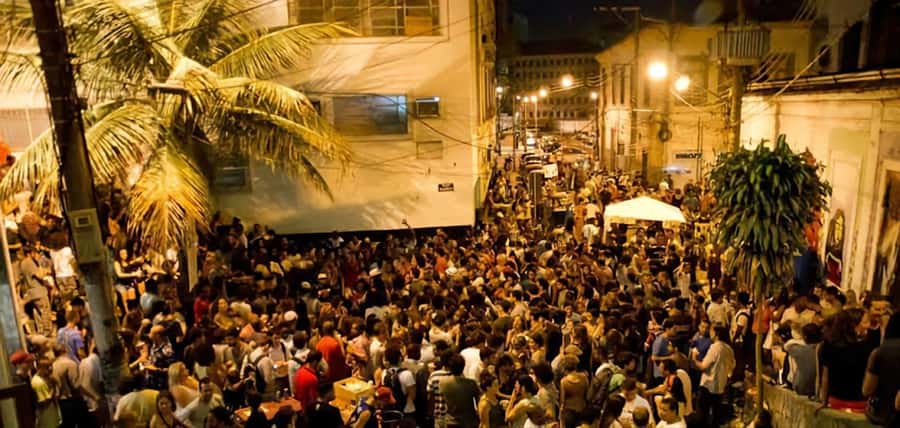
The walk leads to Pedra do Sal, known as the birthplace of samba. On Monday nights, the area comes alive with live samba, drums, dancing, cold drinks, and a crowd gathered for the music.
The key word here is local. This is not described as a formal concert with reserved seats or a fixed program. It is street samba, which means the mood can feel more spontaneous and social. You may find people listening, dancing, chatting, and moving through the area rather than sitting quietly through a performance.
That makes the experience a good match for you if you enjoy being part of a public celebration. It is less suitable if you want a carefully controlled show, a guaranteed seat, or a quiet night with a fixed schedule. The activity description does not promise a particular band, seating, meal, or set length for the music, so keep your expectations flexible.
You are encouraged to dance, but there is no need to arrive as an expert. The point is to feel the rhythm and watch how the evening works. If you prefer to observe, you can do that too. Bruno stays with the group and helps make the setting feel manageable, a detail that matters when you are entering a busy public gathering in an unfamiliar part of the city.
The caipirinha and what is not included
Each person receives one welcome caipirinha. That drink is included in the $42 price and gives the evening a fitting Brazilian start. The information provided does not specify the flavor, but one published comment refers to options such as kiwi, passion fruit, and lime available in the wider setting.
Meals are not included, so eat beforehand or plan to buy food separately if it is available during the night. Do not assume the complimentary drink covers all beverages. Cold drinks are part of the Pedra do Sal atmosphere, but additional purchases are your responsibility.
At $42 per person, the value depends on how you use the four hours. You are paying for a guided walk through Little Africa, a visit to Cais do Valongo and Pedra do Sal, interpretation in your chosen language, a live samba experience, and one caipirinha. Compared with paying separately for a guide and then finding the samba gathering on your own, the package is reasonably useful for a first evening in the district.
The price is less compelling if you only want to hear samba and do not care about the history. You could focus on the music alone, but you would miss the part that gives the night its meaning. For me, the guided context is what makes the cost easier to justify.
What Bruno adds to the evening
The guide can make or break a walking tour, especially one that deals with painful history and a busy public celebration. Bruno is named as the guide, and the available feedback repeatedly highlights his warmth, attentiveness, and ability to make people feel comfortable.
One useful detail is his language range. He guides in English, Spanish, and Portuguese, and his Spanish has been singled out as especially strong. That can make a real difference at Cais do Valongo, where you want to understand the explanation rather than just look at a historic site.
He also appears to be hands-on with the practical side of the night. One person who booked only an hour before the start received help coordinating the meeting. That does not mean you should leave booking until the last moment, but it suggests the guide pays attention to communication as well as storytelling.
I would choose this experience partly for that personal element. The plan is simple on paper, but the evening depends on how well the guide connects the history, the neighborhood, and the music. Bruno’s role is to help you move between those parts without making the night feel like a lecture.
Practical details that shape the experience
Plan on four hours from the 7:30 PM start, with the tour returning to Largo de São Francisco da Prainha. The itinerary includes about two hours of guided visiting in Saúde, followed by the Pedra do Sal samba experience and the return walk.
Wear comfortable shoes and clothes. This is not the night for stiff dress shoes or an outfit that limits movement. You may be walking on uneven surfaces, standing for stretches, and dancing once you reach the samba gathering.
Bring a camera for the street art and neighborhood scenes, but keep it secondary to the experience. You are entering a social setting, not simply photographing a monument. Sun protection is also advised, even though the main event takes place in the evening.
Free cancellation is available up to 24 hours before the activity for a full refund. You can also reserve now and pay later, which helps if your Rio schedule is still shifting. These policies are useful, but the more important planning question is physical comfort and interest in the subject.
There is no hotel transfer, and meals are not included. The tour is not suitable for wheelchair users or people with mobility impairments. Those limits are clear, so you can make a sensible choice before paying.
Who will get the most from this samba night
I would recommend this experience to you if you want to understand Rio through Afro-Brazilian culture rather than only through famous viewpoints and beaches. It suits curious first-time visitors, solo visitors who want a guide for the evening, and couples or small groups who enjoy music with a strong sense of place.
It is also a good pick if you speak Spanish and want a guide who can explain the evening clearly. Bruno’s ability to guide in Spanish, English, and Portuguese gives the tour broad appeal.
You should think twice if you have difficulty walking, standing, or moving through an old urban area. You should also reconsider if you want a formal samba show, a meal, hotel transport, or a carefully timed performance.
The experience is best approached with an open schedule. The history section has a clear plan, but the street samba has its own rhythm. That is part of its appeal, though it means the evening will not feel like a polished theater production.
Should you book the Pedra do Sal experience?
Book it if you want a guided introduction to Rio’s Little Africa followed by real street samba. The strongest part is the combination: Cais do Valongo gives the evening weight, Saúde provides the setting, and Pedra do Sal brings the music to life.
At $42, the tour offers solid value for four hours, especially if you would otherwise feel unsure about finding and joining the Monday samba gathering on your own. The included caipirinha is a pleasant extra, while Bruno’s language skills and personal care add practical value.
Skip it if you are looking only for a quick drink and a short music stop. This is a history walk first, then a samba night. For the right kind of visitor, that is exactly why it works.
FAQ
Where does the tour start?
The meeting point is Largo de São Francisco da Prainha, a main square close to Pedra do Sal in Rio’s port district.
What time does the experience begin?
The tour starts at 7:30 PM.
How long does the activity last?
The full experience lasts four hours and returns to Largo de São Francisco da Prainha.
Which languages does the guide speak?
The tour is offered in English, Spanish, and Portuguese.
Is a caipirinha included?
Yes. Each person receives one complimentary welcome caipirinha.
Are hotel transfers or meals included?
No. Hotel pickup, hotel drop-off, and meals are not included.
Is the tour suitable for wheelchair users?
No. The experience is not suitable for wheelchair users or people with mobility impairments. Comfortable walking shoes and clothes are advised.
Just added around Rio
- Rocinha Jeep Tour: A Journey into the Soul of the Favela!★ 3.8 · 3 reviews
- Tijuca National Park and all its wonders!★ 5.0 · 3 reviews
- Rio: Best Dive Experience All Inclusive Scuba Diving Package★ 5.0 · 3 reviews
- Rio de Janeiro: Doors-off 30-min helicopter tour★ 5.0 · 3 reviews
- Rio de Janeiro: Hang gliding adventure★ 3.7 · 3 reviews
- Pedra Bonita Trail: The easiest trail with a beautiful view of Rio★ 4.6 · 3 reviews
- Rio de Janeiro Secluded Beaches: Hike+Swim Prainha & Grumari★ 5.0 · 3 reviews
- Unforgettable Boat Party★ 5.0 · 3 reviews
Samba & Lapa Nights, compared.

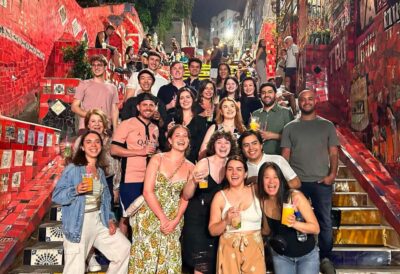
Pub Crawl in Lapa with Cachaça Tasting and Live Samba
Read our review →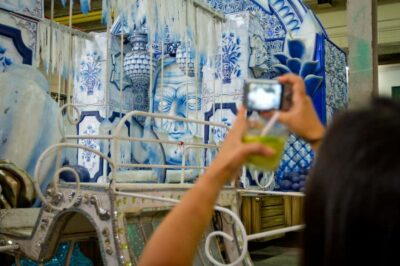
Carnival Backstage Tour at Samba City with Cocktail
Read our review →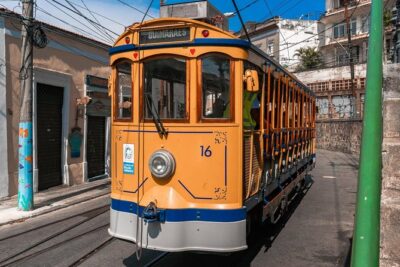
Santa Teresa, Lapa, and Cinelândia with Tram Ride and Selarón Steps
Read our review →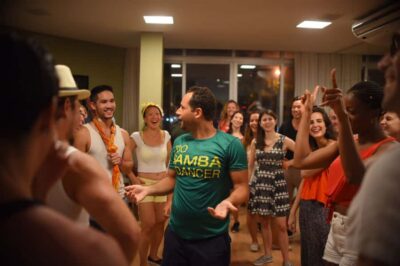


Ginga Tropical – Brazilian Samba and Folklore Show
Read our review →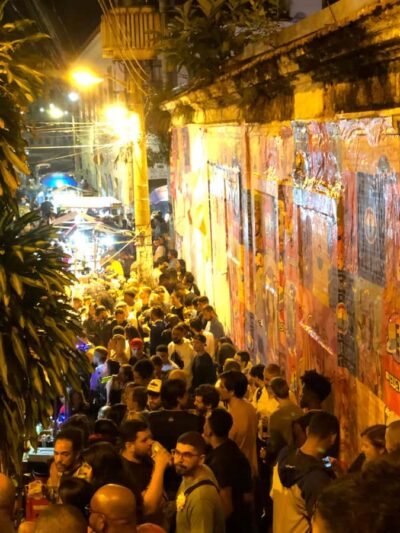
Pedra do Sal: Live Samba Night with Local Guide & Drink
Read our review →Browse the lists this tour appears in