
Reviewed · FOOD & DRINK
Guided Market Fruit Tasting in Rio with 15+ Exotic Flavors
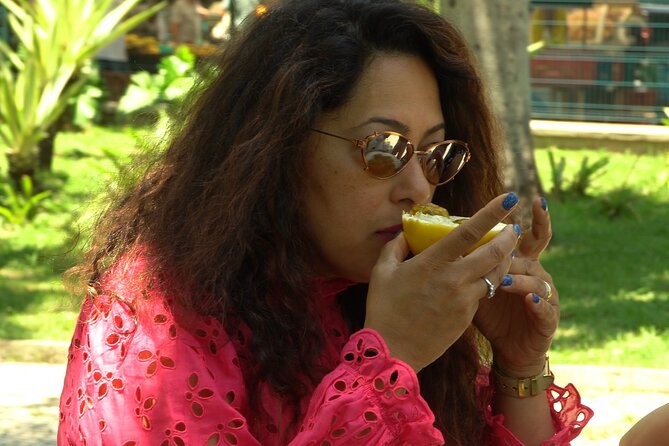
Brazil reveals itself in fruit. At this Rio market, you can taste more than 15 Brazilian varieties while hearing how açaí supports life in the Amazon, how jabuticaba grows directly from tree bark, and how cashew apples become sweets and liqueurs. It is a food tour with a clear sense of place, not just a tray of samples.
I like the large range of flavors, which can include familiar produce alongside fruits even Brazilians may not know. I also like the small group limit of 15 people and the local guides, including Hay Za, Caterina, and Erica, who bring personal stories and help with market shopping.
The main consideration is timing and season. The guide found 18 fruits during one autumn visit, but the exact selection can change. You will also pay separately for anything you decide to buy beyond the included tasting.
In This Review
- Key points to know before booking
- Why this Rio fruit tour is more than a snack stop
- Starting at 10:00 am in Ipanema
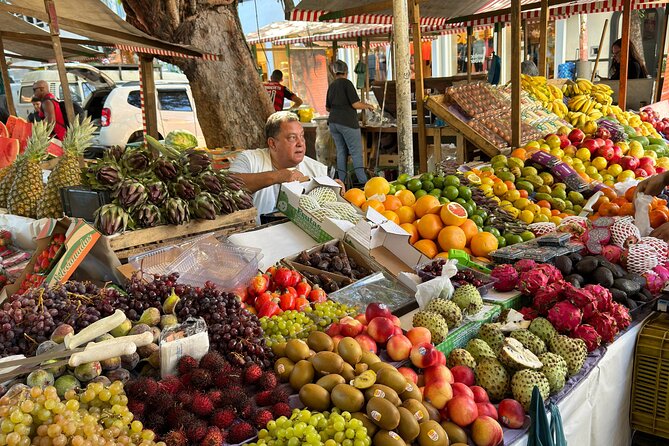
- Entering a real Rio farmers market
- The fruit tasting: 15 to 20 flavors in one morning
- Juices, nuts, and native ingredients
- The guide makes or breaks the experience
- What the market setting adds to the morning
- Is $49 a fair price?
- Who should book this experience?
- Final call: book it for the stories as much as the fruit
- FAQ
- Where does the fruit tasting start?
- What time does the tour begin?
- How long does the experience last?
- Where does the tour end?
- How many fruits will I taste?
- Does the tour include anything besides fruit?
- Are market purchases included?
- How large is the group?
- Can I cancel for a full refund?
- Are service animals allowed?
Key points to know before booking
- Taste 15 to 20 Brazilian fruits: The sample list changes, but the focus is on unusual native and tropical produce.
- Walk through a real farmers market: You see where local people shop, rather than tasting in a closed tourist venue.
- Learn the story behind each bite: Açaí, jabuticaba, cashew apple, and other ingredients connect food with regional life.
- Try more than fruit: The experience includes local juices, nuts, and native market ingredients.
- Keep the group small: The maximum is 15 people, useful when you want to ask questions.
- Start and finish in Ipanema: The tour begins at 10:00 am and returns to its meeting point after about two and a half hours.
Why this Rio fruit tour is more than a snack stop
Many food tours give you a few bites and a list of names. This one uses fruit to explain Brazil’s size and regional differences. You are not simply tasting something sweet, sour, creamy, or tart. You are learning how different ingredients fit into daily meals, market traditions, sweets, drinks, and local identity.
That makes the experience especially useful early in a Rio visit. After two and a half hours, you should have a better sense of the flavors you will see elsewhere in Brazil, from juice bars to restaurant menus. You may also leave with a short list of foods to seek out again.
The setting matters. A farmers market gives you color, noise, displays, vendors, and the chance to see produce as an everyday part of city life. It feels more grounded than a tasting held in a hotel or restaurant. You get a look at the shopping side of Brazilian food culture as well as the eating side.
Other Rio tours people book on the same trip:
- Rio de Janeiro: 6-Stop Highlights of Rio with Lunch
★ 4.4 · 5,157 reviews - Christ the Redeemer Entry Ticket by Corcovado Train
★ 4.4 · 4,476 reviews - Rio de Janeiro: Rocinha Favela Walking Tour with Local Guide
★ 4.8 · 3,052 reviews
Starting at 10:00 am in Ipanema
The tour starts in Ipanema at 10:00 am and ends back at the same meeting point. That simple arrangement makes the outing easy to fit into a morning in Rio, with no need to plan a separate return transfer.
The meeting point is near public transportation, which helps if you are staying outside Ipanema. The available information does not specify a particular station or route, so check the exact meeting instructions after booking and allow enough time to arrive before the start.
Because the tour is outdoors and takes place in an operating market, comfortable walking shoes make sense. You will be moving between stalls and stopping for samples rather than sitting in one place for the full experience.
Entering a real Rio farmers market
The market is the heart of the activity. Instead of receiving a fixed selection in a private room, you walk through a working food market and taste products in context. That gives you a chance to see ingredients before they are cut, blended, or served.
A good guide can make a big difference here. Hay Za is praised for being warm and well informed, while Caterina is noted for explaining what Brazilians like to eat. Erica also helps with market shopping and answers questions as you sample fruits from nearby farms.
Those details matter because exotic fruit can be confusing at first. A name may be unfamiliar, the skin may not suggest the flavor inside, and the best way to eat it may not be obvious. The guide provides the bridge between an unusual-looking product and an enjoyable bite.
You may also see more than the tasting covers. The market has other foods and drinks available for purchase, so bring room in your plans, and perhaps your appetite, for browsing after the formal portion ends.
The fruit tasting: 15 to 20 flavors in one morning
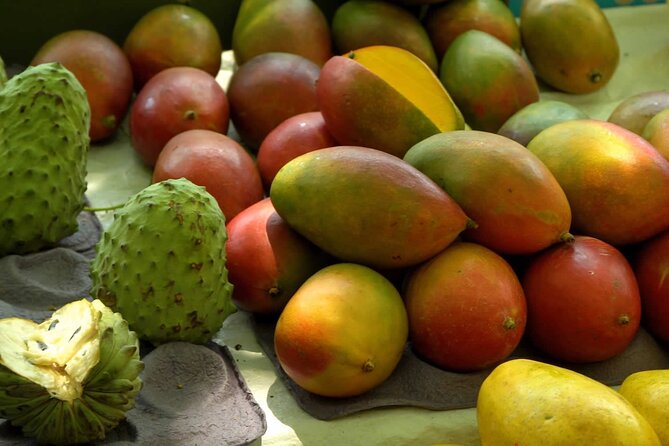
The advertised range is 15 to 20 fruits. That is enough variety to make the tasting feel like a tour across Brazil, but it is not so large that every sample becomes a rushed blur.
The exact selection depends on availability and season. One autumn visit still produced 18 exotic fruits, which suggests that the guide works with what the market can offer rather than promising a rigid menu. That is a strength for freshness, though anyone seeking one particular fruit should understand that it may not appear.
You might recognize some of the fruit, especially common tropical varieties. The fun comes from comparing familiar items with native produce that is less common outside Brazil. The tasting can also reveal that two fruits with similar appearances may have very different textures or uses.
Açaí offers a clear example of food with cultural weight. Outside Brazil, açaí is often reduced to a sweet bowl or smoothie ingredient. Here, you learn about its connection to the Amazon and its role as a source of energy in that region.
Jabuticaba is another memorable subject. Its fruit grows directly on the tree bark, an unusual sight that makes it worth seeing in person. It is the kind of detail that helps a food memory last long after the tasting ends.
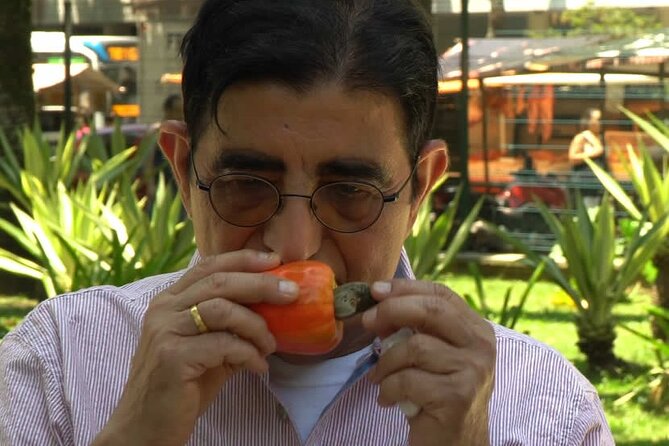
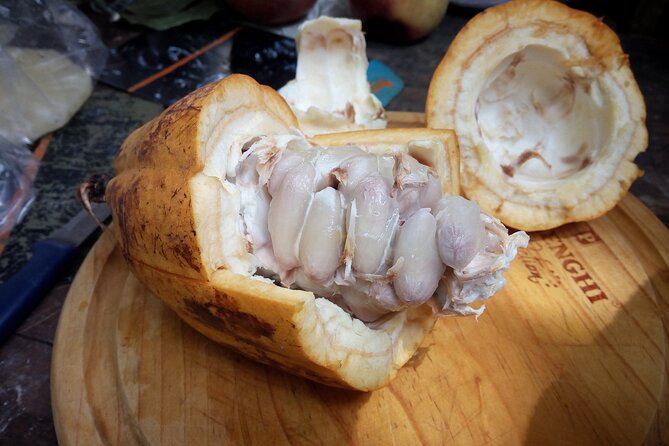
The cashew apple adds another useful lesson. Cashews are familiar around the world, but the fleshy fruit attached to the nut also has a place in Brazilian sweets and liqueurs. Tasting it in a market setting helps you see the ingredient as a whole, not just as a packaged nut.
A different side of the city, same few days:
- Rio: Christ the Redeemer, Sugarloaf, Selaron & BBQ Lunch
★ 4.5 · 2,428 reviews - Rio De Janeiro: Half-Day Rocinha Favela Walking Tour
★ 4.7 · 2,272 reviews - Rio de Janeiro: Angra dos Reis and Ilha Grande Full-Day Tour
★ 4.6 · 1,673 reviews - Rio de Janeiro: Beginner Samba Lesson in Ipanema
★ 4.9 · 1,071 reviews
Juices, nuts, and native ingredients
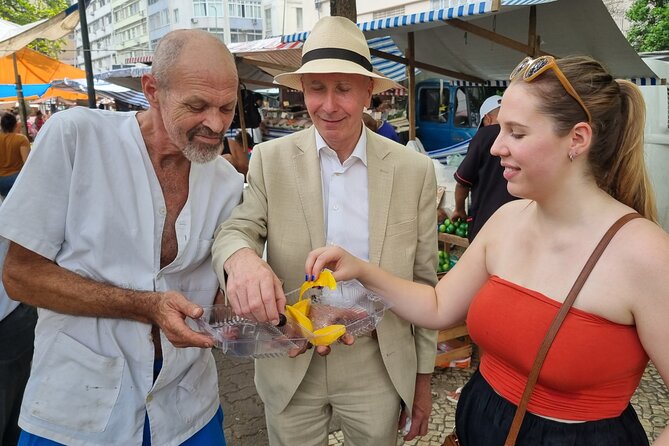
The experience is not limited to sliced fruit. You also taste local juices, nuts, and other native ingredients sold in the market. This broadens the tour from raw produce to the ways Brazilians drink, snack, preserve, and transform food.
Juices are useful for understanding how fruit behaves in a different form. A fruit that seems sharp or mild when eaten may work differently when pressed or combined with other ingredients. The same is true of nuts and market products, which show how local ingredients move from farm or forest to everyday eating.
The additional tastings also add value to the $49 price. If you only received a few pieces of cut fruit, the cost would be harder to defend. Here, the fee covers a guided two-and-a-half-hour activity, a walk through the market, 15 to 20 fruit samples, and several related tastings.
Still, keep the price in perspective. The experience does not include every food or drink you may want to buy. If you enjoy market browsing, your final spending can rise once you start picking up extra treats.
The guide makes or breaks the experience
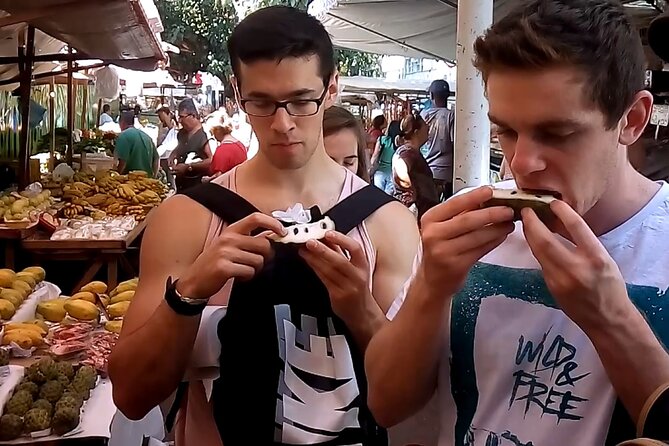
The strongest part of this tour is the human explanation. Fruit names alone are not enough. You want someone who can tell you where an ingredient fits, how locals use it, and why it matters.
The guides named in the available material include Hay Za, Caterina, and Erica. Hay Za receives praise for being sweet and well informed. Caterina is associated with a generous tasting and useful explanations of Brazilian eating habits. Erica is described as helpful with shopping and good at answering questions while you taste.
The provider is Cook in Fiesta, and the tour includes a Five-Star Guarantee. The stated policy says that if the experience is not five-star, you do not pay for four. That is a confident promise, though the practical details of how the guarantee is handled should be checked with the provider if it becomes relevant.
A small group helps here. With a maximum of 15 people, you have a better chance to hear the guide and ask about a fruit you do not recognize. It is not a private tour, so the exact feel depends on how many people book that day, but the limit keeps the group from becoming unwieldy.
What the market setting adds to the morning
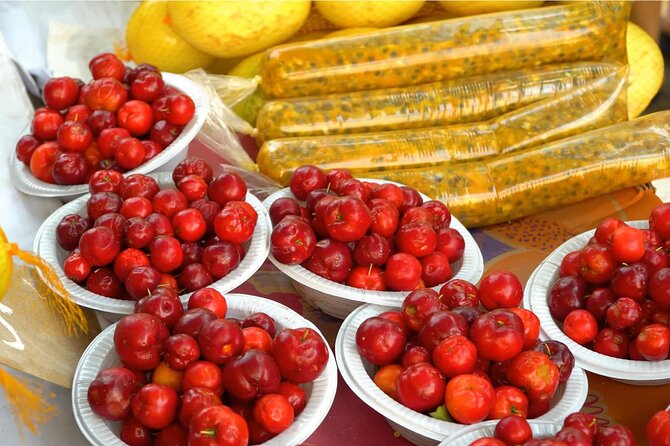
A market gives this tour a useful sense of ordinary life. You can see local sellers presenting their produce and notice that Brazilian food culture is not limited to famous dishes served in restaurants.
It also creates a more flexible experience. After the included samples, you can wander, compare products, and buy items for yourself. The tour does not cover those purchases, but that is reasonable. You choose what interests you instead of paying for a larger package filled with items you may not want.
The tradeoff is that a working market is not a controlled tasting room. Stalls may change, certain fruits may be out of season, and the pace may depend on market conditions. If you want a fixed menu, exact measurements, or a polished cooking demonstration, this is not that kind of outing.
For most food-focused visitors, the unpredictability is part of the appeal. The guide’s ability to find 18 fruits in autumn shows why a flexible approach can work well.
Is $49 a fair price?
At $49 per person, this is not the cheapest way to eat fruit in Rio. You could buy several items at a market for less. The value comes from the interpretation, the range of samples, and the time spent learning how the ingredients connect to Brazil.
I see the price as fair for someone who would otherwise pass through the market without knowing what to choose. The guide helps you identify unusual produce, taste it in a sensible order, and understand how it is used. That saves guesswork and adds cultural context.
The value is also stronger for a first visit to Brazil. You are sampling more than 15 fruits in one morning, along with juices, nuts, and native ingredients. If you are a serious food fan, that variety can justify the cost.
It is less compelling for a person who dislikes trying unfamiliar foods or prefers a conventional sightseeing walk. The tour is built around tasting, asking questions, and staying open to surprises.
Who should book this experience?
This is a strong choice for food-focused visitors, curious families, and anyone who wants a low-pressure introduction to Brazilian ingredients. The guides have worked with people who knew some fruit already and people who were surprised by how many varieties were new to them.
It also suits shoppers. Erica’s market guidance is especially useful if you want help choosing extra items after the tasting. You can take the information from the tour and use it later at markets, juice counters, or restaurants.
The experience may be less suitable if you need a tightly timed sightseeing schedule. Two and a half hours is a significant part of a morning, and the activity ends where it starts in Ipanema. It is best treated as a full food outing, not a quick stop between major attractions.
Service animals are allowed, and the activity is near public transportation. The group maximum is 15 people. Confirmation arrives at booking, and the tour requires a minimum number of participants. If that minimum is not reached, you are offered another date or experience, or a full refund.
Free cancellation is available up to 24 hours before the 10:00 am start. Cancel later than that, or request changes within 24 hours, and the amount paid is not refunded.
Final call: book it for the stories as much as the fruit
Book this tour if you want to understand Brazil through food and you enjoy trying things you cannot easily identify at home. The strongest reasons are the 15 to 20 samples, the real farmers market, the added juices and nuts, and the guides’ focus on local context.
I would also book it early in a Rio stay, when the information can guide later food choices. Just remember that the fruit list changes with the season, extra purchases cost more, and this is a market walk rather than a formal restaurant tasting.
If those points suit you, $49 buys a friendly, focused introduction to Brazilian produce with plenty of room for curiosity. If you only want a cheap snack or a fixed menu, spend your money elsewhere.
FAQ
Where does the fruit tasting start?
The experience starts in Ipanema, Rio de Janeiro, Brazil.
What time does the tour begin?
The tour starts at 10:00 am.
How long does the experience last?
It lasts approximately two hours and 30 minutes.
Where does the tour end?
The activity ends back at the meeting point in Ipanema.
How many fruits will I taste?
The guided tasting includes 15 to 20 exotic Brazilian fruits.
Does the tour include anything besides fruit?
Yes. The experience also includes tastings of local juices, nuts, and native ingredients.
Are market purchases included?
No. Any other fruit, food, or drink you choose to buy is paid for separately.
How large is the group?
The activity has a maximum of 15 participants.
Can I cancel for a full refund?
Yes. You can cancel at least 24 hours before the start time for a full refund.
Are service animals allowed?
Yes. Service animals are allowed on this activity.
More Food Tours in Rio
- Rio: Pub Crawl in Lapa with Cachaça Tasting and Live Samba
★ 4.7 · 881 reviews - Sunset Boat Tour with Beer, Water, Soda and Snacks included
★ 5.0 · 227 reviews - Petropolis The Imperial City with Beer tour and Lunch
★ 4.5 · 83 reviews - Rio de Janeiro: Shared Speedboat Tour with Beer Included!
★ 4.5 · 68 reviews
Just added around Rio
- Rocinha Jeep Tour: A Journey into the Soul of the Favela!★ 3.8 · 3 reviews
- Tijuca National Park and all its wonders!★ 5.0 · 3 reviews
- Rio: Best Dive Experience All Inclusive Scuba Diving Package★ 5.0 · 3 reviews
- Rio de Janeiro: Doors-off 30-min helicopter tour★ 5.0 · 3 reviews
- Rio de Janeiro: Hang gliding adventure★ 3.7 · 3 reviews
- Pedra Bonita Trail: The easiest trail with a beautiful view of Rio★ 4.6 · 3 reviews
- Rio de Janeiro Secluded Beaches: Hike+Swim Prainha & Grumari★ 5.0 · 3 reviews
- Unforgettable Boat Party★ 5.0 · 3 reviews
Food & Drink, compared.
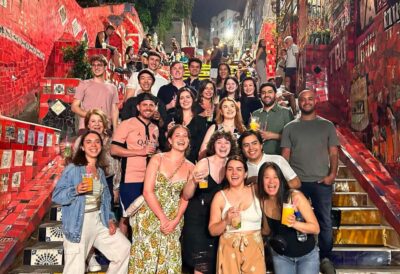
Pub Crawl in Lapa with Cachaça Tasting and Live Samba
Read our review →
Sunset Boat Tour with Beer, Water, Soda and Snacks included
Read our review →
Petropolis The Imperial City with Beer tour and Lunch
Read our review →

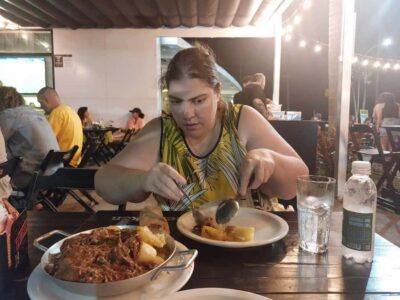

The Best Food Tour: Taste the Most Authentic Flavours of Rio
Read our review →
Browse the lists this tour appears in