
Reviewed · TIJUCA FOREST TOURS
Jeep Adventure: Guided Tour through Tijuca Rain Forest
Rio’s Tijuca Forest gives you a rare change of scene without leaving the city. In about ten minutes, high-rises give way to rainforest, waterfalls, and sweeping views of Copacabana, Ipanema, and Guanabara Bay. I especially like the mix of open-Jeep sightseeing and a short, gentle walk to Cachoeira dos Macacos. The stops at Vista Chinesa and Mayrink Chapel add views and history, not just trees.
I also like that the guide explains the Mata Atlântica ecosystem and Tijuca’s major reforestation effort. Guides such as Eddie, Everton, Lucy, George, Mario, Myriam, and Andrea have been singled out for clear explanations, humor, and help with photos. The main drawback is that pickup communication can be unreliable, and the Jeep’s narrow bench seats may feel cramped on the road.
In This Review
- Key points to know before booking
- Rio’s rainforest is only ten minutes away
- The Visitor Center sets the scene
- Cascatinha Taunay brings the first waterfall
- The gentle walk to Cachoeira dos Macacos
- Emperor’s Table combines history with a city view
- Mayrink Chapel is the quietest stop
- Vista Chinesa is the photo star
- What the open Jeep adds, and what it does not
- Guides make the four hours work
- Pickup is the biggest practical risk
- Is the $88.21 price fair?
- Who should book this Tijuca Forest tour?
- Should you book it?
- FAQ
- How long does the Tijuca Rain Forest tour last?
- Where is hotel pickup available?
- Is the hike difficult?
- Which waterfalls will I see?
- Can I visit Vista Chinesa on a weekend?
- What wildlife might I see?
- What languages are available?
- Is food included?
- What happens if I need to cancel?
Key points to know before booking
- Tijuca Forest is close to central Rio: The drive into the park takes about ten minutes from the city center.
- The walk is easy but real: Allow 15 to 30 minutes on a gradual forest trail, with waterfall stops along the way.
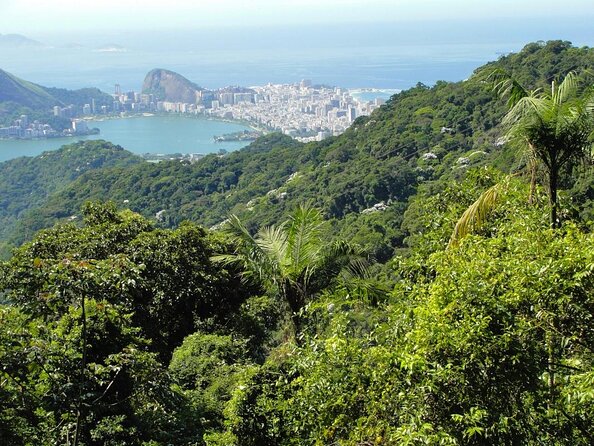
- The best city view is Vista Chinesa: You can see Ipanema, Copacabana, Guanabara Bay, and sometimes Niterói.
- The Jeep is open and breezy: It adds fun and fresh air, but the small bench seats are not the most comfortable.
- Wildlife is possible, not promised: You might see monkeys, sloths, butterflies, birds, coatis, lizards, or hummingbirds.
- Weekend planning matters: Vista Chinesa cannot be visited on Saturdays, Sundays, or holidays because of forest regulations.
Rio’s rainforest is only ten minutes away
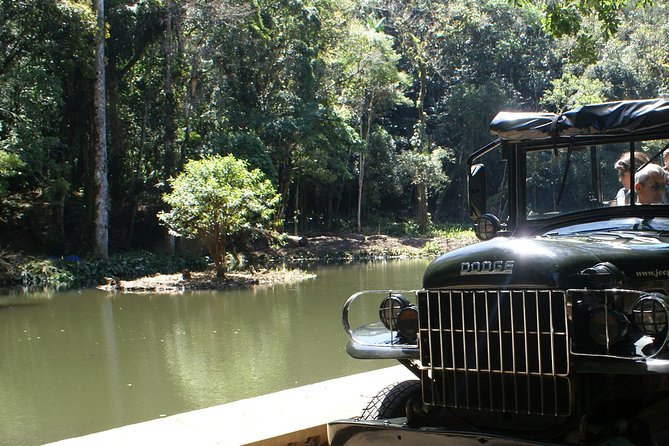
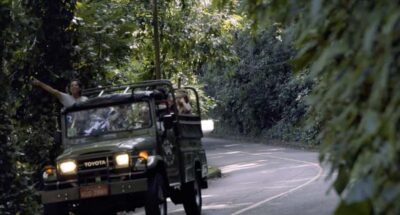
This four-hour excursion works because Tijuca National Park is so close to Rio. You do not spend most of the morning sitting in traffic. After pickup at a selected hotel in Downtown, the South Zone, or Barra da Tijuca, you ride toward the forest in an open-top Jeep.
The transition is quick. One moment you are in Rio’s city streets, and soon you are climbing into a protected forest area. The open vehicle lets you feel the change in temperature and air, although it also exposes you to sun, wind, and rain. Bring a hat, sunglasses, sunscreen, and water. Comfortable shoes matter more than fancy hiking gear.
Your guide provides the setting for what you see. Tijuca is part of the Mata Atlântica, a highly protected Brazilian ecosystem that once covered a far larger area. The guide also explains the park’s reforestation program, which is one of the most important parts of the experience. This is not simply a ride to a waterfall. You learn why this patch of forest matters so much beside a major city.
The group can include up to 20 people. That size keeps the price reasonable, but it may mean waiting for others at pickup or at stops. One recent departure lost almost 30 minutes waiting for late passengers, so do not schedule an important activity immediately afterward.
More of the Tijuca forest:
- Rio de Janeiro: Christ, Selaron Steps, and Tijuca Park Tour
★ 4.7 · 857 reviews - Rio de Janeiro: Guided Jeep Tour through Tijuca Rainforest
★ 4.3 · 740 reviews - Rio: Tijuca Forest Small Group Hike to Caves and Waterfalls
★ 4.9 · 536 reviews
The Visitor Center sets the scene
The Tijuca National Park Visitor Center is a short stop, listed at about 15 minutes. It gives you a quick introduction to local biodiversity before you start looking at the forest yourself.
Do not expect a full museum visit. This is a compact orientation stop, but it helps you notice more during the walk. The guide’s commentary is the main source of detail, especially if you want to understand the plants, animal sounds, and work behind the forest’s recovery.
Available guide languages include English, Spanish, German, Italian, French, and Portuguese. Language ability can vary by departure, so confirm your preferred language when the operator reconfirms your pickup time.
Cascatinha Taunay brings the first waterfall
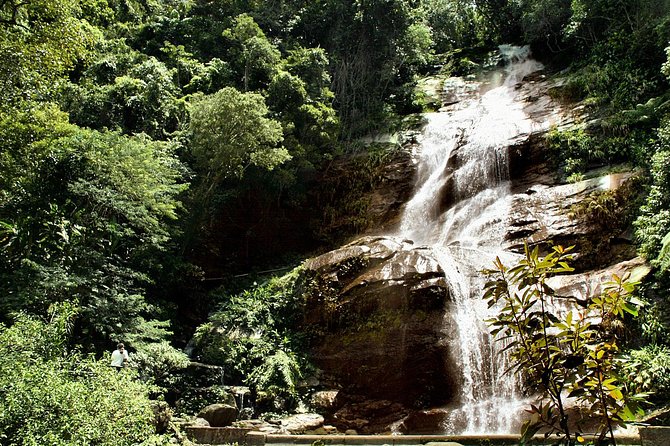
Cascatinha Taunay is one of the easiest places to appreciate the park’s scenery. You walk a short distance to a clear, picturesque waterfall surrounded by forest. The stop is brief, about ten minutes, so you get time for photographs but not an extended swim or picnic.
This is a good early taste of Tijuca’s character. Water, rock, tall trees, and city access all come together in one compact stop. If the weather is wet, the falls and foliage may look especially striking, but paths can also feel slick. Shoes with a decent sole are a sensible choice.
The tour also includes waterfall views at Cachoeira dos Primatas and the hike to Cachoeira dos Macacos, sometimes called the Waterfall of the Monkeys. The names suggest a wildlife guarantee, but they do not mean monkeys will appear. Wildlife sightings are unpredictable. You might spot monkeys, sloths, butterflies, birds, a coati, lizards, hummingbirds, or fish, but several people have seen little beyond trees and small reptiles.
That is important: this is a forest walk focused on plants, water, and ecology, not a safari. If you expect the Jeep to chase animals through thick forest, you may find the experience modest.
The gentle walk to Cachoeira dos Macacos
The tour’s main physical activity is an easy 15 to 30 minute walk on a gradual trail. Your guide leads you through the forest toward Cachoeira dos Macacos, with another waterfall, Cachoeira dos Primatas, included along the way.
You should be comfortable walking on an uneven outdoor path, but this is not presented as a strenuous hike. Most people can participate. The walk gives you time to look closely at the Mata Atlântica rather than simply pass it from a vehicle. Listen for birds and animal calls, and ask the guide to identify plants. Some guides are especially good at turning the walk into a lesson about local flora and fauna.
The short length suits a first visit to Rio, families, and anyone who wants a rainforest experience without giving up an entire day. It is less suitable if you want a long hike, serious exercise, or a remote wilderness outing.
Take care with expectations. The tour may show you a beautiful cascade, but the water level and appearance can change with weather. The experience also depends on how much time remains after pickups and how quickly the group moves.
More jeep tours around the city:
- Rio: Half-Day Jeep Tour at Floresta da Tijuca
★ 4.5 · 353 reviews - Rio de Janeiro: Jeep Tour in the Tijuca Forest
★ 4.2 · 108 reviews - Rio de Janeiro Jeep Tour : Tijuca Forest
★ 4.5 · 96 reviews - Rio de Janeiro: Jeep Tour Christ the Redeemer + Sugar Loaf
★ 4.6 · 21 reviews
Emperor’s Table combines history with a city view

At about 487 meters above sea level, Emperor’s Table is a lookout connected with Brazil’s royal past. The name comes from the story of Dom Pedro I stopping here for a meal while traveling from his residence at Quinta da Boa Vista toward Estrada da Vista Chinesa.
Today, the concrete lookout and surrounding stairs place you above much of Rio. The view illustrates the constant contrast of the city: forested slopes in one direction, dense urban development and water in another. It is a short stop of about ten minutes, but it adds historical context to the scenery.
The access details can change by day. One account notes that the table may require walking on weekends, so ask the guide how the stop will work on your departure. This is another reason to wear proper walking shoes even though the overall tour is easy.
Mayrink Chapel is the quietest stop
Mayrink Chapel is a small pink building tucked into the woods at roughly 460 meters. Built in 1860 by Portuguese banker Viscount de Souto, it later became one of Tijuca National Park’s cultural attractions.
The chapel is not large, and the stop lasts only about five minutes. Its appeal comes from the setting and small details. The altar has reproductions of sacred panels by Cândido Portinari. The gardens and the Carrara marble and tiled patio tub are linked to landscape designer Roberto Burle Marx.
You may not spend long inside, but the chapel breaks up the nature stops with a bit of art and Brazilian history. It also makes a good photo stop because the pink walls contrast with the surrounding trees.
Vista Chinesa is the photo star
Vista Chinesa, or Chinese View, is the tour’s biggest payoff for many people. The bamboo-and-cement pagoda-style lookout was built between 1902 and 1906, honoring the Chinese workers who brought tea cultivation to Brazil in the early nineteenth century.
At about 380 meters above sea level, the viewpoint opens toward Ipanema and Copacabana beaches, Guanabara Bay, and Niterói in the distance. On a clear day, you get a memorable sense of how Rio’s forest and city fit together. This is the place to keep your camera ready.
The stop is usually about ten minutes, which is enough for photographs but not a long period of quiet sightseeing. Weather makes a real difference. In rain or low cloud, the view may be limited, though the forest itself can still be attractive. Several departures have had good experiences in rainy conditions, but you should not book the tour solely for the panorama if the forecast is poor.
The most important scheduling warning is simple: Vista Chinesa is not available on Saturdays, Sundays, or holidays because of forest regulations. If this viewpoint is central to your plans, choose a weekday.
What the open Jeep adds, and what it does not

The Jeep gives the trip a playful Rio feel. You get natural air, a higher view than a normal car, and a sense that you are heading into an adventure rather than simply transferring between sights. The ride is part of the atmosphere.
Still, the vehicle is not the main attraction. The tour does not describe a long off-road drive deep into the forest. Much of the value comes from getting to the park, stopping at viewpoints, and walking the trails. One sensible criticism is that the Jeep can feel unnecessary when you are not driving far from the road. The narrow bench seats may also be uncomfortable, especially for taller people or anyone sensitive to bumpy rides.
Think of the Jeep as a fun open-air transport choice, not as a wildlife vehicle. If you want comfort above all else, a regular vehicle may appeal more. If you like fresh air and a slightly old-fashioned sightseeing feel, the Jeep is a plus.
Guides make the four hours work
The strongest part of this activity is the guide. A good guide connects the trees, waterfalls, views, and history into one story. You can expect explanations about reforestation, the Mata Atlântica, animals, Brazilian history, and the meaning of places such as Vista Chinesa and Emperor’s Table.
Several guides have made a particularly strong impression on past departures. Eddie has been praised for detailed explanations and for allowing time to take photographs. Everton has been noted for covering the park’s different sections and speaking several languages. Lucy has been described as clear and patient when answering questions. George has combined plant knowledge, Rio history, and humor, while Mario has been valued for interesting explanations and good photo stops. Andrea has helped solo passengers with pictures and offered practical suggestions for other activities, and drivers such as Gilmar and Jimal have been praised for punctuality and care.
Guide quality can vary, of course. The experience is much better when you ask questions rather than simply ride along. If you want to learn the names of plants or understand the animal calls, speak up.
Pickup is the biggest practical risk
Roundtrip hotel transport is included for most hotels in Downtown, Rio’s South Zone, and Barra da Tijuca. That is a major convenience in Rio, where getting to the park independently can take extra planning.
The weak point is communication. Some departures have had pickup confusion, including people waiting at a hotel address and later being directed to another hotel about 15 minutes away. Other passengers have reported no vehicle or message arriving at all. These problems are not part of the forest experience, but they can ruin a short holiday morning.
Pay close attention to your neighborhood and the two pickup options, which have different prices. Confirm the exact meeting point and departure time after booking, and keep your phone available that morning. The final departure time is determined after reconfirmation, so do not assume the time shown during initial booking is the last word.
The operator is Gray Line Brazil. The tour is free to cancel up to 24 hours before the start time for a full refund. Changes or cancellations inside that 24-hour window are not accepted.
Is the $88.21 price fair?
At $88.21 per person, this is not the cheapest way to see trees in Rio. You are paying for hotel transport, a multilingual guide, the Jeep, national park access, the short hike, and several scenic and cultural stops.
I think the value is fair if you have only half a day and want someone else to handle the route. The hotel pickup saves time, and the guide adds context you would miss by simply walking to a waterfall. The combination of nature, history, and city views gives you more variety than a basic park transfer.
The price feels less attractive if your main goal is wildlife or a long hike. Animals may not appear, the Jeep seats are small, and some stops are very short. If you are staying close to Tijuca and are comfortable arranging your own transport, an independent visit may offer more time in the forest, though you would lose the guide’s explanations and the packaged route.
Who should book this Tijuca Forest tour?
I would choose this experience if you want a manageable introduction to Rio’s rainforest. It suits first-time visitors, families, solo travelers, couples, and anyone with a free morning or afternoon who does not want a demanding trek.
It is also a good choice if you enjoy learning as you go. The best moments may come from identifying a plant, hearing why the forest was replanted, or understanding how the viewpoints connect Rio’s royal and modern past.
I would hesitate if you need firm pickup arrangements, dislike open vehicles, or expect frequent animal sightings. I would also avoid a weekend booking if Vista Chinesa is essential. For the strongest chance of a clear view, plan a weekday and keep your schedule flexible around the four-hour duration.
Should you book it?
Book it for a short, varied introduction to Tijuca National Park, especially if hotel transport and a multilingual guide matter to you. The waterfall walk is easy, the viewpoints are excellent on a clear day, and the forest’s closeness to Rio makes the outing efficient.
Before paying, confirm your hotel’s pickup point, the final departure time, the guide language, and the day’s access to Vista Chinesa. Go expecting plants, waterfalls, history, and city views, with wildlife as a bonus. That expectation matches the experience far better than treating the Jeep like an animal-spotting safari.
FAQ
How long does the Tijuca Rain Forest tour last?
The experience lasts approximately four hours, including hotel pickup, transport, forest stops, the short hike, and return drop-off.
Where is hotel pickup available?
Pickup and drop-off are available from most hotels in Downtown Rio, the South Zone, and Barra da Tijuca. Two pickup options are available with different prices, so check the neighborhood and meeting details carefully.
Is the hike difficult?
The hike is described as easy, with a gradual trail taking about 15 to 30 minutes. Comfortable clothing and shoes are recommended.
Which waterfalls will I see?
The route includes Cascatinha Taunay, Cachoeira dos Macacos, and Cachoeira dos Primatas. The walk leads to waterfall views, but swimming and food stops are not included.
Can I visit Vista Chinesa on a weekend?
No. Forest regulations prevent visits to Vista Chinesa on Saturdays, Sundays, and holidays.
What wildlife might I see?
Possible sightings include sloths, monkeys, butterflies, birds, coatis, lizards, hummingbirds, and fish. Wildlife is not guaranteed.
What languages are available?
The tour is available in English, Spanish, German, Italian, French, and Portuguese. Confirm your preferred language when your departure is reconfirmed.
Is food included?
No. Food and drinks are not included. Bring a bottle of water, especially in hot weather.
What happens if I need to cancel?
You can cancel at least 24 hours before the experience for a full refund. Cancellations or changes made less than 24 hours before the start time are not accepted.
Just added around Rio
- Rocinha Jeep Tour: A Journey into the Soul of the Favela!★ 3.8 · 3 reviews
- Tijuca National Park and all its wonders!★ 5.0 · 3 reviews
- Rio de Janeiro: Doors-off 30-min helicopter tour★ 5.0 · 3 reviews
- Rio de Janeiro: Hang gliding adventure★ 3.7 · 3 reviews
- Rio: Best Dive Experience All Inclusive Scuba Diving Package★ 5.0 · 3 reviews
- Pedra Bonita Trail: The easiest trail with a beautiful view of Rio★ 4.6 · 3 reviews
- Rio de Janeiro Secluded Beaches: Hike+Swim Prainha & Grumari★ 5.0 · 3 reviews
- Unforgettable Boat Party★ 5.0 · 3 reviews
Tijuca Forest Tours, compared.


Tijuca Forest Small Group Hike to Caves and Waterfalls
Read our review →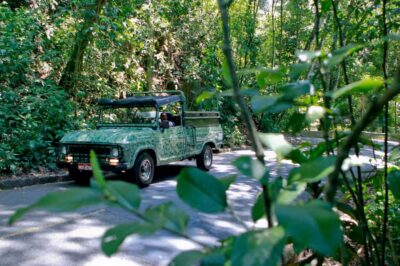
Rio de Janeiro Botanical Garden & Tijuca Forest Tour
Read our review →
Browse the lists this tour appears in