
Reviewed · TIJUCA FOREST TOURS
Rio: Tijuca Forest Small Group Hike to Caves and Waterfalls
Tijuca Forest is not just a patch of trees beside Rio. It is a 19th-century coffee plantation area turned into the world’s largest replanted urban forest, and this six-hour outing shows you the traces of both past and present. You walk 6.2 kilometers through rough rainforest trails to waterfalls, a chapel, a cave, a suspension bridge, and old plantation ruins.
I like two things especially. First, the small-group format gives guides such as Vini, Riccardo, Tito, and Renata room to explain Brazil’s history, geology, plants, and wildlife instead of simply pointing down a trail. Second, the Baronesa Cascade shower near the end is a fine reward after the uphill sections. The main consideration is fitness: 448 meters of elevation gain and uneven, wet ground can feel harder than the distance suggests.
In This Review
- Key points to know before booking
- Why Tijuca Forest is worth your half-day
- Pickup from Copacabana, Ipanema, and nearby neighborhoods
- Cascatinha Taunay begins the forest story
- Mayrink Chapel and the old plantation roads
- Cova da Onça, the bridge, and the eucalyptus grove
- Morcego’s Grotto, Brazil’s large gneiss cave
- Baronesa Cascade is the best payoff
- The return route adds more history and a viewpoint
- How hard is 6.2 kilometers?
- The guide can make or break the experience
- Is the $69 price good value?
- What to pack and how to prepare
- Should you book the Tijuca Forest hike?
- FAQ
- How long is the hike?
- How difficult is the route?
- Is hotel pickup included?
- What if my hotel is not listed for pickup?
- Is the tour offered in English?
- Can I swim under a waterfall?
- Are food and drinks included?
- Is the tour suitable for everyone?
Key points to know before booking
- A forest walk with a past: Coffee plantations, an old slave cemetery, a former estate, and a chapel give the rainforest a human story.
- Two very different waterfalls: Cascatinha Taunay is the park’s major waterfall sight, while Baronesa Cascade is the place to cool off.
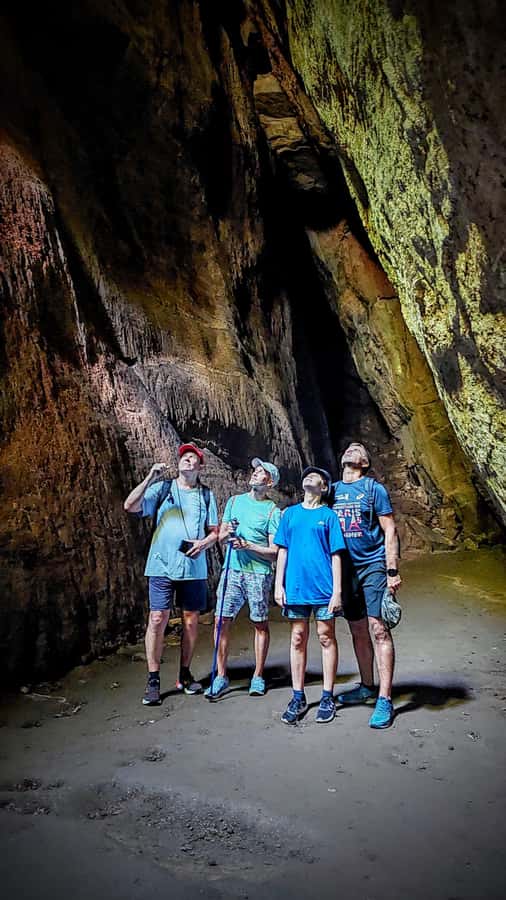
- Morcego’s Grotto: This large gneiss cave adds a bit of adventure, though bats may be resting out of sight.
- A genuine workout: The route covers 6.2 kilometers in roughly two and a half to three hours, with 448 meters of climbing.
- A useful guide makes a difference: English and Portuguese guides explain the forest and connect it to Rio and Brazilian history.
- Simple transport: Pickup and drop-off are included from designated hotels and hostels in Rio’s South Zone.
Why Tijuca Forest is worth your half-day
Rio gives you beaches, viewpoints, and grand city scenes. Tijuca Forest gives you a different side of the city: shade, steep green hills, water, stone, and the sound of rainforest life close to busy neighborhoods.
The forest’s story makes this more than a routine nature walk. Much of Tijuca was cleared for coffee farming in the 19th century. Later, the area was replanted, helping restore water sources and protect the hills above Rio. As you walk, the old roads and ruins show how quickly land can change from plantation to woodland and then to national park.
I appreciate that the route does not rely on one big viewpoint. Instead, it builds interest through a string of smaller places. One stop offers a waterfall, another a painted chapel, another a cave or bridge. You get a fuller sense of the park than you would from a short roadside visit.
The forest is also cooler than Rio’s open streets, with much of the hike under shade. That does not remove the need for sunscreen and water, but it makes the route more pleasant on a warm day. Rain is possible, and a wet forest can make the trail more atmospheric while also making rocks and slopes more slippery.
More of the Tijuca forest:
- Rio de Janeiro: Christ, Selaron Steps, and Tijuca Park Tour
★ 4.7 · 857 reviews - Rio de Janeiro: Guided Jeep Tour through Tijuca Rainforest
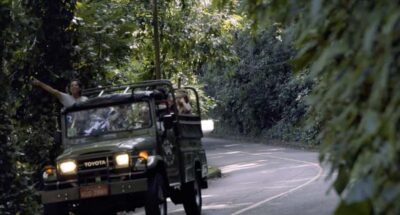
★ 4.3 · 740 reviews - Jeep Adventure: Guided Tour through Tijuca Rain Forest
★ 4.0 · 554 reviews
Pickup from Copacabana, Ipanema, and nearby neighborhoods
The tour includes transportation from designated hotels and hostels in Copacabana, Ipanema, Leblon, Leme, Flamengo, Santa Teresa, Gloria, Catete, Urca, and Praia de Botafogo. The long list of pickup points is useful if you are staying in Rio’s South Zone, but do not assume every address is automatically covered. Confirm your hotel or use the nearby meeting point supplied by the operator.
Pickup and drop-off save you the trouble of arranging a separate ride to the forest. The transfer is short enough that this convenience matters, though one recent assessment found the van a little cramped for taller passengers. Another useful improvement would be receiving the vehicle’s model or license plate in advance, so check the meeting instructions carefully on the day.
Groups are small, and private arrangements are also available. A small group is a good fit here because the trail has several points where you will want to stop, ask questions, and move at a comfortable pace. The group size can vary, but some departures have had only two people, while others have had around five.
Cascatinha Taunay begins the forest story
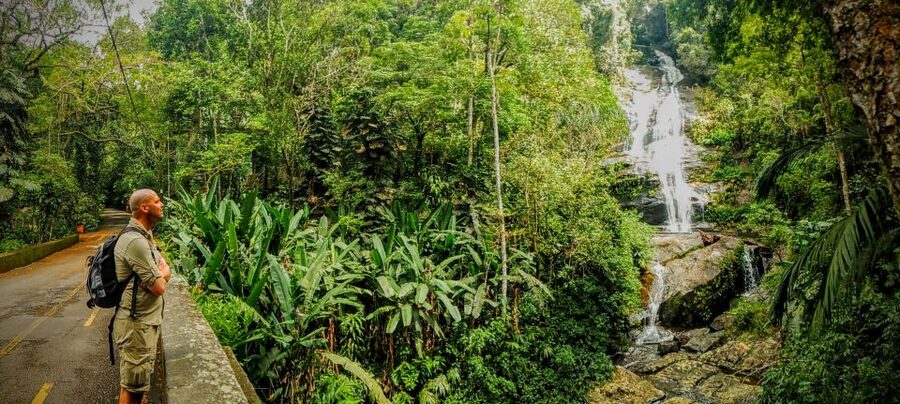
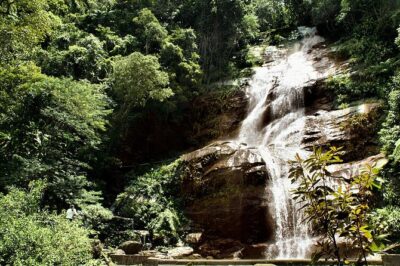
The first major stop is Cascatinha Taunay, the park’s largest and best-known waterfall. It is a short sightseeing stop rather than the main swimming point, so expect time for photographs and an introduction to the park rather than a long stay in the water.
This is a good opening because it gives you an immediate sense of the forest’s scale. Water drops through the trees and stone, while the guide explains the setting and the role of Tijuca National Park. The route then moves away from the most obvious attraction and onto older paths.
That change matters. A quick waterfall stop alone would make a thin half-day. Here, Cascatinha is the beginning of a connected walk through the park’s natural and cultural past.
Mayrink Chapel and the old plantation roads
The Mayrink Chapel dates from 1850 and makes a quiet contrast with the forest around it. The stop is brief, mainly for viewing and photographs, but it helps you picture the people who once owned, managed, or worked this land.
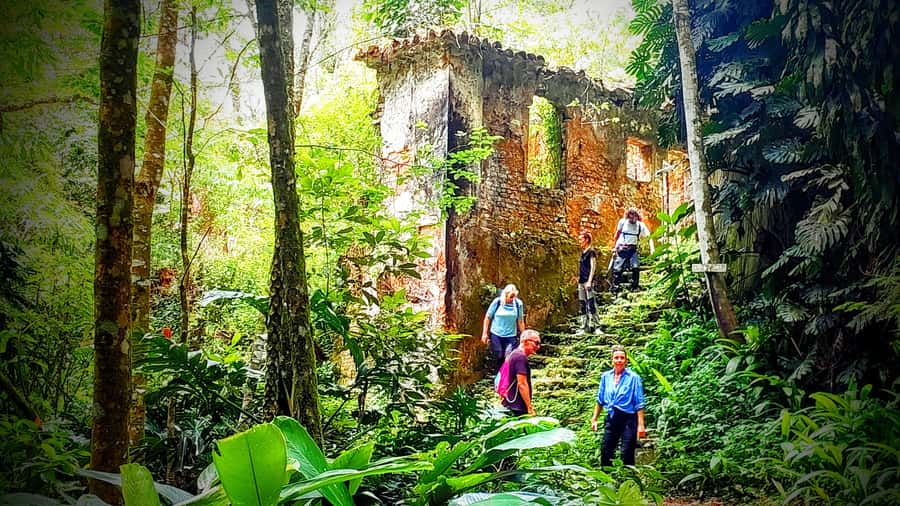
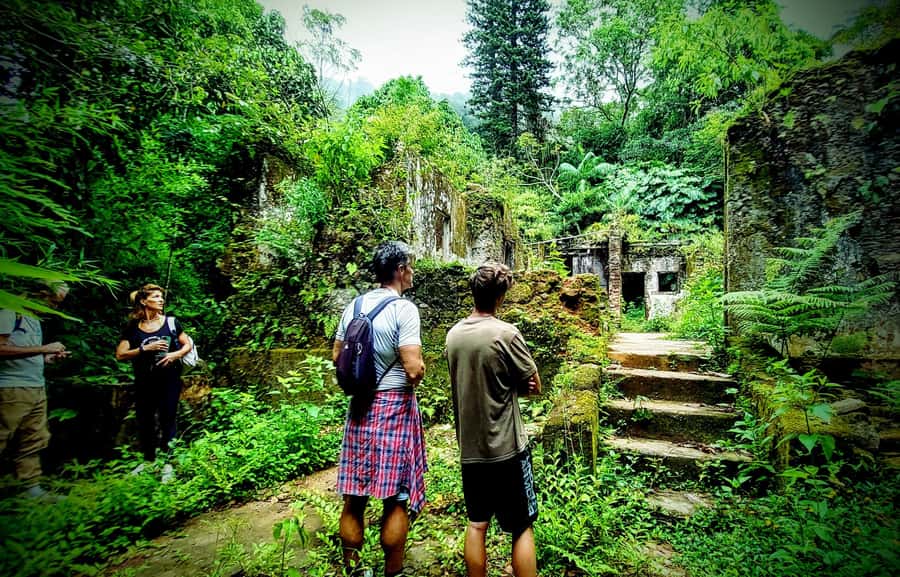
The trail itself follows routes made in the 19th century. Underfoot, you should expect rainforest rough terrain rather than a smooth park promenade. The route rises and falls, and the stated 448-meter gain is worth taking seriously.
Guides often use this part of the walk to explain how Rio developed around the forest. Tito, Riccardo, Vini, and other guides have been praised for linking local history with geography and plant life. A good guide turns an old wall or path into evidence of how the city and forest have shaped one another.
More hikes around Rio:
- Pedra do Telégrafo Hike and Beach Full-Day Tour
★ 4.5 · 417 reviews - Rio de Janeiro: Pedra da Gávea 7-Hour Hike
★ 4.7 · 183 reviews - Rio de Janeiro: Tijuca Forest Challenge Hike Full-Day Trip
★ 4.9 · 163 reviews - Rio de Janeiro: Vidigal Favela Tour and Two Brothers Hike
★ 4.5 · 121 reviews
Cova da Onça, the bridge, and the eucalyptus grove
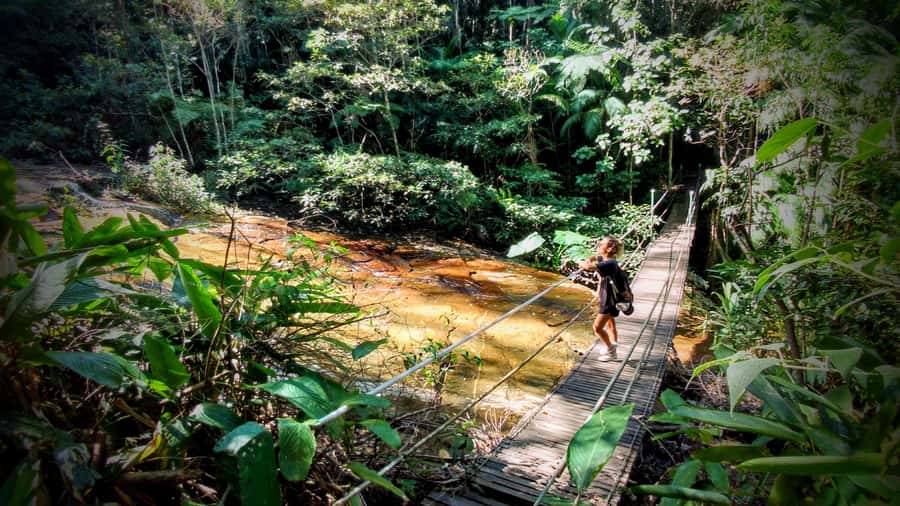
Cova da Onça Suspension Bridge adds a small thrill to the route. It is not the central challenge of the hike, but it breaks up the walking and gives you another way to experience the forest.
The eucalyptus grove brings a more sobering detail. It contains an old slave cemetery, a reminder that the plantation era was built on forced labor. This is one of the places where the tour’s historical side earns its keep. You are not simply walking past exotic plants. You are seeing a landscape marked by Brazil’s colonial and agricultural past.
There are also several short photo stops and a secret stop along the circuit. The exact appeal of these pauses depends on the guide and the conditions that day. They may focus on unusual rock formations, vegetation, views, or a small historical detail. Let the guide set the pace rather than expecting every stop to be a major attraction.
Morcego’s Grotto, Brazil’s large gneiss cave
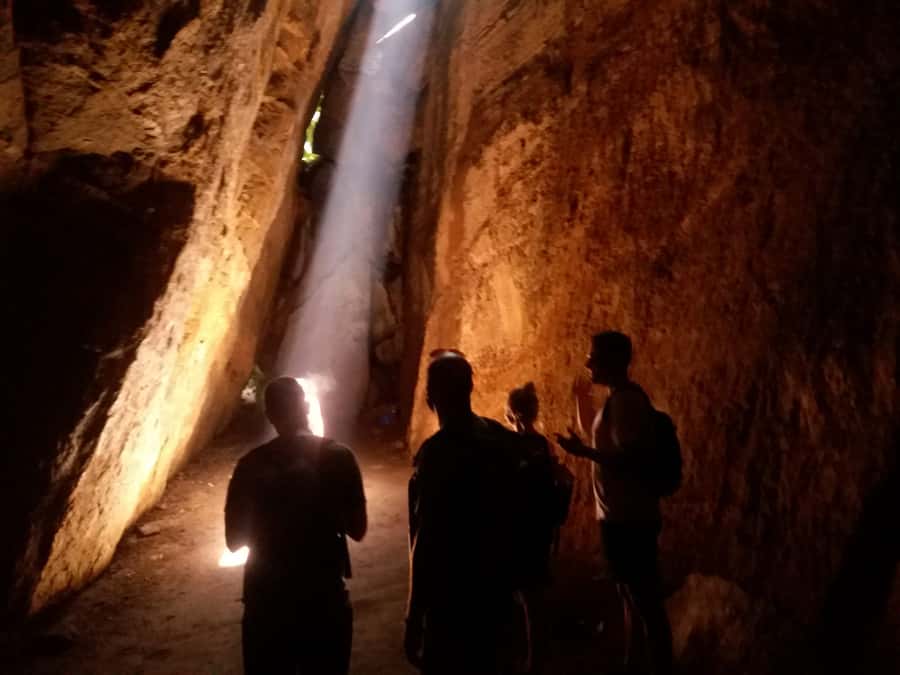
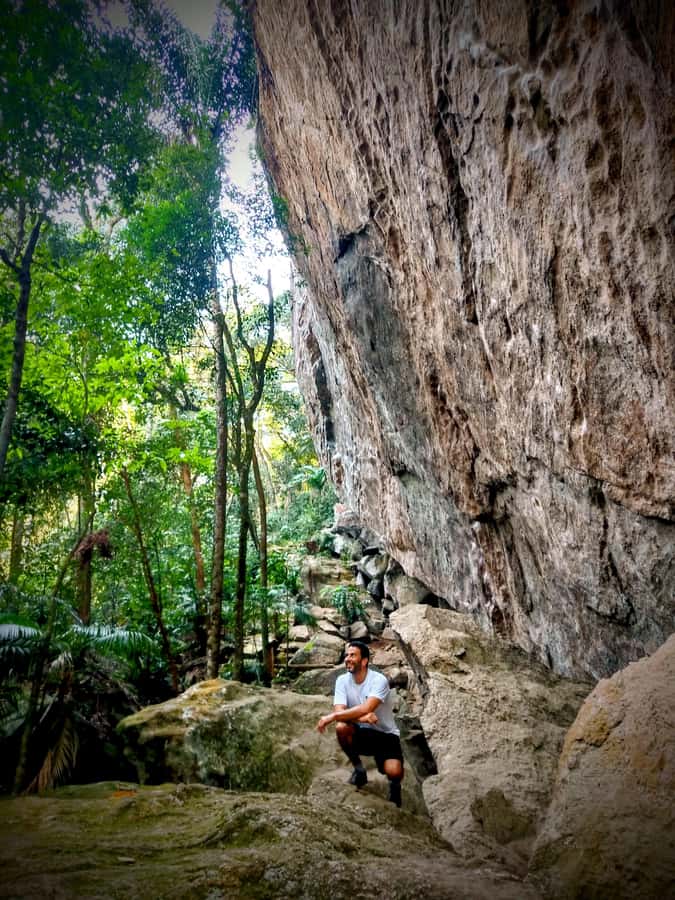
Morcego’s Grotto, also called the Bat Cave, is the route’s most adventurous stop. It is described as the largest gneiss cave in Brazil, and entering the rock chamber changes the mood of the walk. You leave the open forest for a darker, cooler space shaped by Rio’s geology.
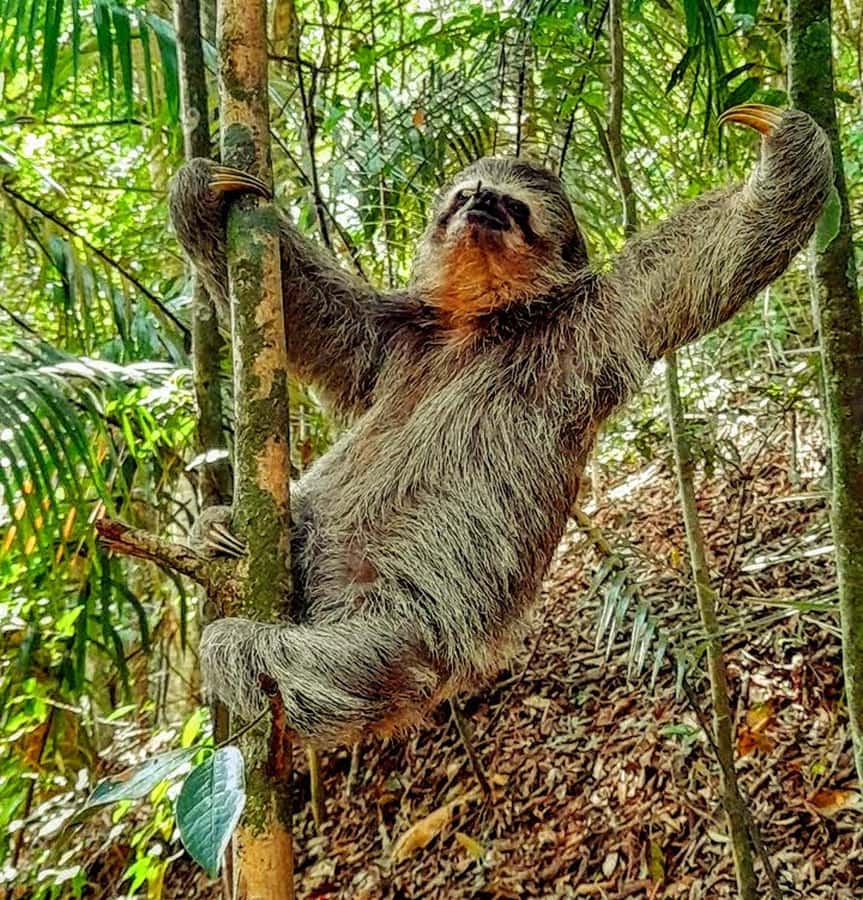
Do not book this excursion solely to see bats. They may be present, but they may also be resting out of view. One careful guide chose not to disturb hibernating bats, which is exactly the right approach in a protected forest. Wildlife sightings are never guaranteed, and some outings see monkeys, coatis, or a sloth while others see no animals at all.
That variation is part of the deal with Tijuca. The forest’s plants, rock, water, and history are more dependable than its animals. Guides can point out wildlife signs and explain the ecosystem, but they cannot summon a monkey for your camera.
Baronesa Cascade is the best payoff
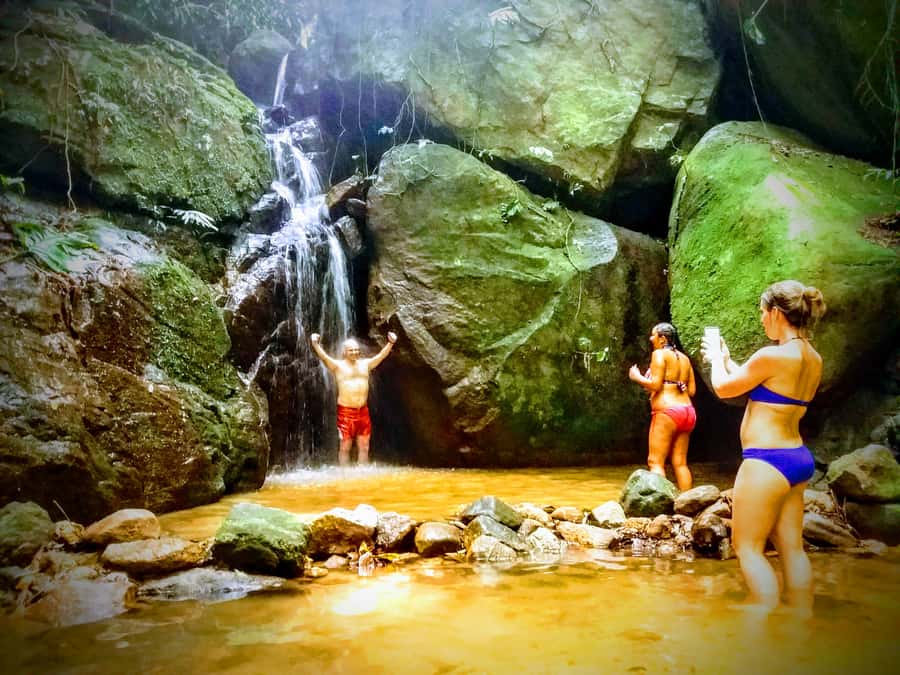
After the cave and more trail walking, you reach Baronesa Cascade. This is the point where you can cool off under the water. It is not a grand resort-style swimming area, and you should bring practical clothing rather than expecting facilities, but a waterfall shower is a welcome finish to a humid hike.
The timing is smart. By placing the cascade after the main climbing and sightseeing, the tour gives you a physical reward at the moment you want it most. Wear sports clothing and shoes that can handle wet ground. Bare feet are not allowed, so keep your footwear on around the falls.
The waterfall is also a good reminder to pack a small towel or spare shirt, though those items are not listed as required. The official advice does clearly call for water, snacks, sunscreen, insect repellent, sports shoes, sportswear, and a daypack. Bring your own food and drinks because they are not included.
The return route adds more history and a viewpoint
The walk back passes the former residence of Barão d’Escragnolle, once one of the park’s managers. The building is now associated with Esquilos restaurant, giving you another glimpse of the park’s administrative and social past.
You also see the Wallace Fountain, a gift from English philanthropist Richard Wallace to Brazil, produced in France in 1870. Its sculpture represents goodness, charity, sobriety, and simplicity. It is an unusual detail to find in a rainforest circuit, and it shows how Rio’s public art and European connections reached into the park.
Mirante da Palmira and another viewpoint provide scenic pauses along the way. These stops are short, but they help break up the final stretch. If the day is clear, the views give you a sense of how close the city remains, even when the trail feels remote.
Do not expect a high mountain trek with nonstop panoramic views. The route is primarily a forest experience, and the best sights are often close at hand: water, roots, stone, ruins, and plants. That is a strength if you want nature without leaving Rio for a full day.
How hard is 6.2 kilometers?
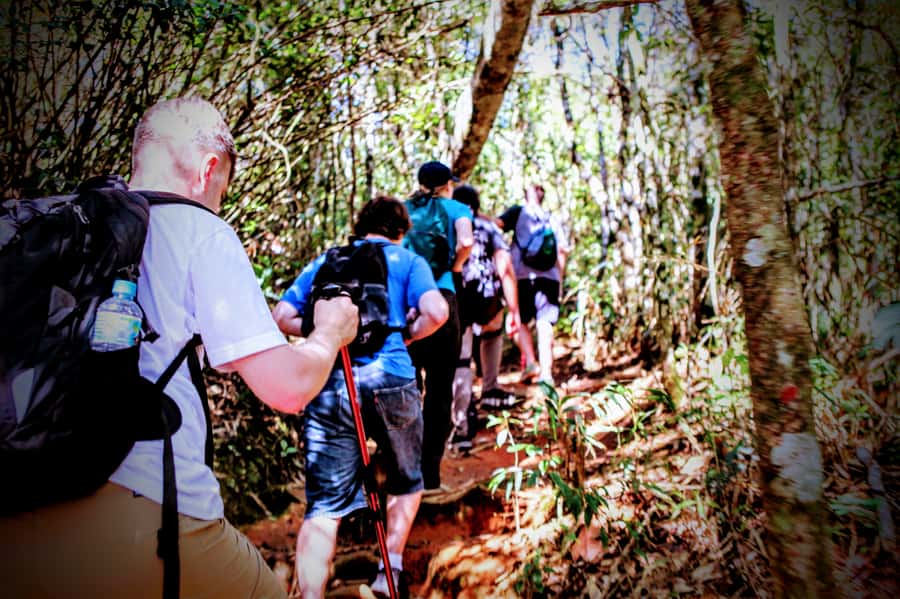
The tour describes the hike as moderate, lasting about two and a half to three hours, with 448 meters of elevation gain. That is a compact distance with a serious amount of climbing, so your normal walking pace is not the only thing to consider.
Some people find it fairly easy, while others are surprised by the steep section. The route includes uphill and downhill walking on rough rainforest ground. Rain can add another layer of difficulty, although guides may provide ponchos when conditions turn wet.
You should be comfortable walking for several hours and handling short steep climbs. The tour is not suitable for wheelchair users or people with heart problems. It is also not a good match if you want a flat sightseeing outing or have only packed city shoes.
A guide can help with pacing. Diana, for example, described a steep section as a real challenge but also found the group and guide supportive. That is an important point: the small-group setting can make the walk feel more manageable, but it cannot remove the climb.
The guide can make or break the experience
The strongest part of this outing is the guiding. The best guides do much more than lead the way. They explain Brazil’s social and political story, identify plants, discuss geology and geography, and show how the replanted forest functions today.
Vini is especially associated with lively explanations of Brazil, Rio, wildlife, and the forest. Riccardo is known for a cheerful, engaging style, while Tito has been praised for mixing humor with careful attention to the group. Renata brings a strong sense of care and clear explanations, and Luiza’s background in botany adds depth to discussions of the ecosystem.
Guide quality can still vary from one departure to another, and personal chemistry always plays a part. But the tour’s design gives the guide plenty to work with. The old chapel, cemetery, cave, plantation remains, and fountains create natural openings for explanation.
The bilingual format is English and Portuguese. If you care about detailed interpretation, listen actively and ask questions. This is not a silent hike, and the value rises sharply when you engage with the guide.
Is the $69 price good value?
At $69 per person, the price is reasonable for a six-hour outing that includes transportation from designated South Zone hotels, a bilingual guide, and insurance. You are paying for more than access to a forest trail. You are also getting transport, route-finding, historical context, cave access, waterfall stops, and a guide who can adjust the pace.
The value is strongest if you are staying in the pickup area and want a well-organized half-day without arranging a taxi or planning the route yourself. It is also strong for first-time visitors who want a practical introduction to Tijuca.
The value is weaker if you only want a short nature walk, dislike group transport, or expect guaranteed wildlife. Food, drinks, and transport from outlying areas cost extra. The van may feel tight for tall people, and some forest attractions can be busy when other people arrive.
Still, the combination of city convenience and real trail time is hard to fault. The tour gives you a meaningful forest outing without using an entire day of your Rio visit.
What to pack and how to prepare
Pack light. Large bags and luggage are not allowed, so use a small daypack. Bring more water than you think you need, plus snacks or a packed meal.
Wear sports shoes with a secure sole. The route can include wet rock, mud, roots, and steep ground. Sandals and casual city shoes are poor choices, especially if rain is in the forecast.
Your short packing list should include:
- Water and snacks
- Sunscreen
- Insect repellent
- Sports shoes
- Breathable sportswear
- A small daypack
- A spare layer or shirt for the waterfall
You must provide your full name, passport number, and birth date for the included insurance. Alcohol and drugs, pets, bare feet, large bags, and luggage are not permitted.
The tour offers free cancellation up to 24 hours before departure, and you can reserve now and pay later. Check the available starting times because the full outing lasts six hours, including transportation.
Should you book the Tijuca Forest hike?
Book it if you want a guided introduction to Rio’s rainforest with real walking, not just a drive past trees. You will get the most from it if you enjoy history, plants, geology, and small sights as much as dramatic views.
It is especially suitable for reasonably fit visitors who want a half-day break from the beach and city streets. The waterfall shower, Morcego’s Grotto, chapel, suspension bridge, and plantation remains give the route variety. The guides are the main reason the experience feels substantial rather than like a simple marked trail.
Skip it if you need guaranteed animal sightings, a flat route, or a spacious private transfer. The forest may be quiet and full of life, but wildlife is unpredictable. At $69, though, this is a sensible way to see a less obvious side of Rio, provided you are ready for the hills.
FAQ
How long is the hike?
The hike covers 6.2 kilometers, or about 3.8 miles. The walking portion takes roughly two and a half to three hours, while the complete activity lasts six hours.
How difficult is the route?
It is rated moderate and includes uphill and downhill walking on rough rainforest terrain. The elevation gain is 448 meters, or 1,469 feet, so a reasonable level of fitness is required.
Is hotel pickup included?
Yes. Pickup and drop-off are included from designated hotels and hostels in parts of Rio’s South Zone, including Copacabana, Ipanema, Leblon, Leme, Flamengo, Santa Teresa, Gloria, Catete, Urca, and Praia de Botafogo.
What if my hotel is not listed for pickup?
The operator may provide a nearby meeting point. You should check with the local supplier to confirm whether pickup is possible from your exact hotel or address.
Is the tour offered in English?
Yes. The tour has live guides in English and Portuguese.
Can I swim under a waterfall?
You can cool off under Baronesa Cascade, described as a waterfall shower. Bring suitable sports clothing and keep your shoes on, since bare feet are not allowed.
Are food and drinks included?
No. You need to bring your own water, drinks, and snacks. Food and drinks are not included in the price.
Is the tour suitable for everyone?
No. It is not suitable for wheelchair users or people with heart problems. Participants also need to manage a moderate hike with steep sections and uneven rainforest ground.
Just added around Rio
- Rocinha Jeep Tour: A Journey into the Soul of the Favela!★ 3.8 · 3 reviews
- Tijuca National Park and all its wonders!★ 5.0 · 3 reviews
- Rio: Best Dive Experience All Inclusive Scuba Diving Package★ 5.0 · 3 reviews
- Rio de Janeiro: Doors-off 30-min helicopter tour★ 5.0 · 3 reviews
- Rio de Janeiro: Hang gliding adventure★ 3.7 · 3 reviews
- Pedra Bonita Trail: The easiest trail with a beautiful view of Rio★ 4.6 · 3 reviews
- Rio de Janeiro Secluded Beaches: Hike+Swim Prainha & Grumari★ 5.0 · 3 reviews
- Unforgettable Boat Party★ 5.0 · 3 reviews
Tijuca Forest Tours, compared.

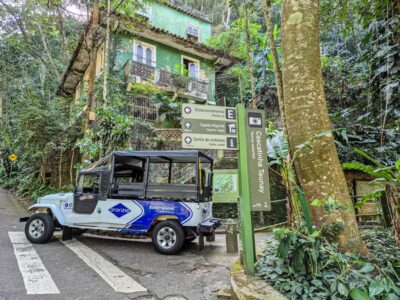
Jeep Adventure: Guided Tour through Tijuca Rain Forest
Read our review →
Rio de Janeiro Botanical Garden & Tijuca Forest Tour
Read our review →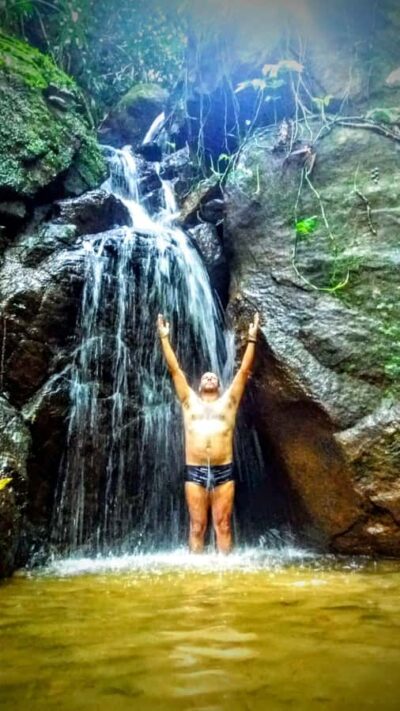
Browse the lists this tour appears in