
Reviewed · MARACANã STADIUM & FOOTBALL MATCHES
Rio de Janeiro: Flamengo Museum Ticket Entrance
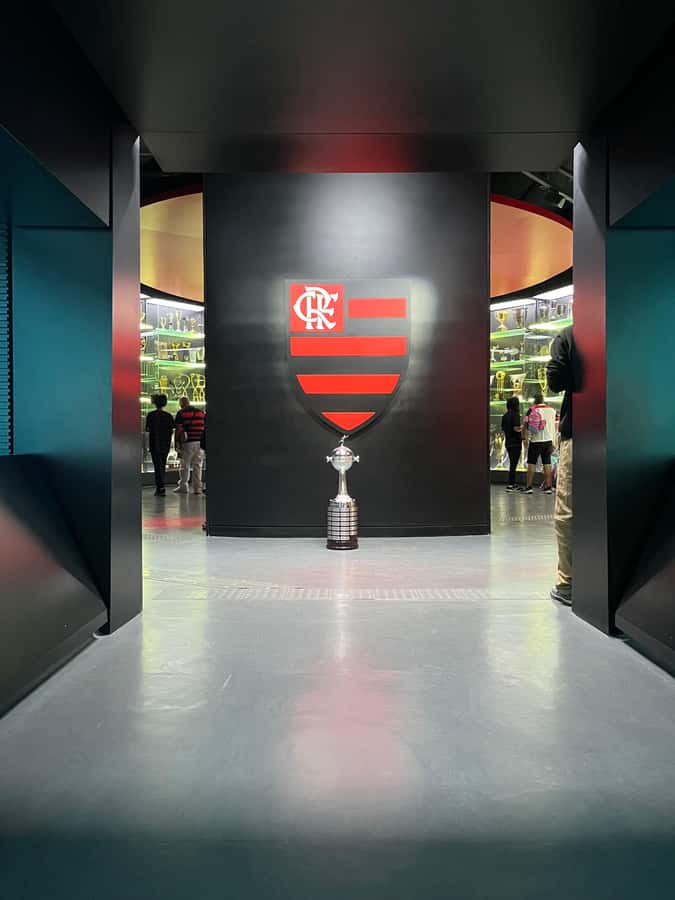
The Flamengo Museum turns club history into a full sensory show. You move from the early days of Clube de Regatas do Flamengo to its rise as one of Brazil’s biggest football powers, with giant screens, historic objects, idols, and a trophy room spread over four floors. The emotional Rubro-Negro atmosphere is the main attraction.
I like the clear timeline, which gives Flamengo’s sailing origins their proper place, and I like the mix of football with other sports and club figures. The 14 themed sections also offer more than rows of dusty cups. You get interactive rooms and carefully staged moments built for a passionate fan base.
The main consideration is simple: this is a Flamengo museum, not a general Rio sports museum. If you do not care much about the club, the strong team identity may feel narrow. Also, food, drinks, and a Gávea headquarters tour are not included.
In This Review
- Key points to know before you go
- From sailing club to football powerhouse
- Four floors of trophies and sporting memory
- Fourteen themed sections with a modern touch
- The Rubro-Negro feeling at Gávea
- A digital guide in English, Spanish, and Portuguese
- What the $18 ticket is really buying
- Practical rules that can affect your visit
- Who will get the most from this museum?
- How the museum feels in practice
- Should you book the Flamengo Museum?
- FAQ
- Where is the Flamengo Museum located?
- How much does admission cost?
- How long is the ticket valid?
- Is a Gávea headquarters tour included?
- Is a digital guide included?
- Is food or drink included?
- Can I take photos inside?
- Can I bring a pet?
- Can children visit alone?
- Can I cancel for a refund?
Key points to know before you go
- Four floors of trophies: The collection gives Flamengo’s silverware enough room to make an impression.
- A story beginning in 1895: You learn how a sailing club became a major force in world football.
- Fourteen themed sections: Screens, sensory rooms, and interactive displays keep the visit moving.
- A digital guide in three languages: English, Spanish, and Portuguese support are included.
- A Gávea location: The museum sits at Clube de Regatas do Flamengo’s headquarters in Rio’s South Zone.
- A strong 4.7 rating from 22 reviews: The most praised qualities are the emotional presentation, the Rubro-Negro setting, and the sense of club identity.
From sailing club to football powerhouse
The best feature of the Flamengo Museum is its starting point. Flamengo did not begin as a football empire. Its story reaches back to 1895, when Clube de Regatas do Flamengo was founded as a sailing club.
That opening matters because it gives the football story some useful context. You are not simply looking at goals, titles, and famous shirts. You are following the growth of a sporting institution that developed across several disciplines before becoming a football giant.
The museum presents this change as a central part of the visit. I like that approach. A club with more than a century of life deserves more than a highlight reel of recent victories, and the early sailing connection gives the collection a stronger backbone.
As you move forward, the focus shifts toward the football identity most people associate with Flamengo. The red and black colors, known in Brazil as Rubro-Negro, become the visual and emotional thread tying the rooms together.
The supplied feedback repeatedly praises the feeling of the place. One short comment focused on logos and history. Another called the experience emotional. That tells you what this museum is built to do: it wants you to feel the club’s identity, not just memorize dates.
More match days at the Maracana:
- Skip the Line Maracana Stadium Entrance Ticket
★ 4.0 · 203 reviews - Football Match in Rio de Janeiro – Guided with Transportation
★ 4.5 · 150 reviews - Rio de Janeiro: Football Game Ticket with Guide and a Drink
★ 4.6 · 124 reviews
Four floors of trophies and sporting memory
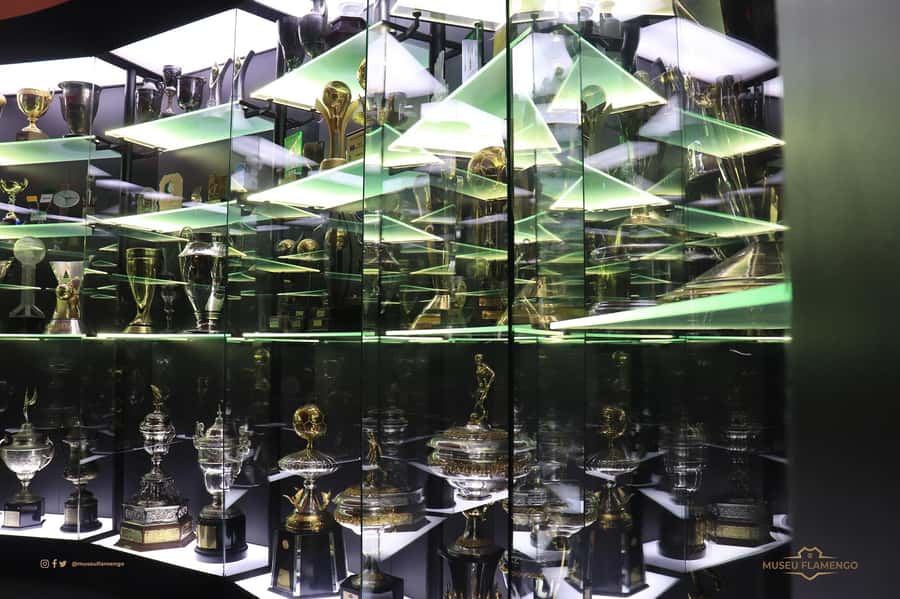
The trophy room is one of the clearest reasons to pay the $18 admission. Rather than squeezing the silverware into a single cabinet, the museum spreads it across four floors.
That arrangement gives the trophies room to function as part of the story. You can see the scale of Flamengo’s success and understand that the club’s achievements are not limited to one brief period.
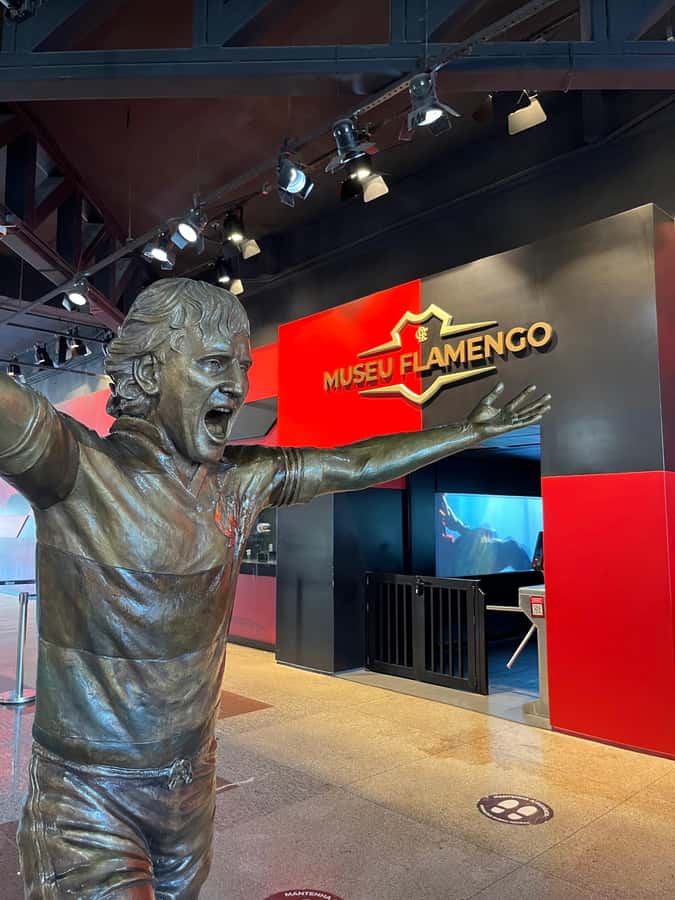
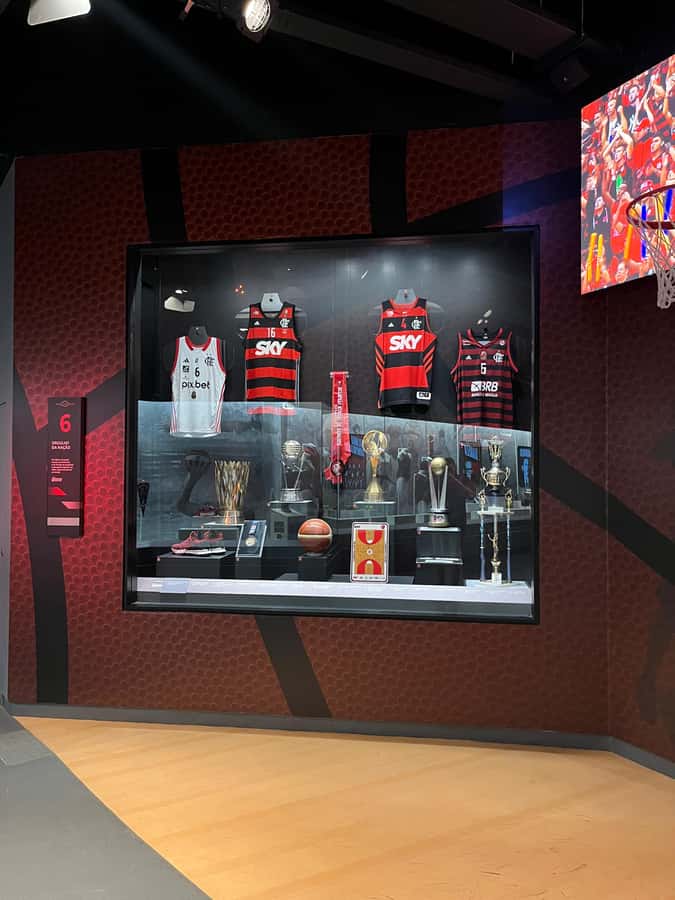
The museum also includes idols from several sports. This is important for longtime supporters who know Flamengo as more than a football side. It also helps explain the club’s wider sporting culture, even if football remains the star.
You should not expect a quiet, traditional museum built around long written labels. The emphasis is on objects, screens, sound, sensory settings, and visual drama. If you enjoy displays that put you inside the action, this format should suit you.
If you prefer a slow, scholarly presentation with extensive archival text, you may find the approach less satisfying. The information is presented through a designed experience, so the museum’s emotional effect often comes before detailed historical analysis.
Fourteen themed sections with a modern touch
The 14 themed sections are the heart of the visit. They combine technology, interactivity, and club history in different ways, giving the museum more variety than a simple corridor of memorabilia.
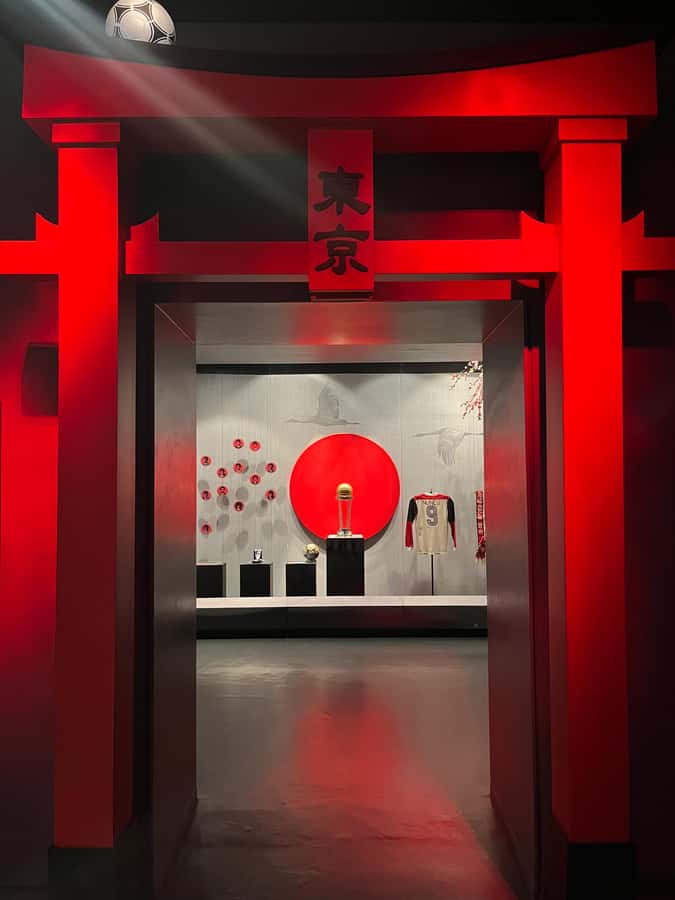
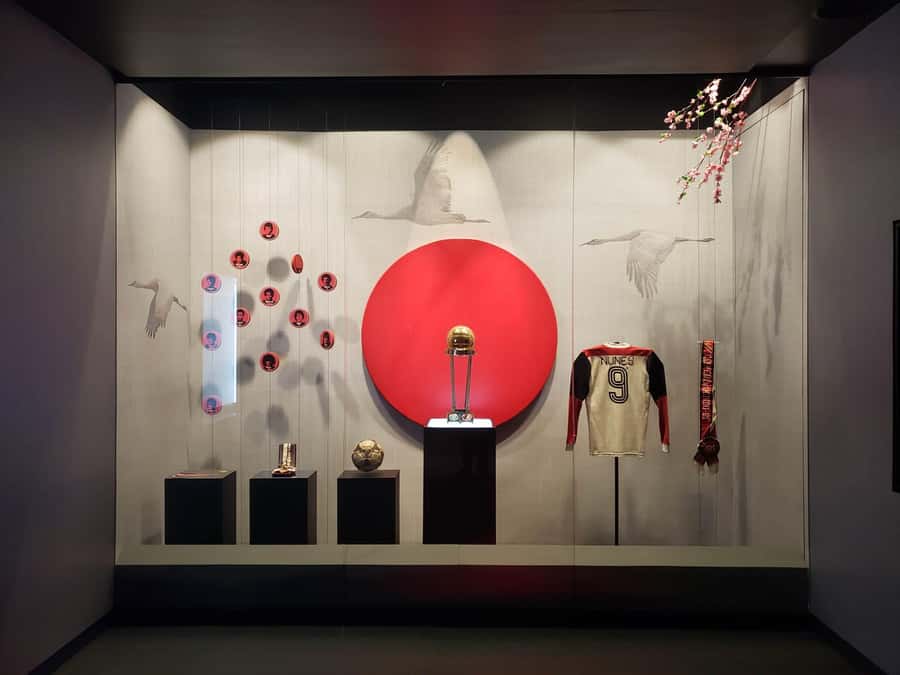
Giant screens recreate important moments from Flamengo’s past. Sensory environments add sound and atmosphere, while immersive rooms are designed to make you feel close to the team and its supporters.
I would allow time to pause in these spaces rather than rushing from one display to the next. A museum built around big moments can become a blur if you treat it like a quick photo stop. The details are easier to appreciate when you give each section a little breathing room.
The technology is also useful for a club with such a large fan base. A traditional object can show you what happened. A screen or sensory room can show you why the moment still matters to supporters.
The presentation team has worked on sports museums connected with River Plate, Boca Juniors, Juventus, and Benfica. That background helps explain the polished, international style of the museum. You are getting a purpose-built sports presentation rather than a temporary collection assembled in spare rooms.
Still, the presentation has a clear target. It is designed for people who already feel something for Flamengo, or who want to understand the scale of that support. The more personal your connection to the club, the more powerful the displays are likely to feel.
The Rubro-Negro feeling at Gávea
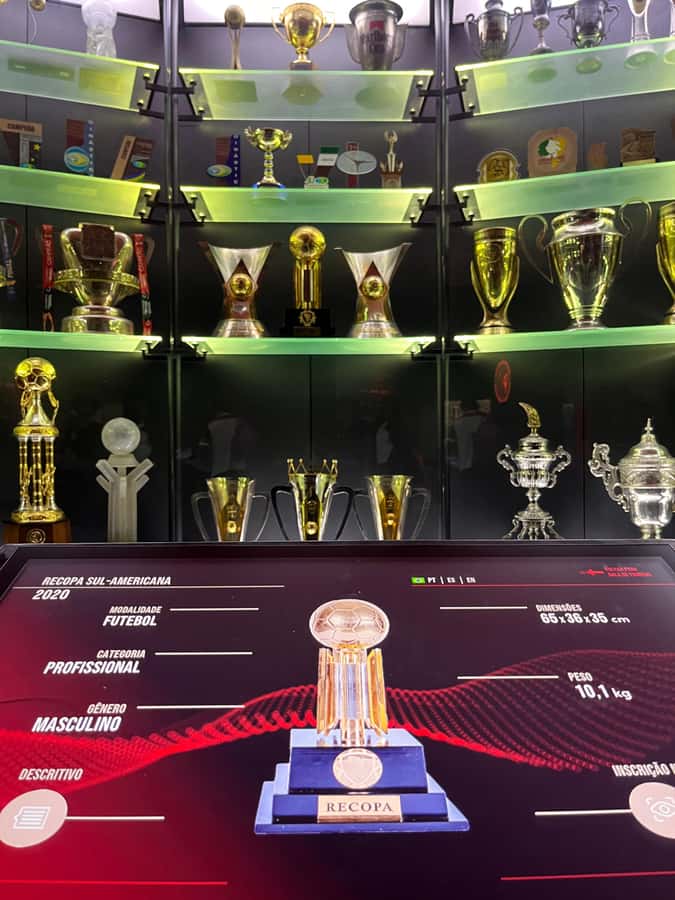
The museum is located at Flamengo’s headquarters in Gávea, in the South Zone of Rio de Janeiro. The location gives the visit a useful sense of place. You are not seeing the club’s story in a detached downtown gallery. You are entering the institution’s own home base.
That setting is part of the experience, but do not confuse the museum ticket with a tour of Gávea. A visit around the headquarters is specifically not included.
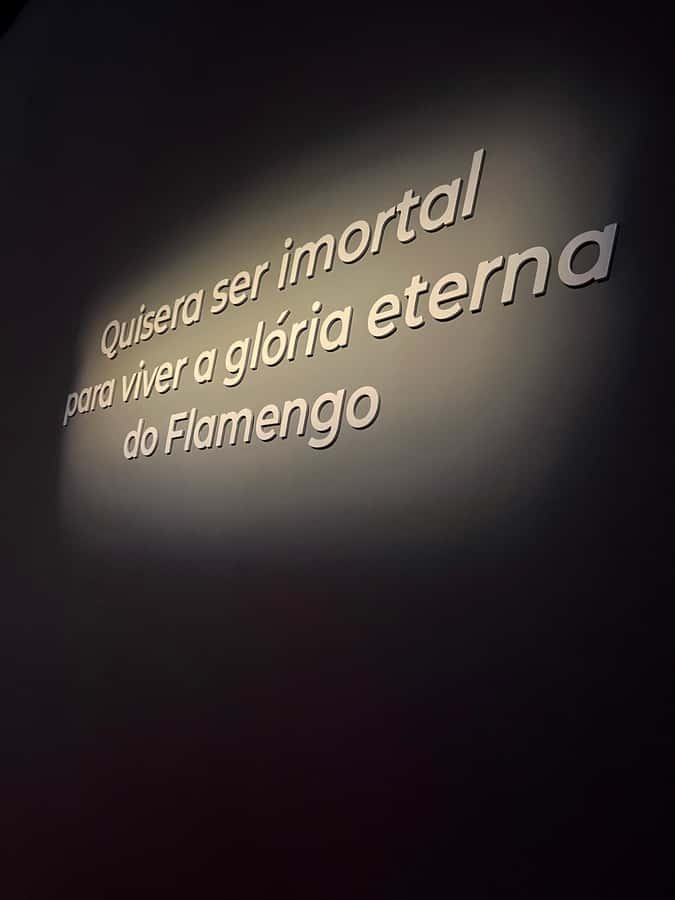
The club atmosphere comes through strongly in the museum’s design. One of the most praised elements is the Rubro-Negro experience, which ties together the colors, major moments, and emotional connection between the team and its supporters.
You will also find opportunities to see club products. One enthusiastic response specifically mentioned how good it was to acquire items from the team. The supplied details do not identify a shop layout or product range, so I would treat merchandise as a possible extra rather than a guaranteed part of the ticket.
The strongest reason to visit Gávea is the sense that you are standing inside Flamengo’s own world. That will mean more to a fan than a museum in a neutral location could manage.
More museums in Rio:
- Petrópolis Day Trip from Rio de Janeiro including Imperial Museum and Crystal Palace
★ 4.0 · 101 reviews - Olympic Boulevard, Museum of Tomorrow & Historical Rio
★ 4.5 · 66 reviews - Rio: Olympic Boulevard, AquaRio and Museum of Tomorrow Tour
★ 4.5 · 54 reviews - Rio: Olympic Boulevard, Museum of Tomorrow & History Tour
★ 4.1 · 47 reviews
A digital guide in English, Spanish, and Portuguese
Your ticket includes a digital guide available in English, Spanish, and Portuguese. This is a practical advantage, especially if you do not read Portuguese comfortably.
The guide should help you follow the club’s timeline and understand the significance of objects and displays. It also lets the museum serve an international audience without losing its Brazilian character.
The activity information lists instructor language support in Spanish, English, and Portuguese. No individual guide names are provided, and the ticket is primarily described around the digital guide rather than a named live tour leader.
That distinction matters. If you are expecting a personal, guide-led walk with a specific historian, this may not be the right assumption. You should expect a museum visit supported by digital language options.
I like this setup for an independent visit. You can set your own pace, spend longer with the rooms that interest you, and avoid being tied to a fixed spoken tour. The tradeoff is that you may not have a staff member explaining every display in person.
What the $18 ticket is really buying
At $18 per person, the ticket is not the cheapest way to fill an hour in Rio. Its value depends heavily on your interest in Flamengo.
For a committed supporter, the price covers a large, purpose-built presentation with four floors of trophies, 14 themed sections, historic objects, multiple sports figures, and a digital guide. The museum offers enough variety to feel like a main activity rather than a quick cabinet visit.
For a casual football fan, the decision is less automatic. You will still see a major Brazilian club presented through technology and sporting history, but the exhibition is built around Flamengo’s identity. The club, not Rio’s football culture as a whole, is the subject.
The one-day validity gives you flexibility around your Rio plans. It does not mean the museum takes a full day to visit. The available information confirms that the ticket is valid for one day, while starting times depend on availability.
Food and drinks are not included. Food, drinks, plastic bags, glass objects, and several other items are prohibited inside the museum, so plan to visit without refreshments in hand.
Cancellation is flexible up to 24 hours before the activity for a full refund. You can also reserve now and pay later, which helps if you are still arranging your Rio schedule.
Practical rules that can affect your visit
The museum has a strict list of prohibited items and behavior. Smoking and vaping are not allowed, and the rules also prohibit alcohol, drugs, weapons, sharp objects, glass objects, scooters, and fire.
Pets are not allowed, although assistance dogs are permitted. Unaccompanied minors are also not allowed, so families should plan for an accompanying adult.
Sportswear is listed among the prohibited items. That is an unusual rule for a football museum, so check the current entry conditions before you go rather than assuming a team jersey or athletic outfit will be accepted.
Inside, your phone should be on silent or airplane mode. Flash photography and filming are not allowed, and smoking anywhere on the museum premises is expressly forbidden.
These rules can feel strict, but they protect the displays and keep the sensory rooms from turning into a noisy free-for-all. Bring your phone for the digital guide, but use it quietly and without flash.
Who will get the most from this museum?
I would recommend the Flamengo Museum first to supporters, football historians, and anyone curious about how a Brazilian club builds a powerful public identity.
It should also work well for visitors who enjoy modern sports museums. The four-floor trophy display and 14 themed sections offer a good mix of objects and technology, while the digital guide makes the visit easier for international visitors.
Families need to pay attention to the unaccompanied-minor rule. The supplied information does not give an age policy beyond that restriction, so an adult should plan to remain with younger visitors.
This is less suitable if your main goal is to see Rio’s stadiums, tour Gávea, or learn about Brazilian football in general. The Gávea headquarters tour is not included, and the museum’s focus stays firmly on Flamengo.
It may also be a weaker choice for someone who wants a quiet collection with little sound or visual stimulation. Giant screens and sensory areas are central to the design.
How the museum feels in practice

The museum’s strongest quality is its emotional rhythm. The story starts with origins, moves through sporting achievements, and builds toward the club’s most memorable moments.
The atmosphere is clearly important. The Portuguese responses describe the experience as emotional and celebrate the Rubro-Negro setting. Another comment praises the overall environment and the chance to buy products connected with the team.
You do not need to understand every Portuguese phrase to grasp the basic message. The colors, objects, images, screens, and trophies carry much of the story. Still, the digital guide in English or Spanish is worth using if you want more context.
The visit also gives you a look at Flamengo’s broader sporting identity. Idols from several sports appear alongside football material, reminding you that the club’s history is wider than the sport most often shown on international television.
The museum aims for feeling and recognition. It wants you to remember the great moments and feel close to the supporters who lived them. That makes it particularly effective for people who already know the club’s symbols and heroes.
Should you book the Flamengo Museum?
Book it if Flamengo matters to you, or if you want a polished look at one of Brazil’s most important sporting institutions. The combination of a 1895 origin story, four floors of trophies, 14 technology-led sections, and a multilingual digital guide gives the $18 ticket solid value for fans.
Think twice if you want a general football museum, a Gávea tour, or a low-tech historical collection. Those are not what this ticket provides.
My practical call is simple: Flamengo supporters should make room for it in a Rio visit. Neutral football fans can book if the modern presentation appeals to them. Everyone else should spend the $18 elsewhere unless the club’s story is part of what brought them to Rio.
FAQ
Where is the Flamengo Museum located?
The museum is at the headquarters of Clube de Regatas do Flamengo in the Gávea neighborhood, south of central Rio de Janeiro.
How much does admission cost?
The listed price is $18 per person.
How long is the ticket valid?
The ticket is valid for one day. Starting times depend on availability.
Is a Gávea headquarters tour included?
No. A tour of Gávea is not included with the museum ticket.
Is a digital guide included?
Yes. The digital guide is available in English, Spanish, and Portuguese.
Is food or drink included?
No. Food and drinks are not included, and food and drinks are not allowed inside the museum.
Can I take photos inside?
Flash photography and filming are not allowed. Your cell phone should be on silent or airplane mode.
Can I bring a pet?
Pets are not allowed. Assistance dogs are permitted.
Can children visit alone?
No. Unaccompanied minors are not allowed.
Can I cancel for a refund?
Yes. You can cancel up to 24 hours in advance for a full refund. You can also reserve now and pay later.
Just added around Rio
- Rocinha Jeep Tour: A Journey into the Soul of the Favela!★ 3.8 · 3 reviews
- Tijuca National Park and all its wonders!★ 5.0 · 3 reviews
- Rio: Best Dive Experience All Inclusive Scuba Diving Package★ 5.0 · 3 reviews
- Rio de Janeiro: Doors-off 30-min helicopter tour★ 5.0 · 3 reviews
- Rio de Janeiro: Hang gliding adventure★ 3.7 · 3 reviews
- Pedra Bonita Trail: The easiest trail with a beautiful view of Rio★ 4.6 · 3 reviews
- Rio de Janeiro Secluded Beaches: Hike+Swim Prainha & Grumari★ 5.0 · 3 reviews
- Unforgettable Boat Party★ 5.0 · 3 reviews
Maracanã Stadium & Football Matches, compared.


Football Match in Rio de Janeiro – Guided with Transportation
Read our review →


Fluminense Football Match at Maracanã with Local Hosts
Read our review →
Maracanã Stadium Live Match Day: Tickets plus transportation
Read our review →Browse the lists this tour appears in