
Reviewed · RIO OLYMPIC & PORT DISTRICT TOURS
Rio: Olympic Boulevard, Museum of Tomorrow & History Tour
Rio’s Downtown tells a different story from the postcard beaches. This half-day tour links Valongo Wharf and the African roots of Brazil with Olympic Boulevard, a giant Kobra mural, a futuristic museum, and grand imperial-era buildings. I like that the route moves between old and new instead of giving you another quick look at Sugarloaf and Copacabana. I also like the self-paced visit inside the Museum of Tomorrow, which lets you spend your museum time where your interest leads.
The main caution is organization. Most guides, including Emma, Emanuella, and Pedro, have been praised for clear history and friendly service, but two recent accounts describe missed directions, a rushed guide, and a drop-off mix-up. You should confirm your pickup time and stay alert when the group returns to the van.
In This Review
- Key points at a glance
- Why this Downtown route is worth your morning
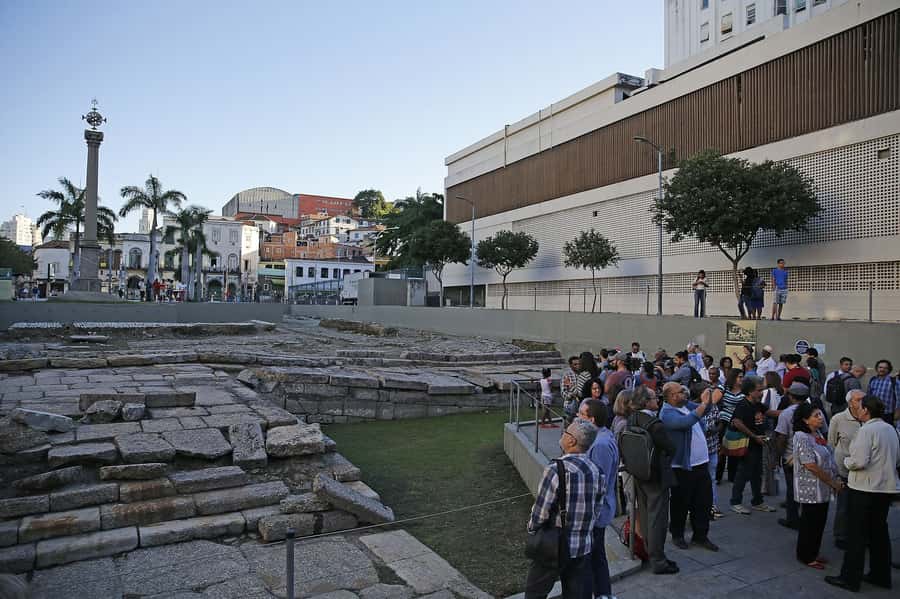
- Starting at Valongo Wharf and facing Rio’s difficult past
- Kobra’s five faces along Olympic Boulevard
- The Museum of Tomorrow and Rio’s futuristic waterfront
- Saint Benedict Monastery, where the inside changes the story
- The Olympic Cauldron and the route to Praça XV
- Confeitaria Colombo and a proper Rio finish
- Guides, group size, and the value of the transport
- Who should book this tour?
- Should you book the Olympic Boulevard and History Tour?
- FAQ
- How long does the tour last?
- Where is hotel pickup available?
- What time does pickup take place?
- Is admission to the Museum of Tomorrow included?
- What languages are available?
- Is food included at Confeitaria Colombo?
- Does the tour operate on Sundays?
Key points at a glance
- Valongo Wharf: Learn about the arrival of enslaved Africans in Brazil at Rio’s newest UNESCO World Heritage site.
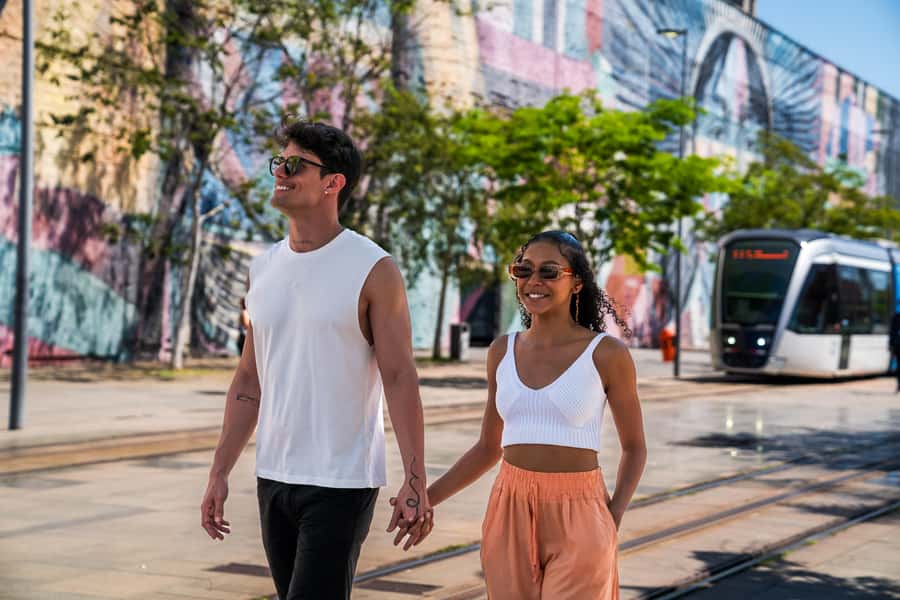
- Eduardo Kobra’s mural: See one of the world’s largest graffiti murals, with five ethnic groups shown in bold geometric colors.
- Museum of Tomorrow: Visit Brazil’s most visited museum and explore questions about the planet’s future.
- Baroque and imperial Rio: Compare the gold-covered interior of Saint Benedict Monastery with the former imperial buildings around Praça XV.
- Confeitaria Colombo: Finish among stained glass, mirrors, and imported tiles, with Brazilian snacks available to buy.
- Practical format: Expect four hours, moderate walking, a maximum of 19 people, and pickup from selected South Zone hotels.
Why this Downtown route is worth your morning
At $67 per person, this is not the cheapest way to see Rio. It is a useful value if you want transport from the South Zone, an English-, Spanish-, or Portuguese-speaking guide, admission to the Museum of Tomorrow, and a history-focused route in one morning.
I especially like the balance. The tour is not only about grand buildings or modern design. It asks you to look at Rio through several chapters: the forced migration of Africans, the city’s imperial past, the 2016 Olympics, contemporary Brazilian art, and questions about the future.
The route also solves a common Rio problem. Downtown sights are spread across different areas, and a first-time visitor may not know how to connect them efficiently. Here, the van handles the journey from Copacabana, Ipanema, Leblon, or Leme, while the central portion becomes a guided walk.
You should expect a social group rather than a private tour. The van holds up to 19 people, and the walking pace includes several stops, picture opportunities, and short explanations. The four-hour limit keeps the outing manageable, but it also means you will not have unlimited time at every location.
More of the port district and Olympic Boulevard:
- Rio’s city walking tour: a glimpse of history and olympic legacy
★ 4.5 · 78 reviews - Olympic Boulevard, Museum of Tomorrow & Historical Rio
★ 4.5 · 66 reviews - Rio: Olympic Boulevard, AquaRio and Museum of Tomorrow Tour
★ 4.5 · 54 reviews
Starting at Valongo Wharf and facing Rio’s difficult past
Valongo Wharf is the most serious stop on the route. It was the main landing point for enslaved Africans brought to Rio, and its UNESCO recognition places it among the city’s most important historical sites.
The site itself is not a grand monument. That is part of its force. You are looking at a place tied to a brutal system that shaped Brazil’s population, culture, labor, religion, and food. A good guide can help you understand the African influence on Brazil without reducing the story to a brief date and a few names.
I would give close attention here, even if the modern attractions later in the morning seem more immediately photogenic. This stop gives the rest of the tour a needed foundation. The colorful mural and polished museum make more sense when you have first considered who built much of Brazil and how those communities shaped the country.
The stop is guided, but the supplied details do not promise a long formal lecture or extensive time on site. If this subject matters deeply to you, treat the guide’s explanation as an introduction rather than a complete study of Rio’s African history.
Kobra’s five faces along Olympic Boulevard
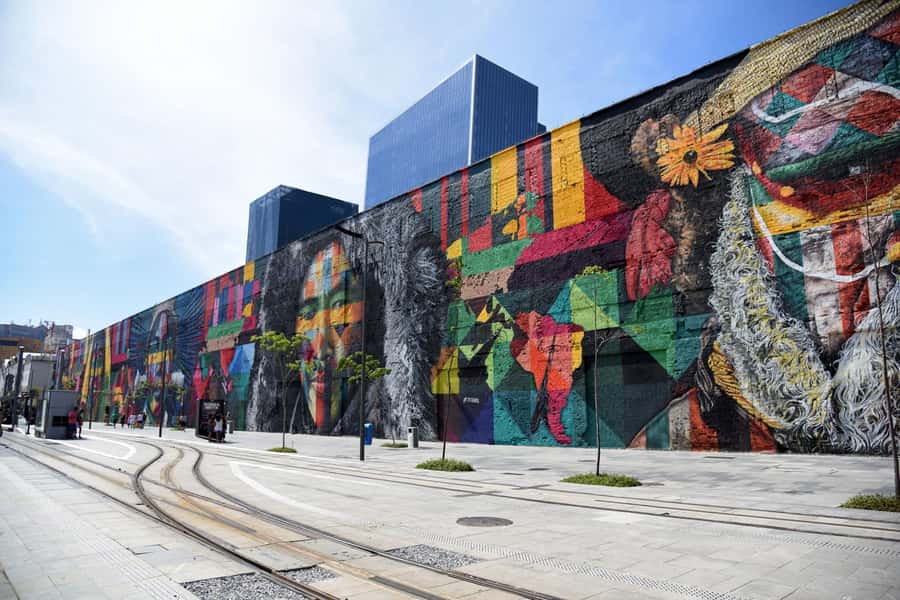
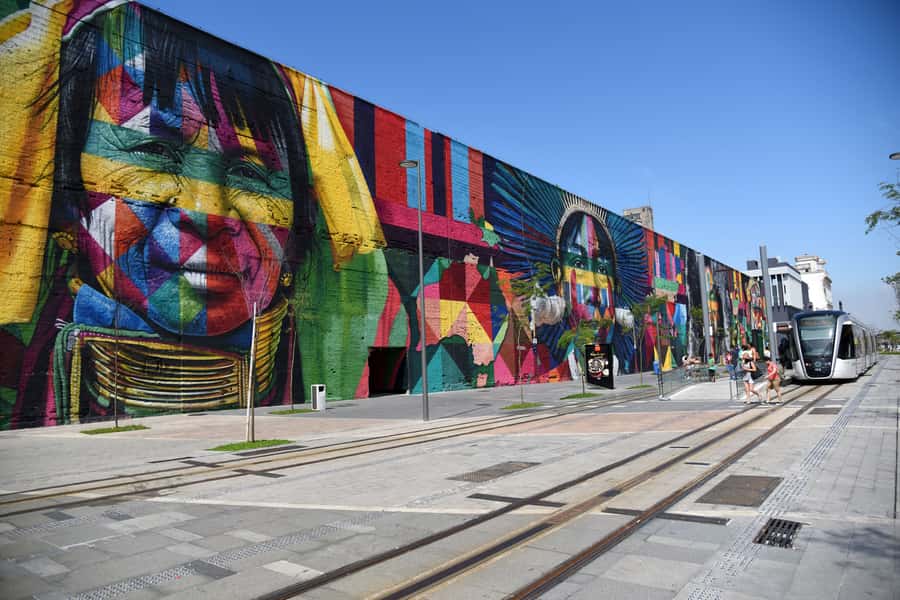
From Valongo Wharf, you continue toward Eduardo Kobra’s huge mural on Olympic Boulevard. The work presents five ethnic groups against a colorful geometric background, making it one of the easiest places on the route for photographs.
The mural is more than a large wall with bright paint. Its size and subject connect public art with the Olympic redevelopment of the port area. You get a sense of how Rio used the boulevard to reshape an old waterfront district and give it a new public identity.
I like this stop because it requires no art-world background. Your guide can explain the work, but you can also appreciate its scale and design in a few minutes. The geometric faces are clear from a distance, and the boulevard gives you room to step back for a full view.
Your time here will likely depend on the group. If everyone wants photographs, the stop may feel leisurely. If the schedule is tight, you may get only a short explanation and a few minutes with the mural. Comfortable shoes matter because this section is part of the walking route, not a drive-by photo stop.
The Museum of Tomorrow and Rio’s futuristic waterfront
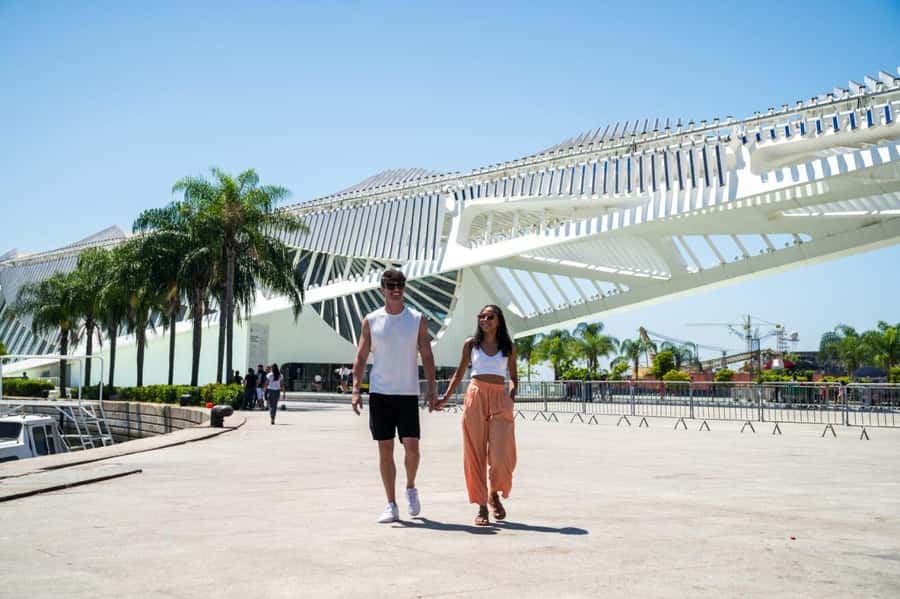
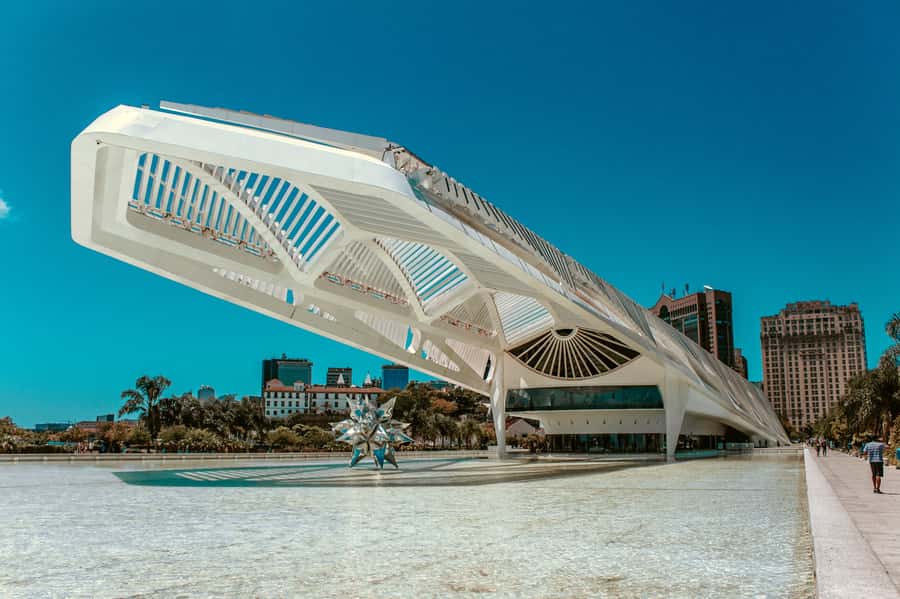
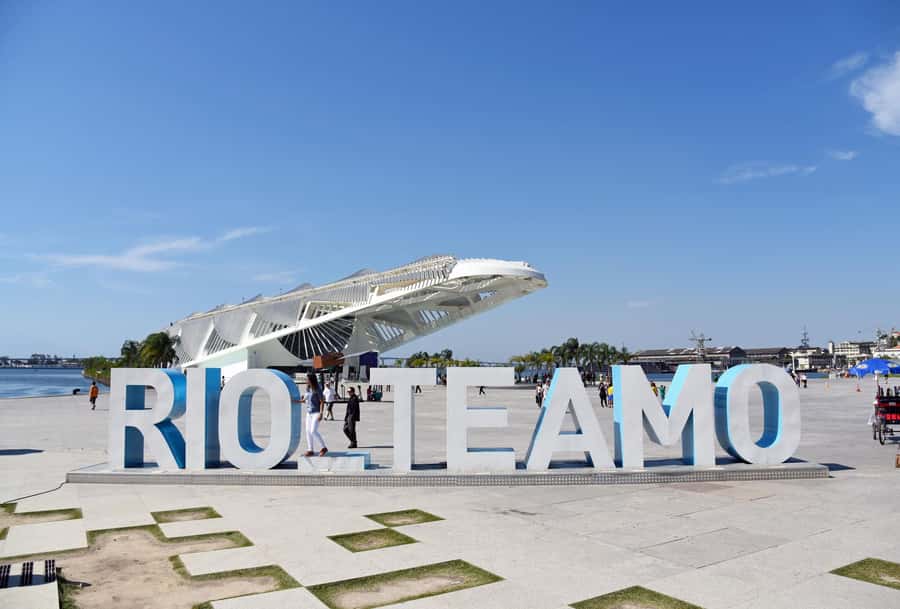
The Museum of Tomorrow is the tour’s main ticketed attraction. Admission is included, and you have time to explore its exhibits at your own pace rather than being marched from display to display with the guide.
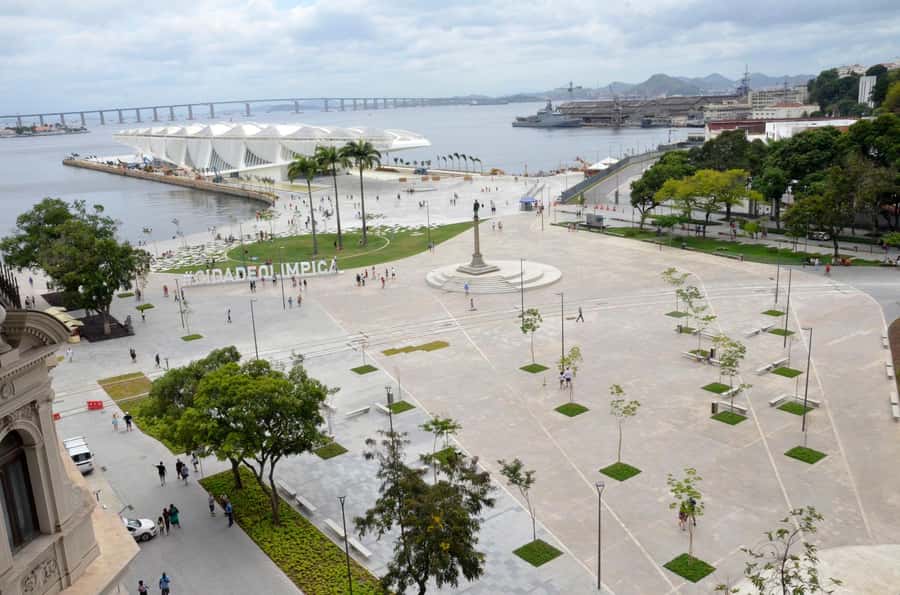
The building itself is the first thing you notice. Its futuristic form looks particularly different from the older churches and colonial-era buildings elsewhere on the route. Inside, the museum focuses on possible futures for the planet and humanity, asking how present decisions shape what comes next.
I like the contrast with Valongo Wharf. The morning moves from a painful historical site to a museum concerned with science, technology, sustainability, and the choices ahead. That change is not accidental. It gives the tour a clear rhythm: remember the past, look at the present, then question the future.
Do not expect a quiet traditional museum filled with old objects. The appeal is the building, technology, and big questions. Your enjoyment will depend on how much you like interactive science and broad ideas about the planet. Since the visit is self-paced, you can focus on the displays that interest you instead of trying to cover every corner.
The museum is described as the most visited museum in Brazil, so it is a major Rio sight rather than a filler stop. Still, the tour’s four-hour schedule includes several other locations. You should not assume that the museum visit alone will fill an entire morning.
More history walks in Rio:
- Rio de Janeiro: Historic Rio and Santa Teresa Half-Day Tour
★ 4.4 · 228 reviews - Rio de Janeiro: Little Africa Heritage Walking Tour
★ 4.9 · 177 reviews - Explore Little Africa : Unveiling Afro Heritage in Rio de Janeiro
★ 5.0 · 97 reviews - Learn the History of Rio with an Unforgettable City Center Walking Tour
★ 5.0 · 82 reviews
Saint Benedict Monastery, where the inside changes the story
The Monastery of Saint Benedict provides one of the tour’s sharpest visual contrasts. From outside, the façade is simple. Inside, the Baroque decoration is covered with golden ornament.
That change is exactly why the stop works. Rio’s older religious buildings often keep their strongest visual impact indoors, where gilded carving and decorative detail reveal the wealth and religious style of the period. Your guide can place the monastery within Brazil’s colonial and Baroque story, while you take in the difference between the plain exterior and ornate interior.
This is a stop for looking slowly. The tour includes many locations, and it can be tempting to treat the monastery as another quick photograph. I would spend a few quiet minutes noticing the layers of gold and the way the interior changes your impression of the building.
The supplied details do not specify a private visit, special access, or a long service inside the monastery. Plan on a sightseeing stop within the broader walking route, and follow any instructions from your guide about respectful behavior.
The Olympic Cauldron and the route to Praça XV
Before reaching Rio’s historic streets, you see the Olympic Cauldron from the 2016 Games. American artist Anthony Howe created the reflective kinetic spherical structure, which works through movement and changing reflections.
This stop gives the tour another time jump. In a few hours, you have moved from the era of the Brazilian Empire to the 2016 Olympics, with modern public art linking the past and present. The cauldron is also a useful reminder that Rio’s port district was not shaped only by old warehouses and colonial buildings. It has been repeatedly reworked for new civic purposes.
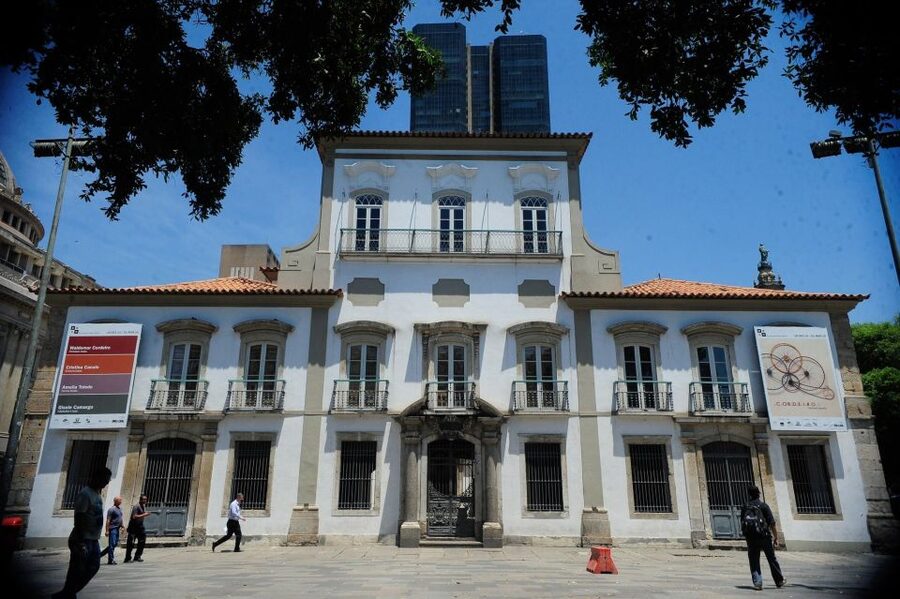
At Praça XV, the historical focus returns. You see one of the former headquarters of the Brazilian Empire and learn about important events connected with the square. This is where a local guide can add real value, since the meaning of an old façade is not always obvious from the street.
I would listen carefully during this part of the tour. The supplied itinerary does not name every building or event discussed, so the guide’s live commentary shapes how much you take away. Pedro has been praised for his focus on Brazilian history, while Emanuella has been credited with explaining the country’s history and architecture clearly.
Confeitaria Colombo and a proper Rio finish
The final stop is Confeitaria Colombo, one of Rio’s most famous cafés. Its interior uses huge stained-glass windows, mirrors, and tiles imported from France, Portugal, and Belgium. It dates from the period when Rio was building a more formal urban culture at the start of the 20th century.
I like ending here because it brings history down to a human scale. After churches, public squares, museums, and monuments, you can sit in an ornate café and order something associated with Brazilian everyday life. Food and drinks are not included, but you can buy a coxinha de frango, a savory chicken snack, or a brigadeiro, a sweet made with chocolate and condensed milk.
The café is closed on Sundays, so choose another departure day if this stop matters to you. The tour still has historical sights even when Colombo is unavailable, but the final café visit is one of its most distinctive touches.
Do not book this expecting a full meal included in the price. Think of Colombo as an optional purchase at the end. You might simply admire the interior, or you might order a snack and use the setting as a pleasant final pause.
Guides, group size, and the value of the transport
Pickup is offered from hotels in Copacabana, Ipanema, Leblon, and Leme. The collection window is between 8:10 and 8:55 AM, but you should contact the provider to confirm the exact time at your hotel. If you stay in a hostel or bed-and-breakfast, you will be assigned a nearby hotel pickup point.
The air-conditioned van holds no more than 19 people. That is small enough for a more personal outing than a large coach, but it is still a group tour. You will need to follow a shared timetable, particularly around the museum and café.
Guide quality can shape the day. Emma is described as friendly and flexible, especially during the self-paced museum visit. Emanuella and Pedro have received strong praise for history and architecture explanations. Marilia and Gabriela are connected with accounts describing serious problems, including rushed commentary and transportation confusion.
I would not treat those negative accounts as a reason to dismiss the entire tour, but I would take the practical lesson seriously. Confirm pickup details, stay with the group, and pay attention when the tour ends. One account describes a missed hotel drop-off after people from different tours were mixed in the same vehicle, followed by an hour-long wait for an arranged car. That is not a small inconvenience at the end of a four-hour outing.
The tour operates rain or shine. Wear comfortable shoes, since the route involves a moderate amount of walking between outdoor sites. Rio’s weather can change, and several important stops are outside.
Who should book this tour?
I would choose this tour if you have already seen Rio’s beach icons and want a guided look at Downtown, or if you have only one morning for the port district and want the main sights connected for you.
It suits you best if you:
- Want Brazilian history explained in English, Spanish, or Portuguese.
- Prefer a mix of outdoor sights, public art, architecture, and one major museum.
- Value hotel pickup from the South Zone.
- Like having museum time at your own pace.
- Can manage moderate walking and a shared group schedule.
I would think twice if you want a slow, highly specialized history tour, a private guide, or a guaranteed long visit at every stop. The route covers a lot in four hours. That is its strength, but also its limit.
The $67 price is reasonable when you count the museum ticket, transportation from the South Zone, guide, taxes, and the number of major stops. Food at Confeitaria Colombo costs extra, and the tour does not include a private vehicle or personal attention. For many first visits to Rio, the combination is practical enough to justify the cost.
Should you book the Olympic Boulevard and History Tour?
Book it if you want Downtown Rio in one well-packed morning and you appreciate the contrast between Valongo Wharf, Kobra’s mural, a futuristic museum, a Baroque monastery, imperial Praça XV, and an Art Nouveau café.
Choose a day other than Sunday if Confeitaria Colombo is important to you. Confirm your pickup in advance, wear shoes made for walking, and keep track of the group during the return transfer. With a strong guide such as Emma, Emanuella, or Pedro, this can be one of the more thoughtful ways to see a side of Rio that beach-focused sightseeing misses.
FAQ
How long does the tour last?
The tour lasts four hours, including hotel pickup and drop-off arrangements.
Where is hotel pickup available?
Pickup and drop-off are available from hotels in Copacabana, Ipanema, Leblon, and Leme. If you stay in a hostel or bed-and-breakfast, you will be told the nearest hotel pickup point.
What time does pickup take place?
Pickup takes place between 8:10 and 8:55 AM. Contact the tour provider to confirm the exact time at your hotel.
Is admission to the Museum of Tomorrow included?
Yes. The Museum of Tomorrow ticket is included in the tour price.
What languages are available?
Live guide commentary is available in English, Spanish, and Portuguese.
Is food included at Confeitaria Colombo?
No. Food and drinks are available for purchase at Confeitaria Colombo, including Brazilian snacks such as coxinha de frango and brigadeiro.
Does the tour operate on Sundays?
The tour can operate on Sundays, but Confeitaria Colombo is closed that day. The tour operates rain or shine.
More Museums in Rio
- Petrópolis Day Trip from Rio de Janeiro including Imperial Museum and Crystal Palace
★ 4.0 · 101 reviews - Museum of Tomorrow Guided Tour, Admission & Transfer
★ 4.5 · 38 reviews - Rio de Janeiro: Flamengo Museum Ticket Entrance
★ 4.7 · 22 reviews - Rio: Museum of Tomorrow, Yup Star & Olympic Boulevard
★ 3.7 · 3 reviews
Just added around Rio
- Rocinha Jeep Tour: A Journey into the Soul of the Favela!★ 3.8 · 3 reviews
- Tijuca National Park and all its wonders!★ 5.0 · 3 reviews
- Rio: Best Dive Experience All Inclusive Scuba Diving Package★ 5.0 · 3 reviews
- Rio de Janeiro: Doors-off 30-min helicopter tour★ 5.0 · 3 reviews
- Rio de Janeiro: Hang gliding adventure★ 3.7 · 3 reviews
- Pedra Bonita Trail: The easiest trail with a beautiful view of Rio★ 4.6 · 3 reviews
- Rio de Janeiro Secluded Beaches: Hike+Swim Prainha & Grumari★ 5.0 · 3 reviews
- Unforgettable Boat Party★ 5.0 · 3 reviews
Rio Olympic & Port District Tours, compared.
Rio’s city walking tour: a glimpse of history and olympic legacy
Read our review →
Olympic Boulevard, Museum of Tomorrow & Historical Rio
Read our review →
Olympic Boulevard, AquaRio and Museum of Tomorrow Tour
Read our review →
Aqua Rio + Olympic Boulevard Tour – Rio de Janeiro by Pepe Rio Tours
Read our review →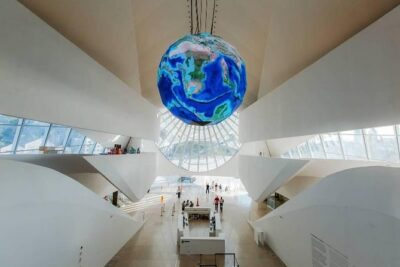
Museum of Tomorrow Guided Tour, Admission & Transfer
Read our review →
Browse the lists this tour appears in