
Reviewed · RIO OLYMPIC & PORT DISTRICT TOURS
Olympic Boulevard, Museum of Tomorrow & Historical Rio
Rio’s story comes into sharp focus in the old Port Zone, where the Cais do Valongo marks one of the darkest chapters in Brazil’s past and the Museum of Tomorrow asks big questions about its future. Between those two points, you walk past Olympic art, colonial lanes, churches, fountains, and a grand old pastry shop.
I like the way this tour joins serious history with easy sightseeing. I also like the practical half-day format, with hotel pickup from much of Rio’s South and West Zones and a small van carrying no more than 19 people. The catch is simple: you will walk a lot, and the Olympic theme is lighter than the title may suggest.
In This Review
- Key points to know before booking
- Why this half-day route works in Rio
- Cais do Valongo and the story behind the port
- Little Africa, Olympic art, and Porto Maravilha
- The Museum of Tomorrow gets the longest stop
- Orla Conde offers a calmer waterfront pause
- São Bento Monastery brings the old center indoors
- Candelária, the Olympic cauldron, and Praça XV
- Confeitaria Colombo is the sweet ending
- Walking, weather, and the shared van
- Is $72 a fair price?
- Who should book this Rio tour?
- FAQ
- What time does the tour begin?
- How long does the tour last?
- Is hotel pickup included?
- Which languages are available?
- Is food included at Confeitaria Colombo?
- Can I cancel for a full refund?
- Should you book it?
Key points to know before booking
- Cais do Valongo sets the tone: See the remains of the port where enslaved Africans were brought to Brazil, with live commentary from your guide.
- The Museum of Tomorrow gets 90 minutes: This is the main indoor stop, with interactive displays and striking modern architecture.
- You walk through two different Rios: The route moves from the renewed Porto Maravilha waterfront to colonial streets around Praça XV.
- Confeitaria Colombo adds a tasty finish: You can go inside this famous historic café, but food and drinks cost extra.
- Pickup saves time: Transport is offered from main hotels in Copacabana, Ipanema, Leblon, Leme, and Barra da Tijuca.
- Plan for weather and footwear: The tour runs rain or shine, and comfortable shoes are not optional.
Why this half-day route works in Rio
At $72 per person, this is not the cheapest way to see downtown Rio. But the price includes admission to the Museum of Tomorrow and São Bento Monastery, a professional guide, roundtrip transport from listed hotel areas, taxes, and the convenience of a planned route.
That matters in Rio. Downtown sights are spread across several districts, and a first visit can involve a fair amount of transport planning. You are paying partly for the explanation and partly for the time saved getting between the Port Zone and the old center.
The tour begins at 9 a.m. and lasts about four hours. That leaves you a useful part of the afternoon for lunch, a beach stop, or another museum. If you have only a few days in Rio, this is a sensible way to see a side of the city that sits far from the usual Copacabana and Ipanema focus.
The group can reach 19 people. That is still small enough for a guide to speak with you, but it is not a private outing. Shared pickup can add delays, since the van may collect people at several hotels. One person found that the pickup information differed between booking messages, so check the final instructions carefully and contact the operator quickly if your hotel or meeting place does not match.
More of the port district and Olympic Boulevard:
- Rio’s city walking tour: a glimpse of history and olympic legacy
★ 4.5 · 78 reviews - Rio: Olympic Boulevard, AquaRio and Museum of Tomorrow Tour
★ 4.5 · 54 reviews - Aqua Rio + Olympic Boulevard Tour – Rio de Janeiro by Pepe Rio Tours
★ 4.5 · 54 reviews
Cais do Valongo and the story behind the port
The first stop is Cais do Valongo, visited from outside with live commentary. You spend about 15 minutes here, and there is no admission charge.
This is not a place to rush past for a photograph. The site was once a landing point for enslaved Africans, and its presence gives the rest of the tour a needed historical frame. Rio’s renovated waterfront can look polished and modern, but Cais do Valongo reminds you what came before the Olympic-era renewal.
The stop is brief, so listen closely. The value comes from the guide’s explanation, not from a long museum visit. Guides including Carlos, Sandra, Alexia, Gabriella, and Newton have been praised for clear explanations and a friendly manner, although the guide assigned to your date can vary.
Little Africa, Olympic art, and Porto Maravilha
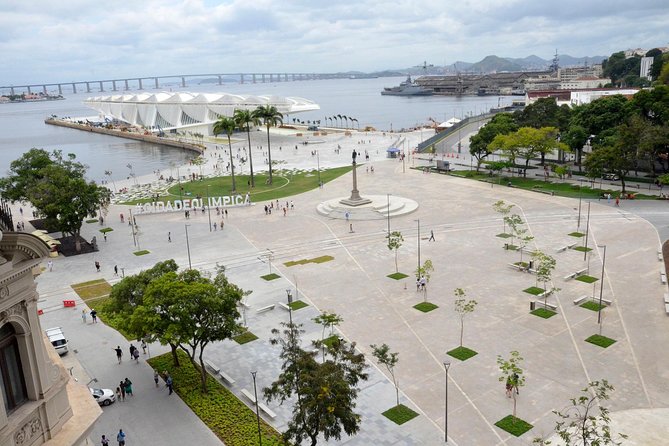
The route continues through Porto Maravilha, the former port area reshaped before the 2016 Olympics. The district now connects public art, open waterfront space, museums, and historic sites.
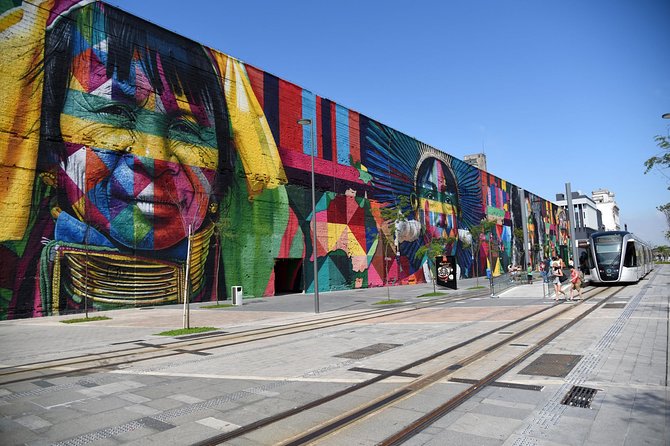
At Painel Etnias, you pause for photographs for about 10 minutes. The large mural by Brazilian artist Eduardo Kobra depicts Indigenous people from around the world in bright geometric colors. It is one of the easiest places on the route to understand the visual change brought to the port district.
The Olympic connection appears again at Mauá Square, visited for about five minutes. The square was refurbished around the 2016 Games and now serves as a gateway to the waterfront museums and Orla Conde promenade.
Do not expect a long tour of Olympic facilities. The route includes the Olympic mural area, Mauá Square, the waterfront, and the Olympic cauldron later in the morning. If you want a detailed look at Olympic venues, this is not the right excursion. The Games are one thread in a broader downtown tour.
The Museum of Tomorrow gets the longest stop
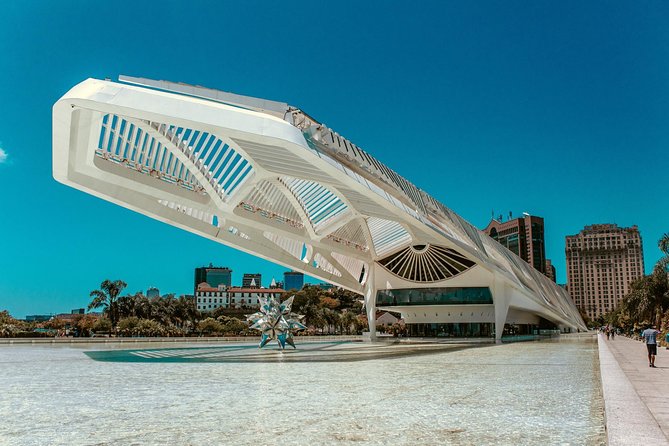
You spend about 90 minutes inside the Museum of Tomorrow, or Museu do Amanhã. Admission is included, and this is the main scheduled attraction of the morning.
The building itself is a major part of the visit. Its long white structure reaches toward the waterfront, giving you a sharp contrast with the older streets and churches that come later. Inside, the displays use interactive exhibits to ask how people live, how the planet is changing, and what kind of future human choices may create.
I would give this stop particular weight if you are traveling with teenagers or children. The touchscreens and interactive format make it easier for younger people to stay involved than they might at a traditional historical museum. You should also know that the museum is an opinion-based, future-focused experience rather than a museum about Rio’s past.
That split explains the mixed reaction to it. Some people find the museum one of the strongest parts of the morning. Others would rather spend more time eating, shopping, or seeing historic buildings. Your own interest in science, design, and environmental questions will decide much of its value.
The 90-minute visit is generous enough to avoid a rushed look, but it also takes up a large portion of a four-hour tour. If the museum is your priority, the schedule works well. If your main goal is old Rio, you may wish the walking portion were longer.
More history walks in Rio:
- Rio de Janeiro: Historic Rio and Santa Teresa Half-Day Tour
★ 4.4 · 228 reviews - Rio de Janeiro: Little Africa Heritage Walking Tour
★ 4.9 · 177 reviews - Explore Little Africa : Unveiling Afro Heritage in Rio de Janeiro
★ 5.0 · 97 reviews - Learn the History of Rio with an Unforgettable City Center Walking Tour
★ 5.0 · 82 reviews
Orla Conde offers a calmer waterfront pause
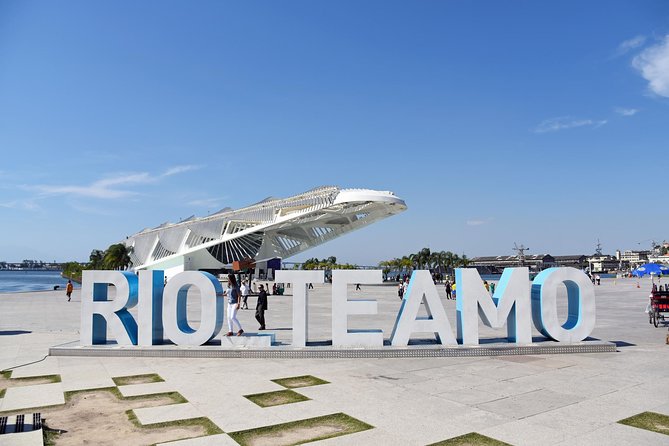
After the museum, you stroll along Orla Conde. This waterfront promenade gives you a different view of Rio, with room to slow down and take in the port district.
The promenade is less about a formal attraction and more about connecting the stops. It also helps break up the indoor museum visit before you enter the older center. Since the tour is taken on foot, these pauses matter. You get a chance to look around, take photographs, and catch your breath before the next set of buildings.
The revitalized port area is one of the route’s most useful lessons. It shows how Rio has tried to bring public life back to an old industrial zone. At the same time, you should not expect every part of the area to feel equally historic. Some of what you see is recent public redevelopment, while the next section of the tour shifts back several centuries.
São Bento Monastery brings the old center indoors
The visit to Mosteiro de São Bento lasts about 15 minutes and includes admission. The monastery is known for its ornate interior, where dark wood, gold decoration, and religious artwork create a marked contrast with the open waterfront.
This is a short stop, so your visit is more about seeing the interior and hearing the basic story than studying every detail. Even so, it is an important change of pace. The Museum of Tomorrow is modern and interactive. São Bento is quiet, devotional, and filled with the visual language of Brazil’s colonial and later religious art.
The schedule may feel tight if you like churches and architecture. You get enough time to look inside, but not enough for a slow, detailed examination. Keep that in mind if you would rather spend a full morning on Rio’s religious buildings.
Candelária, the Olympic cauldron, and Praça XV
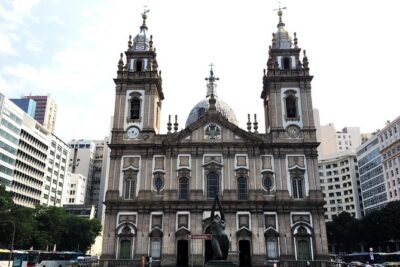
The van and walking route passes the Church of Our Lady of Candelaria, one of Rio’s most famous churches and an important 19th-century artistic work. The itinerary does not list an internal visit here, so you should treat it as an exterior sight rather than a church tour.
Next comes the Pira Olímpica, the cauldron used during the 2016 Summer Olympics. The stop lasts only one minute, which tells you what to expect: a quick look and a photograph, not a full Olympic presentation.
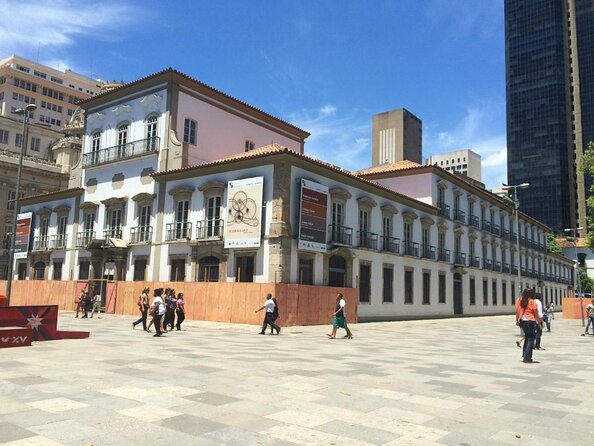
The route then moves through the narrow lanes of Travessa do Comércio, where preserved colonial features make the city feel older and more intimate. You also see the architectural connection between XV Square and Travessa do Comércio, along with the former residence of the Telles de Menezes family.
At Praça XV de Novembro, you walk by with commentary for about 15 minutes. This square gathers several layers of Rio’s past. You may see the Master Valentim Fountain, also called the Colonial Fountain, designed by Valentim da Fonseca e Silva during the colonial period.
The nearby Paço Imperial is another important sight. Built in the 18th century as a residence for governors, it now functions as a cultural center. The tour passes by rather than listing a full interior visit, so you will need a separate visit if you want to explore the building properly.
This is where the route earns its title. You are not simply looking at isolated monuments. You are moving through the old civic center, where colonial government, religious institutions, commerce, and modern redevelopment sit close together.
Confeitaria Colombo is the sweet ending
The final stop is Confeitaria Colombo, with about 20 minutes inside. Food and drinks are not included, but the schedule allows a little extra time if you want to order something.
The café is one of Rio’s best-known historic interiors. Its old-world decoration and long connection with the city make it more than a simple snack stop. You can look around even if you do not buy anything, though many people will want to try one of the sweet or savory pastries.
I would budget for a small purchase here if the café appeals to you. The tour price does not cover food, and 20 minutes is enough for a quick taste rather than a leisurely meal. Confeitaria Colombo is closed on Sundays, so the final stop changes on that day. Confirm how the operator handles the stop when you book a Sunday departure.
The café also gives the tour a pleasant finish. After difficult history, modern ideas, churches, and colonial streets, a pastry and a grand interior provide a lighter final note.
Walking, weather, and the shared van
This is called a walking tour for good reason. You move through streets, squares, waterfront paths, and historic lanes, with several short stops on foot. Wear comfortable shoes with good support. A warm day, poor footwear, or jet lag can make the four hours feel much longer.
The tour operates rain or shine. Bring protection from rain and be ready for changes to the day’s plan. One outing continued in heavy rain with adjustments, while the group still visited the museum and walked where possible. The guide may help pace the route, but you should not book this expecting a fully indoor activity.
Hotel pickup is available from main hotels in Copacabana, Ipanema, Leblon, and Leme, as well as hotels in Barra da Tijuca. You need to tell the hotel about the pickup arrangement and confirm the exact location when you finalize the reservation. The air-conditioned van holds up to 19 people, and the return is arranged back to the starting hotel or meeting location.
Children must be accompanied by an adult. Children age four and under are complimentary if they do not occupy a seat, while adult pricing applies to other participants. Service animals are allowed, and the operator states that most people can take part, but the walking demands still matter for anyone with limited mobility.
The tour requires a minimum number of participants. If that number is not reached, the operator may cancel and offer another date, another experience, or a full refund. One late cancellation caused a serious problem for someone leaving Rio that night, so avoid placing this tour on your final possible morning if your schedule has no backup.
Is $72 a fair price?
The value depends on how you would otherwise see these sights.
If you already know Rio’s transport system and plan to visit only the Museum of Tomorrow, $72 may feel high. You could potentially arrange separate visits yourself and choose exactly how long to stay at each place. The tour also includes several brief exterior stops that cost nothing to enter.
For a first visit, the calculation is better. You receive a guide in English, Spanish, or Portuguese, entry to the Museum of Tomorrow and São Bento Monastery, transport from major hotel areas, and a ready-made route through districts that can be hard to connect on your own. The guide also provides context at Cais do Valongo, Praça XV, and the colonial lanes, where a quick solo walk might miss the significance.
The 4.7 rating from 66 published ratings and the 91 percent recommendation figure suggest strong overall satisfaction, but the weak points are clear. The shared van can take extra time. The tour is quite active on foot. The museum will not appeal to everyone, and the Olympic content is limited to a few locations rather than a full Olympic-site visit.
Who should book this Rio tour?
I would choose this experience if you want a guided introduction to downtown Rio and prefer a half-day commitment. It suits first-time visitors, families with older children, and anyone who wants transport handled from a South Zone or West Zone hotel.
It is also a good fit if you care about more than beaches. The route gives you difficult historical context, public art, modern architecture, old churches, colonial streets, and a famous café in one morning.
I would hesitate if you dislike walking, want a private schedule, or prefer to linger at each museum and church. You may also want another option if your main goal is a detailed Olympic tour. The route uses the Games as a bridge into Porto Maravilha, not as its central subject.
FAQ
What time does the tour begin?
The tour starts at 9:00 a.m.
How long does the tour last?
The experience lasts approximately four hours.
Is hotel pickup included?
Roundtrip transportation is available from main hotels in Copacabana, Ipanema, Leblon, Leme, and Barra da Tijuca. Arrange the pickup from your hotel or a nearby location when confirming the reservation.
Which languages are available?
The professional guide provides live commentary in English, Spanish, and Portuguese.
Is food included at Confeitaria Colombo?
No. Food and drinks are available for purchase at your own expense. Confeitaria Colombo is closed on Sundays.
Can I cancel for a full refund?
Yes. You can cancel at least 24 hours before the local start time for a full refund. Changes or cancellations made less than 24 hours before the start time are not accepted for a refund.
Should you book it?
Book this tour if you want Rio’s downtown story organized into one manageable morning, with transport, museum admission, and a guide included. The strongest parts are the contrast between Cais do Valongo and the Museum of Tomorrow, plus the shift from the renewed waterfront to Praça XV’s colonial streets.
Skip it if you want a slow museum day, a private vehicle, or a full Olympic tour. For everyone else, $72 is a reasonable price for a well-filled introduction to the Rio beyond Copacabana, provided you bring good shoes, allow for shared pickup time, and do not mind touring in the rain.
More Museums in Rio
- Petrópolis Day Trip from Rio de Janeiro including Imperial Museum and Crystal Palace
★ 4.0 · 101 reviews - Rio: Olympic Boulevard, Museum of Tomorrow & History Tour
★ 4.1 · 47 reviews - Museum of Tomorrow Guided Tour, Admission & Transfer
★ 4.5 · 38 reviews - Rio de Janeiro: Flamengo Museum Ticket Entrance
★ 4.7 · 22 reviews
Just added around Rio
- Rocinha Jeep Tour: A Journey into the Soul of the Favela!★ 3.8 · 3 reviews
- Tijuca National Park and all its wonders!★ 5.0 · 3 reviews
- Rio: Best Dive Experience All Inclusive Scuba Diving Package★ 5.0 · 3 reviews
- Rio de Janeiro: Doors-off 30-min helicopter tour★ 5.0 · 3 reviews
- Rio de Janeiro: Hang gliding adventure★ 3.7 · 3 reviews
- Pedra Bonita Trail: The easiest trail with a beautiful view of Rio★ 4.6 · 3 reviews
- Rio de Janeiro Secluded Beaches: Hike+Swim Prainha & Grumari★ 5.0 · 3 reviews
- Unforgettable Boat Party★ 5.0 · 3 reviews
Rio Olympic & Port District Tours, compared.
Rio’s city walking tour: a glimpse of history and olympic legacy
Read our review →
Olympic Boulevard, AquaRio and Museum of Tomorrow Tour
Read our review →
Aqua Rio + Olympic Boulevard Tour – Rio de Janeiro by Pepe Rio Tours
Read our review →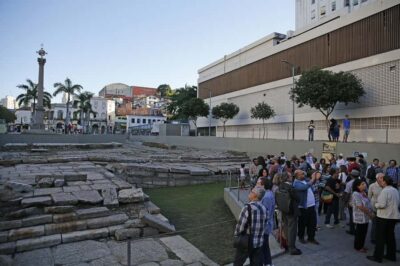
Olympic Boulevard, Museum of Tomorrow & History Tour
Read our review →
Museum of Tomorrow Guided Tour, Admission & Transfer
Read our review →
Browse the lists this tour appears in