Reviewed · TOURS
Rio Street Art Tour
Rio’s street art tells stories that a sightseeing bus cannot. On this private three-hour walk, guide Wellington connects murals with slavery, politics, Carnival, architecture, and daily life, taking you from central Rio to Porto Maravilha by foot, subway, and VLT.
I like two things right away: you see the famous Selarón Steps, but you also reach less obvious works in central neighborhoods, and the public transportation turns the tour into a small lesson in how Rio works. I also like that the tour can be private for one person or a small group.
The main consideration is the walking. Three hours includes several neighborhoods, train and tram rides, and plenty of time on your feet. Some artwork is older, and the route requires good weather, so bring water and avoid booking it as your only fixed plan on a rainy day.
In This Review
- Key points to know before you book
- Why street art is a smart way to meet Rio
- Starting at the Municipal Theater and moving through Glória
- Cinelândia: theaters, libraries, and the city’s public face
- Selarón Steps, Rio’s famous splash of color
- Boulevard Olímpico and the Museum of Tomorrow
- Porto Maravilha and the world’s largest graffiti mural
- Carnival, samba, and the stories behind the paint
- How much value do you get for $68.61?
- Who should book this Rio street-art walk?
- Should you book the Rio Street Art Tour?
- FAQ
- How long does the Rio Street Art Tour last?
- Where does the tour start?
- Where does the tour end?
- Is this a private tour?
- Does the tour include museum admission?
- Does the tour use public transportation?
- What happens if it rains?
Key points to know before you book
- See Rio through murals: Graffiti becomes a guide to local politics, culture, Afro-Brazilian identity, and city history.
- Ride like a local: The route uses the subway and VLT, not a private coach, adding a useful everyday view of Rio.
- Finish at a major landmark: Porto Maravilha includes the world’s largest graffiti mural and the nearby Museum of Tomorrow.
- Meet Wellington: His strongest role is explaining the people, messages, and events behind each artwork.
- Expect a private format: Your group alone takes part, including solo bookings.
- Plan for walking: The tour is about three hours, with free admission at the listed stops and transport along the route.
Why street art is a smart way to meet Rio
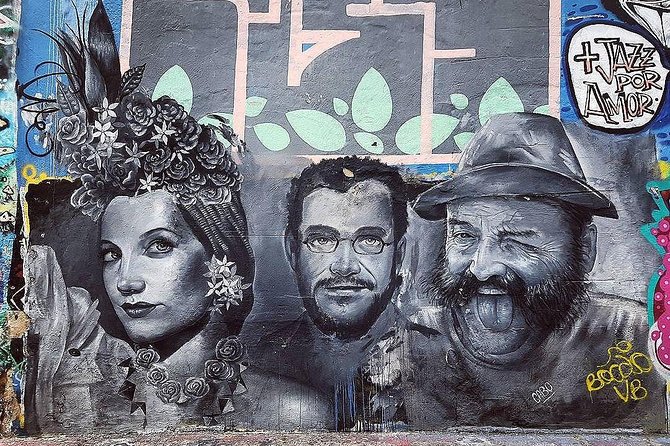
Rio can be difficult to understand if you see only beaches, viewpoints, and postcard landmarks. The center adds another layer. Murals, old civic buildings, former port areas, and public squares show how the city remembers its past and argues about its present.
Wellington’s approach is not simply point, photograph, move on. He explains who appears in the art and why. That matters in Rio, where a large painted wall can touch on race, social issues, politics, Carnival, neighborhood identity, or the legacy of enslaved Africans.
The route also brings useful variety. You will see formal European architectural influence around central Rio, major cultural buildings in Cinelândia, the famously tiled Selarón Steps, contemporary murals in Porto Maravilha, and the futuristic Museum of Tomorrow area.
I especially like the contrast between the polished attractions and the rougher, more personal art on city walls. You get the famous sights, but you also get places you might pass without knowing what you are seeing.
The tour has a 4.9 rating from 39 reviews, with 100 percent recommending it. More important than the numbers is the pattern: Wellington is repeatedly praised for clear English, local knowledge, warmth, and his ability to connect art with history and current issues. One person even described the experience as feeling like exploring with an old friend. That personal style is a big part of the value here.
Other Rio tours people book on the same trip:
- Rio de Janeiro: 6-Stop Highlights of Rio with Lunch
★ 4.4 · 5,157 reviews - Christ the Redeemer Entry Ticket by Corcovado Train
★ 4.4 · 4,476 reviews - Rio de Janeiro: Rocinha Favela Walking Tour with Local Guide
★ 4.8 · 3,052 reviews
Starting at the Municipal Theater and moving through Glória
The official meeting point is the Municipal Theater of Rio de Janeiro at Praça Floriano in Centro. From there, the tour begins around Glória and central Rio, using public transport as well as walking.
The first artwork is described as Rio’s first legalized graffiti. That gives Wellington a natural opening to explain how street art fits into the city rather than treating it as decoration alone. You can expect discussion of the artists, the figures shown, and the changing place of graffiti in public life.
The surrounding buildings provide a useful counterpoint. Central Rio carries strong European architectural influence, especially around its civic and cultural landmarks. Here, the tour shifts between painted walls and grand façades, showing that Rio’s visual character comes from many periods at once.
This opening is a good reason to book the experience early in your stay. It helps you get your bearings in the center, and the guide’s wider comments about Rio can make later sightseeing easier to understand.
The route is not a quiet gallery walk. You will cross active city streets and use public transportation. That is part of the point, but you should wear comfortable shoes and keep your belongings secure in the normal way you would on any urban outing.
Cinelândia: theaters, libraries, and the city’s public face
Cinelândia is one of the tour’s strongest stops for architecture and civic life. The area is home to major libraries and the city’s main theater, so the focus here moves beyond graffiti to the institutions that shaped Rio’s cultural identity.
Wellington uses these buildings to widen the story. You may hear about the city’s past, its cultural life, and how public spaces reflect changing political and social ideas. The art becomes a doorway into the city, not the entire subject.
The listed time here is about 30 minutes. That is enough for an explanation and some photographs, but not enough for a full interior visit to every building. Admission is listed as free for the stop, yet this is not a museum-entry tour. You should think of Cinelândia as an outdoor introduction.
From here, the group takes the VLT, Rio’s light rail system, toward the Olympic Boulevard area. The ride matters because it links old central Rio with the redeveloped port zone. It also gives you a break from walking while keeping you close to ordinary city movement.
The use of public transport is one of the tour’s most useful touches. One person specifically appreciated help with purchasing a train ticket and avoiding a possible fine. That does not mean every transport cost is automatically included, so clarify the arrangement when booking or meeting your guide.
Selarón Steps, Rio’s famous splash of color
The Escadaria Selarón is one of Rio’s best-known photo stops and is often described as the city’s third most visited tourist attraction. The staircase is covered in colorful tiles and attracts plenty of attention, so do not expect solitude.
The tour allows about 20 minutes here. That is a sensible amount of time for photographs and an explanation, especially because the staircase works best as part of a larger route rather than as a stand-alone visit.
I like that the steps are not treated as the whole street-art story. They offer a famous, highly visual example, then the tour moves on to works that are less familiar and often more tied to local events and people.
There is also a practical advantage to finishing near Selarón on some versions of the route. One group received suggestions for places to eat nearby and ended up having lunch among local residents. Food recommendations are not a formal stop or guaranteed service, but the tour can leave you well placed for your next meal.
The exact order may vary. The tour description mentions beginning in Glória, passing Selarón, continuing through Cinelândia, and using the VLT to reach the mural zone, while the stop listing presents the locations in a different order. Ask Wellington to confirm the day’s sequence if you care about timing or want to plan lunch afterward.
A different side of the city, same few days:
- Rio: Christ the Redeemer, Sugarloaf, Selaron & BBQ Lunch
★ 4.5 · 2,428 reviews - Rio De Janeiro: Half-Day Rocinha Favela Walking Tour
★ 4.7 · 2,272 reviews - Rio de Janeiro: Angra dos Reis and Ilha Grande Full-Day Tour
★ 4.6 · 1,673 reviews - Rio de Janeiro: Beginner Samba Lesson in Ipanema
★ 4.9 · 1,071 reviews
Boulevard Olímpico and the Museum of Tomorrow
The VLT brings you to Boulevard Olímpico, a broad waterfront area created around Rio’s Olympic-era redevelopment. Today it is associated with several of the city’s main museums, including the Museum of Tomorrow and the Museu de Arte do Rio.
The tour allows about 30 minutes around Boulevard Olímpico. You should expect an outdoor look at the area and its art rather than a full museum visit. Admission is listed as free for the stop, but museum entry is not presented as part of the experience.
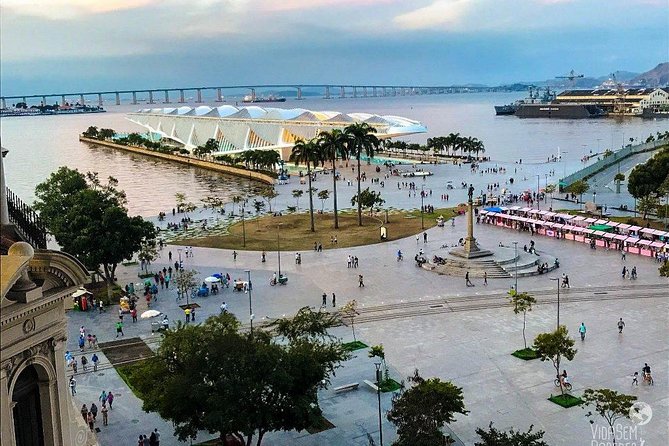
The Museum of Tomorrow adds a sharp visual contrast to the older center. Its modern design and waterfront setting frame the murals in a newer version of Rio, one shaped by major redevelopment and public art.
This is also where the tour’s different subjects come together. You have old architecture, urban transport, public museums, large-scale painting, and the history of the port. Wellington’s role is to connect those pieces so the route does not feel like a collection of unrelated photo stops.
The area can feel more open and exposed than the streets around Cinelândia. Rio’s sun is serious, so bring water, a hat, and sunscreen. One person specifically advised carrying a bottle of water, and that is practical advice for a three-hour walk with outdoor stops.
Porto Maravilha and the world’s largest graffiti mural
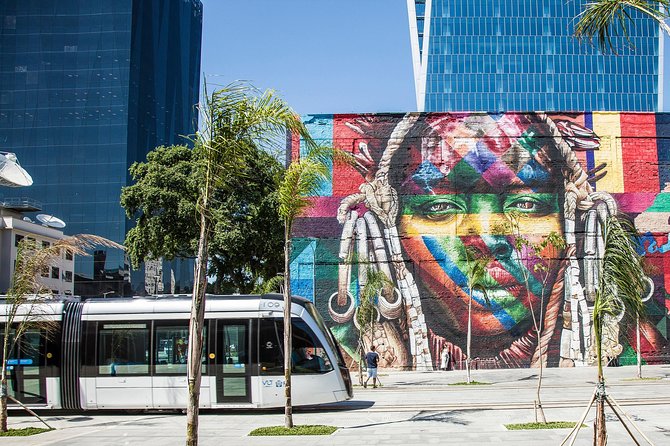
The final hour is devoted to Porto Maravilha, the port district where you see the world’s largest graffiti mural. The mural, often called the Etnias panel, is the visual climax of the tour because of its scale alone.
Large public art can be easy to admire and hard to understand. Wellington explains the figures and their messages, giving you a way to look beyond color and size. You can expect attention to the social and political meaning of the work, not just its record-setting dimensions.
Porto Maravilha also gives the tour its strongest connection to Afro-Brazilian history. The port area is linked to the arrival and enslavement of Africans in Brazil, and the nearby Little Africa area adds important context. Several people found this part especially educational, including one group that changed its focus from street art to a tour of Little Africa.
That flexibility is worth noting. If your main interest is Afro-Brazilian culture and the history of slavery, tell Wellington before or during the tour. The supplied information shows that he has adapted the experience for groups wanting more attention on Little Africa, though the exact route and timing may change.
The port district can feel different from the traditional center. Its large walls and open spaces suit monumental art, while the historical material gives the area emotional weight. I would not rush this last hour. It is where the tour’s central idea becomes clearest: public art can preserve memory, question power, and reshape how a neighborhood is seen.
Carnival, samba, and the stories behind the paint
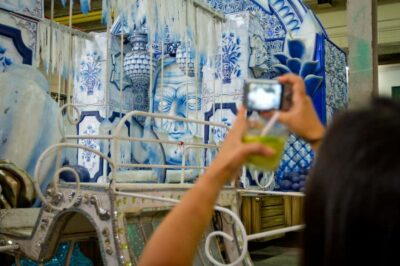
Street art is the advertised subject, but the tour reaches well beyond murals. Wellington also discusses Carnival and samba schools, and one family had the chance to see some Carnival floats and the area used to stage or store them.
A possible extra is Cidade do Samba near one of the train stops. The information provided suggests asking about walking through its grounds if they are open, but this is not guaranteed and should not be treated as a scheduled inclusion.
These Carnival connections are valuable because they show another way Rio uses art in public life. A painted wall and a parade float may look unrelated, yet both can carry neighborhood pride, political feeling, humor, and identity.
You should also feel free to ask questions. Wellington is described as open to questions and able to guide in English. One solo participant even used the outing to practice Portuguese, so the experience can work well if you want conversation rather than a memorized speech.
Some of the murals may be older. One person wished for more new or younger works, which is a fair point. Street art changes quickly, and a route built around established murals may not show the newest pieces in town. If fresh work is a priority, ask Wellington what has changed recently.
How much value do you get for $68.61?
At $68.61 per person, this is not the cheapest way to see a few murals. Its value comes from the private format, the guide, the range of neighborhoods, and the amount of context packed into three hours.
A normal self-guided walk can take you to Selarón Steps or Boulevard Olímpico. It is much harder to understand why particular walls matter, how the port connects to slavery, or how the center’s buildings fit into Rio’s story without someone explaining the links.
The private setup improves the value for solo visitors, couples, families, and friends who want to set the pace. A solo booking is possible, and only your group participates. You can ask more questions and request extra attention to architecture, politics, Carnival, or Little Africa.
The price is less attractive if you want a short photo outing with little walking or if you plan to enter several museums. This is an outdoor cultural tour, not a museum pass, and the listed stops have free admission. Transport is part of the route, but confirm whether subway or VLT fares are included.
You can cancel for a full refund up to 24 hours before the start time. Changes made less than 24 hours ahead are not accepted, and poor weather may lead to a different date or a full refund. Since the activity depends on walking and outdoor art, that weather rule is sensible.
Who should book this Rio street-art walk?
I would choose this tour if you want to understand Rio through people and places rather than collect landmark photographs. It suits anyone interested in public art, architecture, Brazilian culture, politics, Carnival, or Afro-Brazilian history.
Families can benefit because Wellington mixes explanation with movement and visual subjects. Friends can use the private format to ask specific questions. Solo visitors get a ready-made companion and a route through areas they might otherwise skip.
It is also a strong first or second-day activity. You will learn how central Rio connects to the port district, become familiar with the subway and VLT, and receive suggestions for food and other places to see.
I would hesitate if you dislike walking, dislike public transportation, or want a tightly timed museum program. The tour is approximately three hours, and the route covers several areas. Comfortable shoes and water are not optional extras in Rio’s heat.
Should you book the Rio Street Art Tour?
Book it if you want street art with a human voice behind it. Wellington’s best contribution is the connection between the walls and the city: slavery and Little Africa, Carnival and samba schools, architecture and public life, politics and the figures painted across Rio.
You will see famous Selarón Steps and the huge Porto Maravilha mural, but the real payoff is the link between those headline sights. Ask about Little Africa, confirm the transport details, and tell Wellington what interests you most. For a private, history-focused introduction to central Rio, $68.61 is a fair price.
FAQ
How long does the Rio Street Art Tour last?
The tour lasts approximately three hours. The route includes walking, subway travel, and a VLT ride between central Rio and Porto Maravilha.
Where does the tour start?
The meeting point is the Municipal Theater of Rio de Janeiro at Praça Floriano, in Centro, Rio de Janeiro.
Where does the tour end?
The activity ends in a different location from the starting point. The route finishes in Porto Maravilha.
Is this a private tour?
Yes. Only your group participates, and the experience can accommodate a solo booking.
Does the tour include museum admission?
The listed stops show free admission, but the experience is primarily an outdoor street-art and city tour. Museum entry is not specified as included.
Does the tour use public transportation?
Yes. The route uses Rio’s subway and VLT, along with walking between stops.
What happens if it rains?
The experience requires good weather. If poor weather causes cancellation, you will be offered another date or a full refund. You can also cancel up to 24 hours before the start time for a full refund.
Just added around Rio
- Rocinha Jeep Tour: A Journey into the Soul of the Favela!★ 3.8 · 3 reviews
- Tijuca National Park and all its wonders!★ 5.0 · 3 reviews
- Rio: Best Dive Experience All Inclusive Scuba Diving Package★ 5.0 · 3 reviews
- Rio de Janeiro: Doors-off 30-min helicopter tour★ 5.0 · 3 reviews
- Rio de Janeiro: Hang gliding adventure★ 3.7 · 3 reviews
- Pedra Bonita Trail: The easiest trail with a beautiful view of Rio★ 4.6 · 3 reviews
- Rio de Janeiro Secluded Beaches: Hike+Swim Prainha & Grumari★ 5.0 · 3 reviews
- Unforgettable Boat Party★ 5.0 · 3 reviews
Tours, compared.




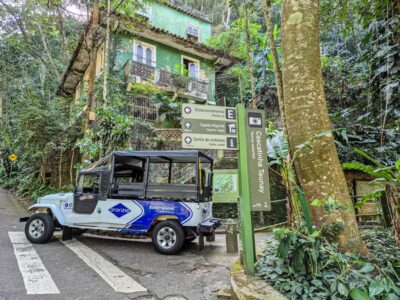

Jeep Adventure: Guided Tour through Tijuca Rain Forest
Read our review →