
Reviewed · WALKING TOURS
Bossa Nova Walking Tour
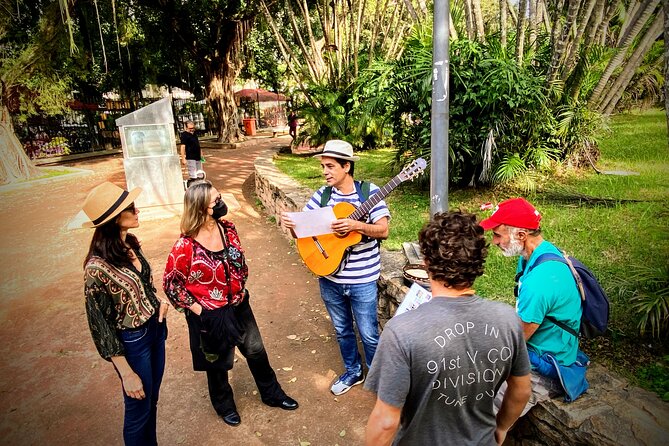
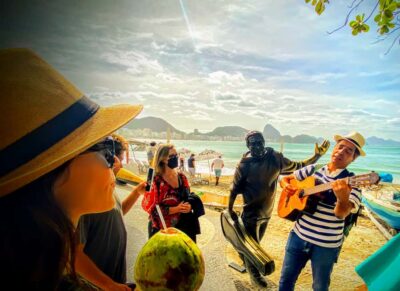
Bossa Nova makes the most sense when you hear it in the streets where it grew up. This three-hour walk links Ipanema and Copacabana landmarks with live guitar, so the story never becomes a dry music lecture. Guide-musician Gui Guimares, also referred to as Guilherme, explains the songs while playing them.
I like the small group limit of eight, which should make it easier to hear the guide and ask questions. I also like the mix of music and place: you learn about Tom Jobim, Vinicius de Moraes, Bahia, the Hippie Fair, and the Girl from Ipanema while standing in the neighborhoods tied to their stories.
The main consideration is pace. You walk between seven stops, and transport, drinks, and food are not included. This suits you best if you enjoy a relaxed cultural walk and can handle outdoor conditions, rather than a quick sightseeing loop.
In This Review
- Key points to know before you book
- Why this Rio music walk feels different
- Starting at Praça Nossa Senhora da Paz
- Praça General Osório and the Hippie Fair
- Copacabana Beach and the city’s musical identity
- The Dorival Caymmi statue and Bahia’s influence
- Parque Garota de Ipanema and the woman behind the song
- Tom Jobim’s statue and the composer’s role
- Casa de Cultura Laura Alvim
- Three hours, seven stops, and a small group
- Is $48.03 a fair price?
- What to bring and how to prepare
- Who will enjoy this experience most?
- Should you book the Bossa Nova Walking Tour?
- FAQ
- Where does the Bossa Nova Walking Tour start?
- Where does the tour end?
- How long does the tour last?
- How many people can join the tour?
- Is live music included?
- Are transportation, food, drinks, or water included?
- Does the tour require good weather?
- Can I cancel for a full refund?
Key points to know before you book

- Live guitar at every major stop: Gui explains Brazilian music through songs, not just spoken history.
- Seven Ipanema and Copacabana locations: The route includes plazas, the beach, statues, a park, and a cultural center.
- A true small-group experience: The maximum is eight people.
- Music from several Brazilian traditions: Bossa Nova is connected to samba and music from Bahia.
- A useful ending point: The walk finishes at Restaurante e Bar Garota de Ipanema, near Vinicius de Moraes and Prudente de Morais streets.
- Good value for music fans: At $48.03 per person, the fee covers a guide and a live musician performance, but not transport or refreshments.
Why this Rio music walk feels different
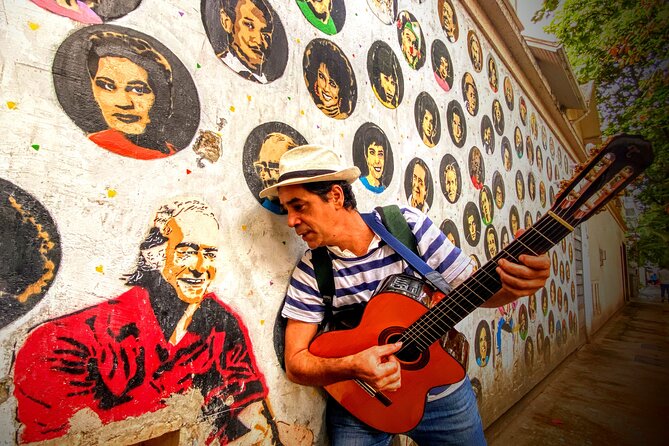
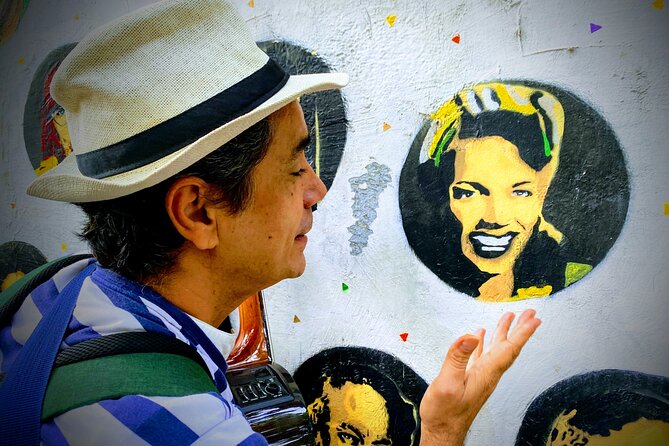
Most city walks ask you to look at buildings, squares, and statues. This one asks you to listen. At each stop, the guide connects the setting to Brazilian music, then uses his guitar to put the explanation into practice.
That combination is the tour’s strongest feature. You are not simply told that Bossa Nova grew from a particular cultural moment. You hear the sound while standing in the neighborhoods that helped give it a public identity.
The music is not limited to one narrow chapter. The route covers Bossa Nova, samba, Brazilian musical traditions from Bahia, and songs from different periods. You do not need to arrive as an expert. The musical performances give you a way into the subject even if you know only The Girl from Ipanema.
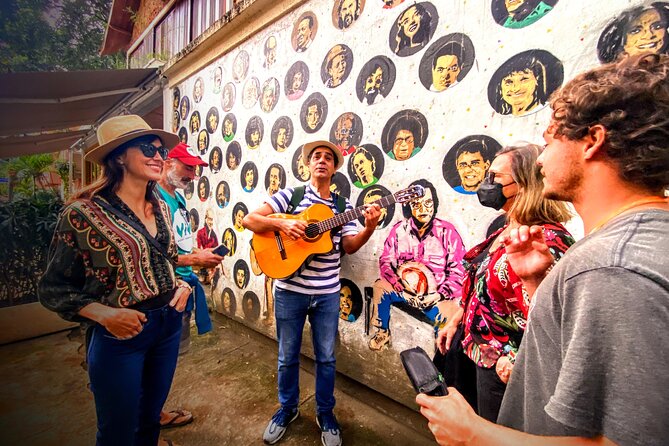
The guide’s role matters here. Gui Guimares is presented as a guitarist as well as a guide, and the experience is built around that combination. His Spanish-made guitar, mentioned specifically in the tour feedback, adds a personal detail to the performance. The format is participatory rather than a formal lecture, which helps keep three hours from feeling academic.
More walking tours in Rio:
- Rio de Janeiro: Rocinha Favela Walking Tour with Local Guide
★ 4.8 · 3,052 reviews - Rio De Janeiro: Half-Day Rocinha Favela Walking Tour
★ 4.7 · 2,272 reviews - Sunrise and Sunrise Walk Two Brothers with Local Guide
★ 5.0 · 193 reviews
Starting at Praça Nossa Senhora da Paz
The tour begins at Praça Nossa Senhora da Paz in Ipanema. This first stop lasts about 20 minutes and serves as both a welcome and an introduction to Brazilian music.
Expect a briefing on the walk, followed by an explanation of how Brazilian music developed and where Bossa Nova fits into that story. The guitar performance begins here, giving you a sample of the approach used throughout the route.
This is a useful opening because the guide can establish the basic musical background before the walk moves through more specific places. If you are new to Bossa Nova, listen for the way the songs are used to explain the subject rather than treated as background music.
The square is also a practical meeting point, since the tour starts near public transportation. You should arrive ready for an outdoor walk, with water already purchased because drinks are not included.
Praça General Osório and the Hippie Fair
The next stop is Praça General Osório, where you spend about 15 minutes hearing about the Hippie Fair and its connection to the Bossa Nova period.
This stop adds a social and local angle. Music does not develop in isolation, and a fair gives the guide a setting for discussing how public spaces, artists, and everyday city life can support a musical movement.
There is another short guitar performance here. Since this stop lasts only 15 minutes, the explanation is likely to be focused rather than extensive. That is a benefit if you prefer movement and variety, but it also means you should ask questions when something catches your interest.
The plaza is part of the normal fabric of Ipanema, not a museum exhibit. That makes the stop feel tied to present-day Rio, while the music supplies the link to the past.
Copacabana Beach and the city’s musical identity
The walk continues to Copacabana Beach for roughly 20 minutes. Here, the guide explains why Copacabana mattered to Bossa Nova and performs more songs on guitar.
This is one of the route’s clearest place-and-music pairings. Copacabana is widely associated with Rio’s public image, but the tour focuses on its role in the development and spread of Brazilian music. You get the beach setting while hearing the cultural story attached to it.
The outdoor setting is also a reminder to plan sensibly. The activity requires good weather, and the route does not provide transport or drinks. Bring water, use sun protection, and wear comfortable shoes. Those are simple choices, but they matter during a three-hour walk in Rio.
The beach stop should appeal to you even if you are not a dedicated music fan. It combines one of Rio’s best-known places with a clear explanation of how the city influenced the sound associated with it.
A different side of the city, same few days:
- Rio de Janeiro: 6-Stop Highlights of Rio with Lunch
★ 4.4 · 5,157 reviews - Christ the Redeemer Entry Ticket by Corcovado Train
★ 4.4 · 4,476 reviews - Rio: Christ the Redeemer, Sugarloaf, Selaron & BBQ Lunch
★ 4.5 · 2,428 reviews - Rio de Janeiro: Angra dos Reis and Ilha Grande Full-Day Tour
★ 4.6 · 1,673 reviews
The Dorival Caymmi statue and Bahia’s influence
At the Estatua de Dorival Caymmi, the tour turns toward music from Bahia and its relationship to Bossa Nova. This stop lasts about 20 minutes and includes another live guitar performance.
Dorival Caymmi gives the guide a chance to widen the story beyond Rio. Bossa Nova is often presented through a small group of famous names, but Brazilian music has many regional roots and connections. The Bahia segment shows you that the genre did not develop in a cultural vacuum.
This is especially useful if you want more than a greatest-hits introduction. You hear how different Brazilian traditions can be discussed alongside Bossa Nova, rather than treating the style as a sealed-off category.
The statue itself is a short outdoor stop, not a full museum visit. You should expect interpretation and music, not extensive exhibits or time inside a building. The advantage is a focused presentation that keeps the walk moving.
Parque Garota de Ipanema and the woman behind the song
Parque Garota de Ipanema is the next major stop, with about 20 minutes devoted to the story of the Girl from Ipanema and another guitar performance.
This is likely to be the most immediately familiar part of the tour for many people. The song is known around the world, but the walk gives it a local setting and explains who the Girl from Ipanema was.
The stop works because it connects an internationally famous song to a real Rio neighborhood. Instead of hearing only about a title on a recording, you stand in Ipanema while the guide tells the story and plays the music.
Do not expect a large attraction with a long indoor visit. The value comes from the setting, the explanation, and the performance. If you already know the song well, the local context should be more useful than a basic introduction.
Tom Jobim’s statue and the composer’s role
The Estatua de Tom Jobim receives about 20 minutes. The guide explains Antonio Carlos Jobim, one of the key composers associated with Bossa Nova, and performs more music.
This stop gives the tour a central figure to focus on. Jobim’s name is closely linked to the songs that carried Bossa Nova beyond Brazil, so learning about him helps connect the local walk to the music’s wider reach.
The live guitar is important here. A spoken account of a composer can remain abstract, but hearing the compositions at his statue makes the subject more direct. You can listen to the melodies while standing in a place dedicated to the person who wrote them.
The program does not promise a full biography, and 20 minutes is not enough for one. Think of this as a concise portrait supported by music. That format suits a walking tour, especially when the next stop continues the cultural story.
Casa de Cultura Laura Alvim
The route ends its formal stops at Casa de Cultura Laura Alvim, where you spend about 15 minutes learning about Laura Alvim and her importance to Brazilian culture and music.
This final cultural stop broadens the route again. The tour is not only about performers and composers. It also considers the people and institutions that support culture and help music remain part of public life.
A final guitar performance is included here. Since the stop is relatively short, the guide will likely keep the focus on Laura Alvim’s cultural role rather than offer a long building tour. The experience is best understood as an outdoor cultural route with selected points of interpretation, not as an inside visit to every attraction.
From there, the walk finishes at Restaurante e Bar Garota de Ipanema, on Rua Vinícius de Moraes at the corner with Prudente de Morais. Food and drinks are not part of the tour, but the ending gives you a clear place to continue your evening independently.
Three hours, seven stops, and a small group
The advertised duration is approximately three hours. The listed stop times add up to about 130 minutes, leaving roughly 50 minutes for walking between locations, transitions, and conversation.
That timing is worth understanding before you book. This is not a hurried march from one landmark to the next, but it is also not a full-day program. The route has enough room for repeated music performances without turning into a long formal concert.
The group limit is eight people. I see that as a major advantage for this particular format. Guitar performances are easier to hear in a small group, and a guide can handle questions more naturally when the group is compact.
The tour is near public transportation, but transportation between stops is not included. You are responsible for getting to Praça Nossa Senhora da Paz and making your own way afterward. The route ends in Ipanema, at the Garota de Ipanema restaurant, so plan your next stop from there rather than assuming you will return to the starting point.
Most people can participate, and service animals are allowed. Still, the walk requires you to be comfortable spending about three hours outdoors and moving between several locations.
Is $48.03 a fair price?
At $48.03 per person, this is not the cheapest way to see Ipanema. You can visit the plazas, beach, statues, and public spaces without paying an admission fee.
The difference is the guide and live guitarist. You are paying for a prepared cultural route, explanations at each site, and repeated performances that make the music part of the sightseeing. If you would otherwise buy a concert ticket and a separate walking tour, the combined value becomes easier to see.
The price is strongest for people who want context. A self-guided walk can show you the same statues, but it will not provide the connected story about Bossa Nova, samba, Bahia, Jobim, Vinicius, and the Girl from Ipanema.
It is less compelling if you want private transportation, a meal, or a long indoor museum visit. None of those are included. You should also remember that every listed stop has free admission, so the fee is for the experience rather than entry tickets.
What to bring and how to prepare
Wear comfortable walking shoes. The route moves through city streets, plazas, the beach area, a park, and outdoor statue locations.
Bring water because food, drinks, and water are not included. Rio’s weather can affect the experience, and the activity requires good weather. If poor conditions cancel the tour, you are offered another date or a full refund.
You receive confirmation when you book. Free cancellation is available until 24 hours before the start time. If you cancel later than that, the payment is not refunded, and changes made within 24 hours are not accepted.
Because the route starts and ends in Ipanema, check both points before leaving your accommodation. The starting point is Praça Nossa Senhora da Paz. The finish is Restaurante e Bar Garota de Ipanema at Rua Vinícius de Moraes, 49, near the corner of Prudente de Morais.
Who will enjoy this experience most?
I would choose this tour if you want to understand Rio through music rather than only through architecture or viewpoints. It is particularly well suited to people who enjoy live performance, Brazilian culture, songwriting, or the story behind familiar songs.
You do not need to be a Bossa Nova specialist. The format works for beginners because the guide explains the subject in plain terms and illustrates it with guitar. It can also suit a mixed group, since someone who came for the music and someone who came for Ipanema can both get something useful from the route.
The experience may be less suitable if you dislike walking, need frequent indoor breaks, or want a silent sightseeing tour. The guitar is central, and the performance appears throughout the route. That is the point, but it will not suit every touring style.
The small group also makes this a better choice for anyone who prefers a personal setting over a large bus tour. With no more than eight participants, the guide-musician format should feel more direct.
Should you book the Bossa Nova Walking Tour?
Book it if the idea of hearing a guitarist explain Rio’s music while you walk through Ipanema and Copacabana sounds better than a standard city tour. The strongest reasons are the small group, the live performances, and the way each stop gives a place in the city a musical purpose.
At $48.03, the tour asks you to pay for interpretation and performance, not admissions or transport. That is fair value if you would appreciate the human story behind Bossa Nova and want more than a list of landmarks.
Skip it if you want a short route, private vehicle, included refreshments, or a weather-proof indoor activity. For everyone else, especially first-time visitors with an interest in Brazilian music, this is a thoughtful way to spend three hours in Ipanema.
FAQ
Where does the Bossa Nova Walking Tour start?
The tour starts at Praça Nossa Senhora da Paz in Ipanema, Rio de Janeiro.
Where does the tour end?
It ends at Restaurante e Bar Garota de Ipanema, at Rua Vinícius de Moraes, 49, on the corner of Vinícius de Moraes and Prudente de Morais streets.
How long does the tour last?
The experience lasts approximately three hours.
How many people can join the tour?
The tour has a maximum group size of eight participants.
Is live music included?
Yes. A guide and live guitar musician performance are included. The guide identified with the experience is Gui Guimares, also referred to as Guilherme.
Are transportation, food, drinks, or water included?
No. Transportation, food, drinks, and water are not included.
Does the tour require good weather?
Yes. The experience requires good weather. If it is canceled because of poor weather, you are offered a different date or a full refund.
Can I cancel for a full refund?
Yes. You can cancel at least 24 hours before the start time for a full refund. Cancellations or changes made less than 24 hours before the start time are not accepted for a refund.
Just added around Rio
- Rocinha Jeep Tour: A Journey into the Soul of the Favela!★ 3.8 · 3 reviews
- Tijuca National Park and all its wonders!★ 5.0 · 3 reviews
- Rio de Janeiro: Doors-off 30-min helicopter tour★ 5.0 · 3 reviews
- Rio de Janeiro: Hang gliding adventure★ 3.7 · 3 reviews
- Rio: Best Dive Experience All Inclusive Scuba Diving Package★ 5.0 · 3 reviews
- Pedra Bonita Trail: The easiest trail with a beautiful view of Rio★ 4.6 · 3 reviews
- Rio de Janeiro Secluded Beaches: Hike+Swim Prainha & Grumari★ 5.0 · 3 reviews
- Unforgettable Boat Party★ 5.0 · 3 reviews
Walking Tours, compared.

Sunrise and Sunrise Walk Two Brothers with Local Guide
Read our review →

Learn the History of Rio with an Unforgettable City Center Walking Tour
Read our review →
Rio’s city walking tour: a glimpse of history and olympic legacy
Read our review →
Walking tour of the bohemian neighborhoods of Santa Teresa and Lapa
Read our review →
Centro Historico and Lapa – Santa Teresa Walking, Historical and Bohemian Tour
Read our review →Browse the lists this tour appears in