
Reviewed · HISTORICAL TOURS
Rio de Janeiro: Little Africa Heritage Walking Tour
Rio’s Little Africa is not a decorative side note to Rio. It is where the city’s port, Afro-Brazilian culture, samba, food, and the legacy of slavery come together. This 150-minute walking tour gives that story a clear route, starting at the Rio Art Museum and finishing around the Valongo area before returning to the museum.
I like two things right away: the rooftop view of Mauá Square and Guanabara Bay, which gives you a useful sense of place, and the way the walk connects major sites with living culture, from African influence on food at Largo da Prainha to samba at Pedra do Sal. The main drawback is simple: you are outdoors for two and a half hours, often in Rio heat, and the tour runs rain or shine.
In This Review
- Key points
- Why Little Africa belongs near the start of your Rio plans
- Meeting at the Rio Art Museum and seeing Mauá Square from above
- Morro da Conceição: a walk through the old port district
- Largo de São Francisco da Prainha and the African roots of Rio’s food
- Mercedes Baptista and the place of Afro dance
- Pedra do Sal and the birth of samba
- The Hanging Garden of Valongo
- Cais do Valongo: ending with the site’s hardest truth
- What makes the guiding so important
- Is $40 a fair price?
- Heat, rain, pace, and practical comfort
- Who will get the most from this walk?
- Should you book the Little Africa Heritage Walking Tour?
- FAQ
- Where does the Little Africa Heritage Walking Tour begin?
- How long does the tour last?
- What places are visited?
- Is the tour offered in English?
- What should I bring?
- Does the tour run in bad weather?
Key points
- Start with Rio’s colonial past: The opening talk gives the slavery and port history needed to understand every later stop.
- Rooftop views at the Rio Art Museum: You get a broad look across Mauá Square and Guanabara Bay before walking into the surrounding streets.
- Largo da Prainha and Afro-Brazilian food: This stop links local dishes and cooking traditions to African influence.
- Pedra do Sal and samba: The tour presents this landmark as the birthplace of samba and a central meeting point for Black Rio.
- Valongo’s difficult history: The Hanging Garden and Cais do Valongo bring the story of the slave trade into direct focus.
- Warm, personal guiding: Guides such as Luana, Nathalia, Marina, Larissa, Eddie, Ryane, Raquel, and Natalia have been praised for clear storytelling, care, humor, and passion.
Why Little Africa belongs near the start of your Rio plans
I would put this tour early in a Rio visit, especially if you want more than beaches, viewpoints, and postcard landmarks. It gives you a framework for understanding how Brazil was shaped by African people, forced migration, resistance, religion, music, food, and the long effects of slavery.
The opening discussion covers Brazil during the colonial period. That may sound like a standard history lesson, but here it matters. Without that background, places such as Valongo can seem like ordinary streets and plazas. With it, the port district becomes a record of how Rio grew and who paid the human cost.
The tour also helps correct the way Rio is often presented. Samba, carnival, dance, and Afro-Brazilian cooking are not just colorful additions to the city’s image. They are connected to communities that survived terrible conditions and continued shaping Brazilian culture.
I especially appreciate the tour’s willingness to address slavery and present-day racial dynamics. Several guides use questions, personal examples, humor, and dramatic storytelling to keep the group engaged. That approach can make painful subjects easier to follow without making them feel light or harmless.
More walking tours in Rio:
- Rio de Janeiro: Rocinha Favela Walking Tour with Local Guide
★ 4.8 · 3,052 reviews - Rio De Janeiro: Half-Day Rocinha Favela Walking Tour
★ 4.7 · 2,272 reviews - Sunrise and Sunrise Walk Two Brothers with Local Guide
★ 5.0 · 193 reviews
Meeting at the Rio Art Museum and seeing Mauá Square from above
You meet your guide in front of the Museu de Arte do Rio, usually called the Rio Art Museum. Arrive five minutes early. The guide can wait only 15 minutes for late arrivals, so this is not the moment to rely on a slow hotel pickup or a last-minute ride across town.
The museum is a smart starting point because the tour uses its rooftop for an opening view. During a short break of about 10 minutes, you can look over Mauá Square and Guanabara Bay while the guide explains how the port area fits into Rio’s story.
This view is more than a photo stop. It helps you read the district from above. You can see the relationship between the waterfront, the square, the old port neighborhoods, and the slopes of Morro da Conceição. The tour then shifts from the broad city view to the people and events that gave this part of Rio its identity.
The rooftop portion is brief, so do not book this expecting a long museum visit. The activity centers on the streets and historical sites outside. If you want to tour the museum’s exhibitions, plan a separate visit.
Morro da Conceição: a walk through the old port district
From the museum, the route moves toward Morro da Conceição. The guided walk here lasts about 20 minutes and begins turning the general history into something more physical and local.
At the turn of the 20th century, neighborhoods around Rio’s port became known as Little Africa. After Brazil ended the slave trade, freed people and their descendants continued living and working in the area. The port was not simply a place where goods arrived. It was part of the social world of Black Rio.
I like this part because you are not being rushed from one isolated monument to another. The guide can point out how the district’s streets, slopes, buildings, art, and public spaces relate to the people who lived here. The meaning is often in the connection between sites.
The walk itself is not described as a strenuous hike, but it is still a city walk with some time on foot. Wear shoes you can comfortably use for at least two and a half hours. Bring water, sunscreen, and light, comfortable clothing.
Largo de São Francisco da Prainha and the African roots of Rio’s food
The next major stop is Largo de São Francisco da Prainha, also known as Largo da Prainha. You spend about 20 minutes here with the guide.
This plaza is where the tour turns toward food. You learn about African influence on Brazilian gastronomy, an important subject because food can preserve memory in ways official monuments sometimes do not. Ingredients, cooking methods, and dishes connect Brazil to the people brought from Africa and to the communities that adapted, maintained, and reshaped those traditions.
The stop is educational rather than a formal meal. Food is discussed as part of culture, not presented as a guaranteed tasting. Some guides have helped participants find places to eat afterward, and one guide-led group continued to lunch for dishes such as shrimp stew after the walk. That is a useful possibility, but lunch is not included in the $40 price.
If you enjoy learning through food, ask your guide for suggestions at the end. The information provided for this activity does not promise a restaurant stop, tasting, or included snack, so come prepared as if this is a walking and history tour only.
More history walks in Rio:
- Rio de Janeiro: Historic Rio and Santa Teresa Half-Day Tour
★ 4.4 · 228 reviews - Explore Little Africa : Unveiling Afro Heritage in Rio de Janeiro
★ 5.0 · 97 reviews - Learn the History of Rio with an Unforgettable City Center Walking Tour
★ 5.0 · 82 reviews - Rio’s city walking tour: a glimpse of history and olympic legacy
★ 4.5 · 78 reviews
Mercedes Baptista and the place of Afro dance
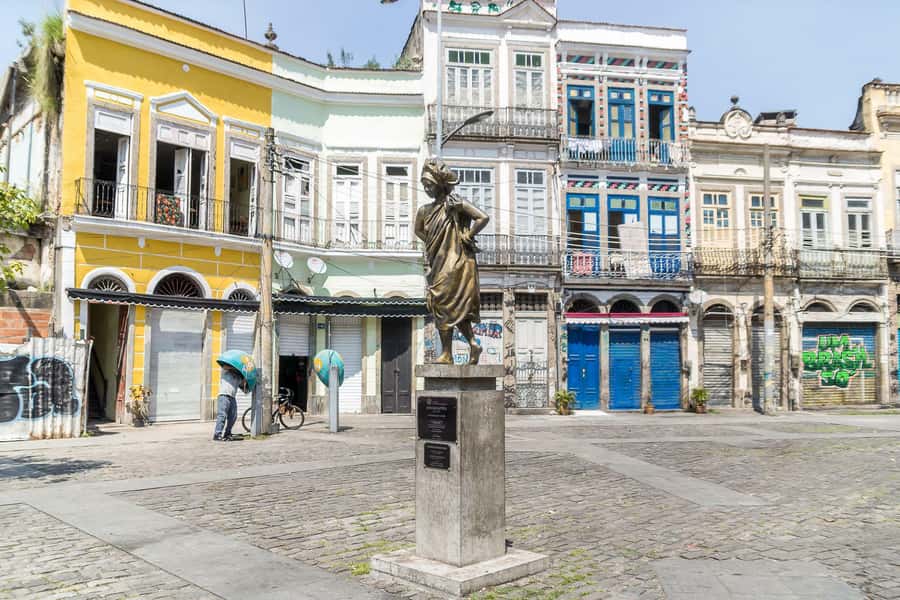
Along the route, you see a statue honoring Mercedes Baptista. She was a pioneer of Afro dance in Brazil and the first Black dancer at Rio’s Municipal Theater.
This is a small stop with a large point. The tour does not limit Afro-Brazilian history to slavery and hardship. It also shows the people who pushed into Brazilian cultural institutions and changed what was possible for those who followed.
A guide’s skill matters here. The stop could easily become a quick name and date. Guides praised for their storytelling, including Marina, Nathalia, and Larissa, have been especially effective at giving individual figures a human place in the larger story. The experience is strongest when the guide explains why a person mattered, not just where the statue is located.
Pedra do Sal and the birth of samba
Pedra do Sal is one of the tour’s central stops. You spend about 20 minutes here, learning why it is considered the place where samba was born.
The site also represents the continuity of Black life in Rio. It is described as the oldest continuously inhabited Black neighborhood in the country, giving the stop a significance beyond music. Samba grew from social and cultural life that developed in this part of the port district.
I like the way this stop links music to community. You are not simply being told that samba began at a famous place. You are learning how the neighborhood’s African heritage, social gatherings, and cultural expression connect.
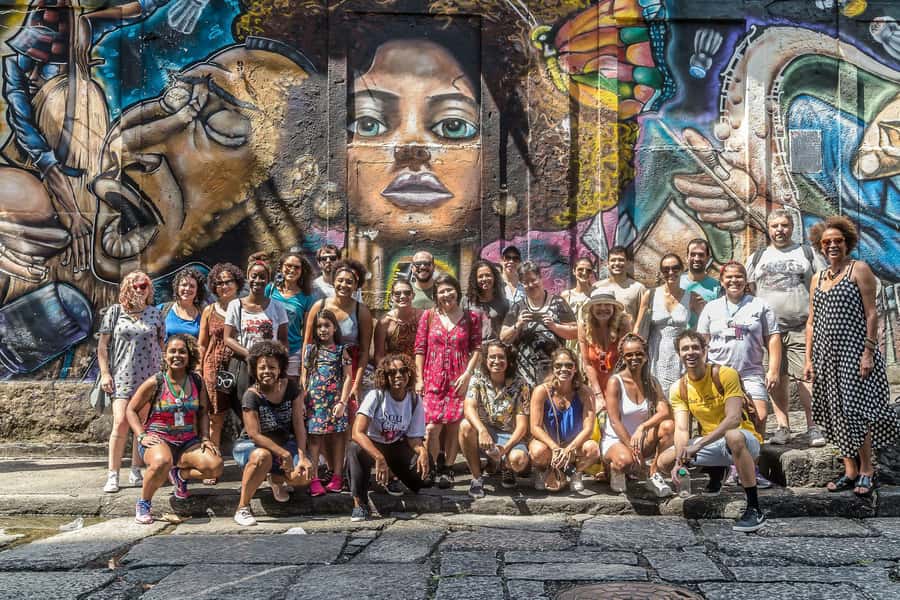
The guide may also point out murals and images of cultural figures around Little Africa. These artworks add another layer to the walk, showing how the area remembers people who shaped or continue to protect Afro-Brazilian culture.
Do not expect a full samba performance as part of the tour. The listed experience is a guided visit and explanation. The value lies in understanding the setting before you seek out music elsewhere in Rio.
The Hanging Garden of Valongo
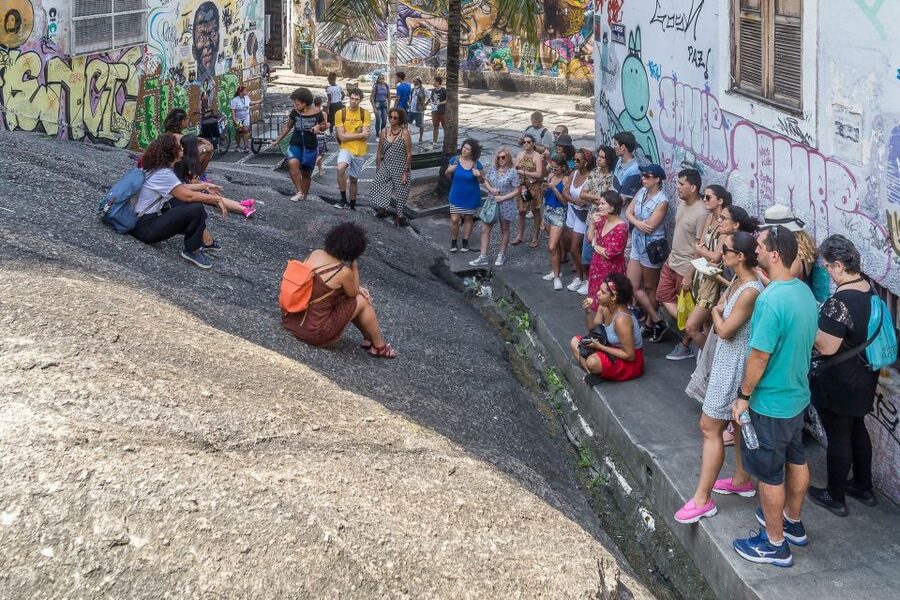
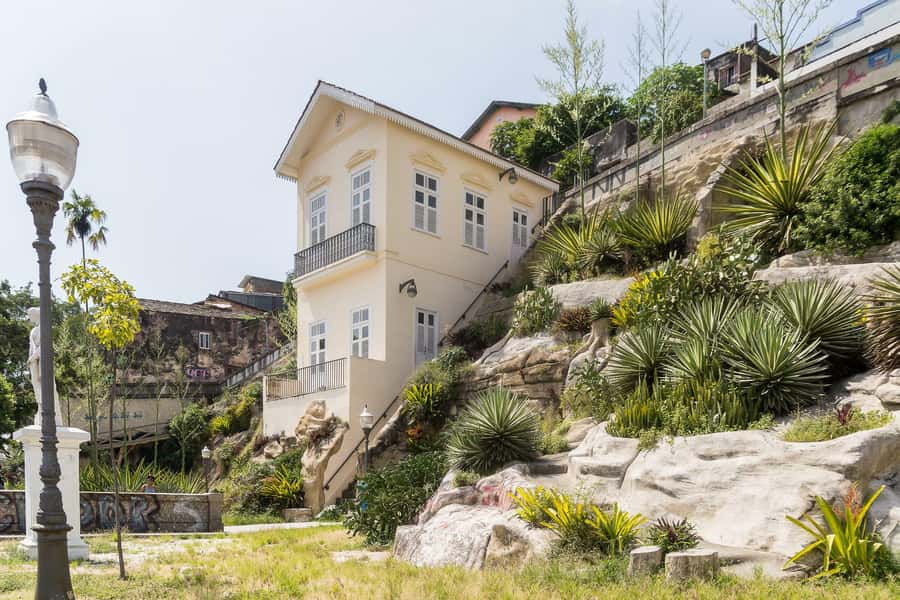
The route continues to the Jardim Suspenso do Valongo, or Hanging Garden of Valongo. The guided visit lasts about 20 minutes.
This site gives the tour a different mood. The garden sits above the Valongo area and offers a place to consider the port’s past from a quieter viewpoint. The stop is part of the story of forced migration and the people who passed through Rio under slavery.
I find this kind of pause useful. After the movement of the streets and the cultural energy of Pedra do Sal, the garden creates space for reflection. Your guide can connect the physical remains and public spaces to the larger history of Brazil’s slave trade.
The subject is difficult, and the tour does not pretend otherwise. Several guides have been praised for handling slavery, structural racism, and sexism with care while still encouraging honest questions. That is important because the walk is not meant to offer a comfortable, simplified version of the past.
Cais do Valongo: ending with the site’s hardest truth
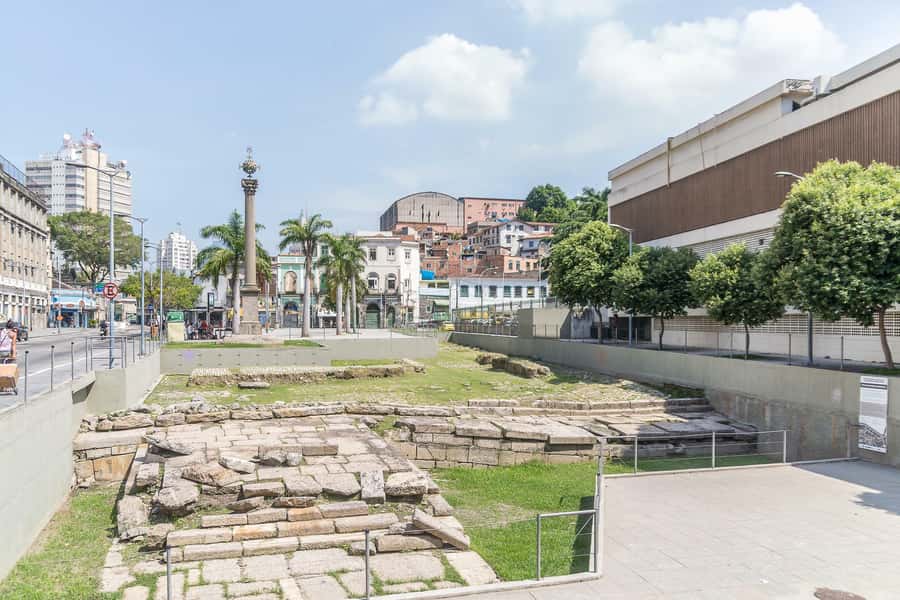
The final historical stop is Cais do Valongo, the Valongo Wharf. You spend around 20 minutes here before the activity returns to the Rio Art Museum.
This is the point where the port history becomes most direct. The wharf is tied to the arrival and sale of enslaved Africans in Rio. Standing at the site gives physical weight to facts that can otherwise remain abstract.
The tour’s strength is its refusal to separate the past from the present. The guide discusses not only slavery but also how racial inequality and identity continue to affect Brazil. The result is a more useful understanding of Rio than a tour that treats the past as finished.
At the end, take a few minutes to ask questions and request food or sightseeing suggestions. Guides have offered recommendations for Little Africa and other parts of Rio, and some have helped participants arrange safe onward transport. That personal help is not a guaranteed service, but it has been part of the warm, attentive guiding style reported across many departures.
What makes the guiding so important
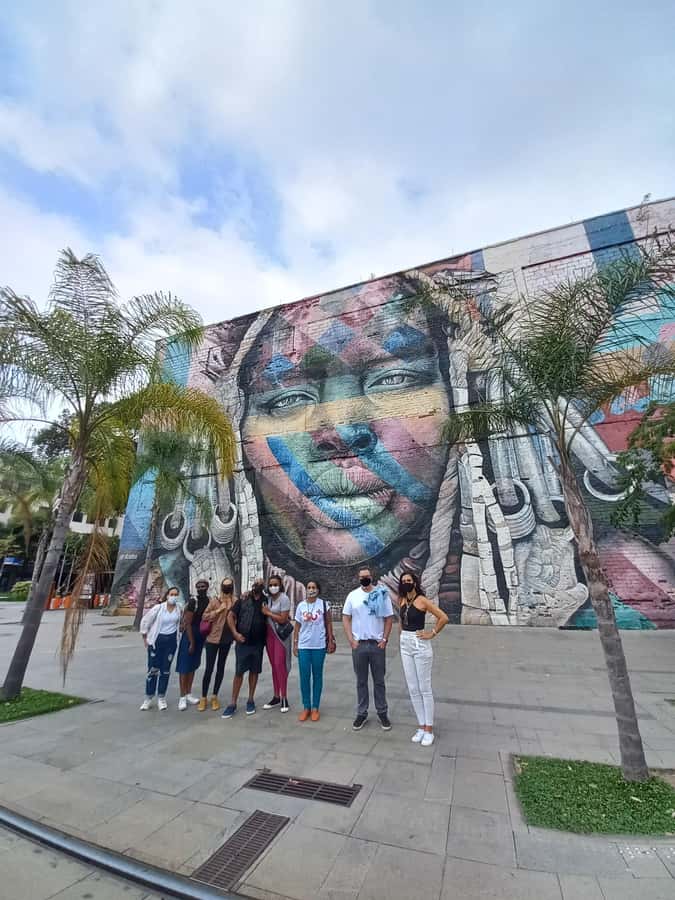
This tour depends heavily on the person leading it. The subjects are serious, and the sites can be easy to miss if you walk through the district alone.
The guide team has included Luana, Nathalia, Marina, Larissa, Eddie, Ryane, Raquel, Natalia, Mariana, and others. The strongest recurring qualities are enthusiasm, clear English, patience with questions, and a personal connection to Afro-Brazilian history.
Some guides have academic backgrounds in history or tourism. Others draw on family experience and community ties. That combination can make the walk feel less like a list of dates and more like a conversation about people, memory, and identity.
I also like that the guiding style is not limited to a solemn lecture. One guide used acting and facial expression to explain historical points. Another balanced humor with discussions of racism, sexism, and slavery. That mix keeps the group involved, but the tone remains appropriate to the subject.
The activity information says English or Portuguese-speaking guiding is included, while the current practical note says the tour is offered only in English. If Portuguese guiding is essential for you, confirm the language before booking.
Is $40 a fair price?
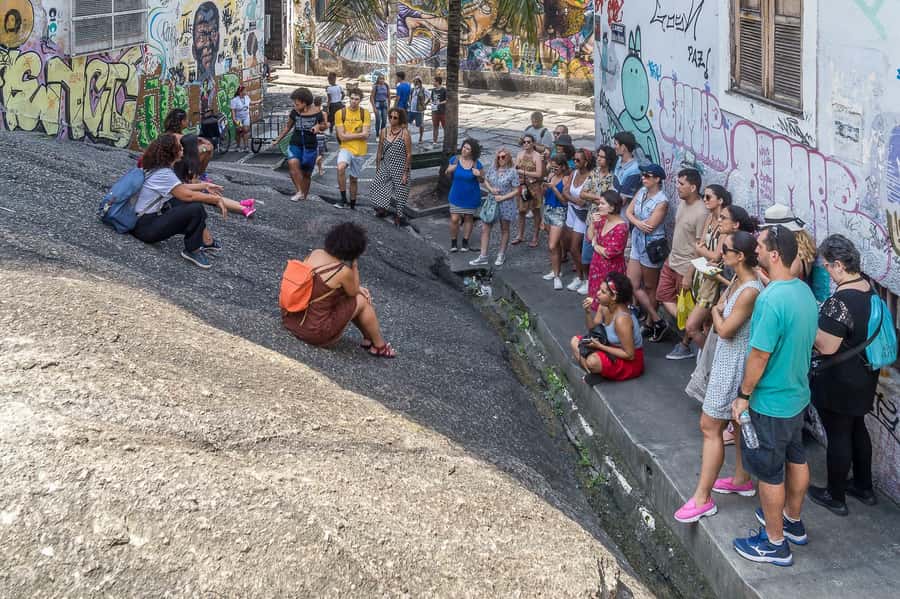
At $40 per person, this is a fair price if you want focused historical interpretation rather than a basic walk through the port district. The price covers the live guide and the full 150-minute route, including the rooftop view and several sites that are easy to pass without context.
You are not paying for transport, hotel pickup, food, museum admission as a separate attraction, or a performance. Hotel pickup and drop-off are not included, and lunch is not part of the tour. That keeps the cost fairly clear, but you should budget for getting to the meeting point and buying food afterward if you want it.
The value comes from the subject and the guide. A casual stroll can show you Pedra do Sal or Valongo, but it cannot easily explain their place in Brazil’s colonial past, the port economy, samba, African cooking, and modern racial relations. For me, that makes the fee worthwhile for visitors who want cultural context.
The free cancellation window of 24 hours and the reserve-now, pay-later option also make planning easier. Still, the practical details matter more than the flexible booking: arrive early, dress for weather, and do not expect the guide to wait beyond 15 minutes.
Heat, rain, pace, and practical comfort
This is an outdoor walk, and the weather affects how comfortable it feels. The tour operates rain or shine. One departure continued during heavy rain, and another participant specifically warned that the heat can be tiring over two and a half hours.
Bring:
- Comfortable walking shoes
- Water
- Sunscreen
- Comfortable clothing
There is a 10-minute break at the Rio Art Museum, but this is not a sit-down tour. Most of the experience takes place on city streets and at outdoor sites.
Children under five are not suitable for the activity. Older children may need to be able to follow a serious historical discussion and keep pace on foot, so consider your family’s interest and stamina before booking.
I would avoid scheduling this immediately before a fixed lunch reservation or another timed attraction. The listed duration is 150 minutes, but group questions, weather, and the pace of discussion can affect the exact finish.
Who will get the most from this walk?
I recommend it to you if you want to understand Rio through Afro-Brazilian history, not just see its famous sights. It is especially useful for first-time visitors who want a stronger cultural base for the rest of their stay.
It also suits people interested in:
- The history of slavery in Brazil
- The port district and Little Africa
- Samba and Black cultural life
- Brazilian food traditions
- Public art, memorials, and local figures
- Present-day questions about race and identity
I would think twice if you dislike walking outdoors, struggle in heat, or want a tour built around food tastings and entertainment. This is an educational heritage walk. The tone can be emotional, and the material includes the horrors of slavery.
The experience may also be valuable if you have already taken a general Rio city tour and found that it skipped Afro-Brazilian history. The Little Africa route adds a part of Rio that broad sightseeing tours often treat too briefly.
Should you book the Little Africa Heritage Walking Tour?
Book it if you want a serious, human-scale introduction to Rio’s African heritage, with a guide who can connect colonial history to food, dance, samba, neighborhood life, and present-day Brazil. The route is compact, the price is reasonable for 150 minutes of live interpretation, and the rooftop view gives the walk a useful opening.
Go prepared for sun, rain, and difficult subjects. Wear good shoes, carry water, arrive five minutes early, and leave room after the tour for lunch or further exploring around the port.
For me, the strongest reason to book is not any single stop. It is the way the stops work together. Mauá Square gives you the view, Prainha explains food, Mercedes Baptista represents achievement, Pedra do Sal connects community and samba, and Valongo forces you to face the port’s darkest history. That is a meaningful way to understand Rio.
FAQ
Where does the Little Africa Heritage Walking Tour begin?
The tour begins in front of the Museu de Arte do Rio, or Rio Art Museum.
How long does the tour last?
The activity lasts 150 minutes, or two and a half hours.
What places are visited?
The route includes the Rio Art Museum, Morro da Conceição, Largo de São Francisco da Prainha, Pedra do Sal, the Hanging Garden of Valongo, and Cais do Valongo. It returns to the Rio Art Museum.
Is the tour offered in English?
The current activity information says the tour is offered only in English. Other details list English or Portuguese-speaking guides, so confirm the language when booking if Portuguese is important to you.
What should I bring?
Bring comfortable shoes, sunscreen, water, and comfortable clothes.
Does the tour run in bad weather?
Yes. The tour takes place rain or shine. Be prepared for outdoor walking in both heat and rain.
Just added around Rio
- Rocinha Jeep Tour: A Journey into the Soul of the Favela!★ 3.8 · 3 reviews
- Tijuca National Park and all its wonders!★ 5.0 · 3 reviews
- Rio de Janeiro: Doors-off 30-min helicopter tour★ 5.0 · 3 reviews
- Rio de Janeiro: Hang gliding adventure★ 3.7 · 3 reviews
- Rio: Best Dive Experience All Inclusive Scuba Diving Package★ 5.0 · 3 reviews
- Pedra Bonita Trail: The easiest trail with a beautiful view of Rio★ 4.6 · 3 reviews
- Rio de Janeiro Secluded Beaches: Hike+Swim Prainha & Grumari★ 5.0 · 3 reviews
- Unforgettable Boat Party★ 5.0 · 3 reviews
Historical Tours, compared.
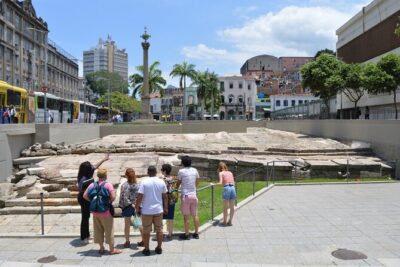
Explore Little Africa : Unveiling Afro Heritage in Rio de Janeiro
Read our review →
Learn the History of Rio with an Unforgettable City Center Walking Tour
Read our review →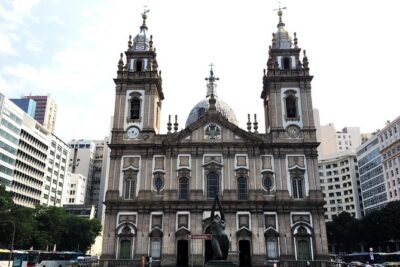
Rio’s city walking tour: a glimpse of history and olympic legacy
Read our review →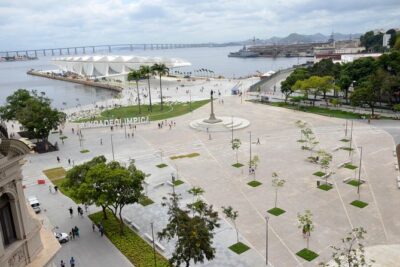
Olympic Boulevard, Museum of Tomorrow & Historical Rio
Read our review →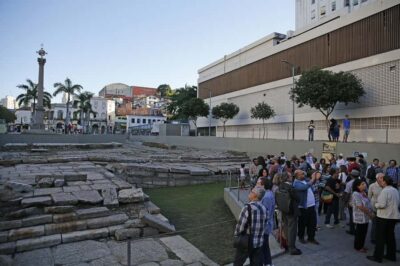
Olympic Boulevard, Museum of Tomorrow & History Tour
Read our review →
Petropolis Bohemia: Historic tour and visit to the Bohemian Brewery
Read our review →
Centro Historico and Lapa – Santa Teresa Walking, Historical and Bohemian Tour
Read our review →Browse the lists this tour appears in