
Reviewed · RIO OLYMPIC & PORT DISTRICT TOURS
Rio’s city walking tour: a glimpse of history and olympic legacy
Rio’s downtown tells a very different story from the beaches. This tour leads you through churches covered in gilt carving, imperial squares, old market streets, museums born from the Olympic renewal, and the grand Metropolitan Cathedral. You get a useful first look at the city’s past and present in one afternoon.
I like the strong mix of old and new, especially the shift from São Bento Monastery and Paço Imperial to Mauá Square and the Museum of Tomorrow. I also like the local guides, with JB, André, and Melanie earning particular praise for their warmth, city knowledge, and willingness to adjust the route.
The main consideration is pace and traffic. It is sold as a walking tour, but hotel transfers and some road travel are part of the day, and one poor experience involved a delayed pickup and confusing communication. You should also expect a moderate amount of walking, sometimes at a brisk pace.
In This Review
- Key points to know before booking
- Why old Rio is worth your afternoon
- Candelária Church and the first look at Rio’s past
- São Bento Monastery, the tour’s artistic high point
- Mauá Square and Rio’s Olympic legacy
- Praça XV and the imperial center
- Market streets, cultural centers, and everyday downtown
- Confeitaria Colombo, a grand pause in the walk
- The Metropolitan Cathedral and Carioca Square
- The guides make the biggest difference
- Walking, transfers, timing, and group size
- Is $60.77 a fair price?
- Who should book this city walk?
- Should you book it?
- FAQ
- How long does the Rio city walking tour last?
- What time does the tour start?
- Which sights are included?
- Is hotel pickup included?
- Are food and drinks included?
- How large can the group be?
- What happens if I need to cancel?
Key points to know before booking
- Four centuries of Rio in one afternoon: Follow a route through colonial churches, imperial buildings, market streets, museums, and modern public spaces.
- São Bento is the visual high point: The monastery’s paintings and gilt woodwork are among the most memorable sights on the route.
- Mauá Square shows modern Rio: The Olympic-era renewal brought the Museum of Tomorrow, Rio Art Museum, and large Cobra mural to this waterfront area.
- Guides can shape the experience: JB, André, Melanie, and other guides have adjusted timing and stops when the group was small.
- Hotel transfers add value: Pickup and return are included for most hotels in São Conrado, Leblon, Ipanema, and Copacabana.
- Expect a moderate walk: Wear comfortable shoes, and book early in your stay if you want practical orientation for later exploring.
Why old Rio is worth your afternoon
This is not a tour of Rio’s famous beaches or mountain views. Instead, it introduces the city center, where Portuguese colonial power, Brazil’s imperial period, Catholic tradition, commerce, and Olympic redevelopment all meet within a compact area.
I like this focus because downtown is easy to skip when you stay in Copacabana or Ipanema. The beach districts are pleasant and convenient, but they do not explain how Rio became Brazil’s political and cultural center. A walk through the old center gives you that missing context.
The route also works well as an early-trip orientation. You will pass squares, museums, churches, market streets, and transport points that can help you decide where to return on your own. Guides have also offered practical suggestions about food, shopping, and getting around Rio, which can save time and money later.
The price is $60.77 per person. That is not the cheapest way to see central Rio, especially since many of the sites are viewed from outside or have no separate admission charge. Still, the price includes a guide for roughly four hours, hotel pickup, and return transport for eligible hotels. I see the value mainly in the explanation, route planning, and added ease of getting to and from downtown.
More of the port district and Olympic Boulevard:
- Olympic Boulevard, Museum of Tomorrow & Historical Rio
★ 4.5 · 66 reviews - Rio: Olympic Boulevard, AquaRio and Museum of Tomorrow Tour
★ 4.5 · 54 reviews - Aqua Rio + Olympic Boulevard Tour – Rio de Janeiro by Pepe Rio Tours
★ 4.5 · 54 reviews
Candelária Church and the first look at Rio’s past
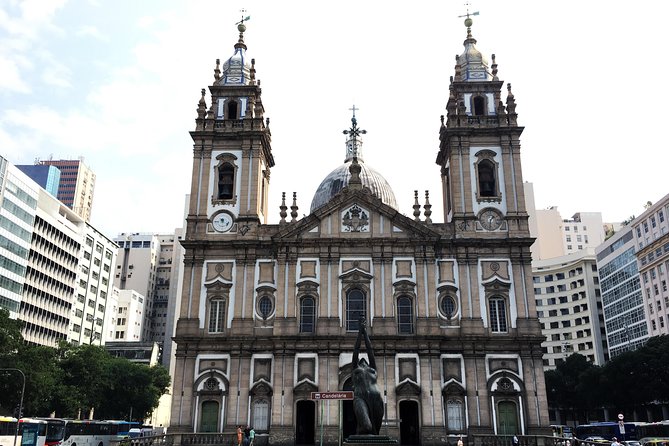
The first major stop is the Church of Our Lady of Candelária, usually called Nossa Senhora da Candelária. Construction began in 1630 and was completed in 1775, and the church’s neoclassical design reflects the long period over which it developed.
You have about 10 minutes here, with admission listed as free. That is enough for a quick look at the exterior and interior, though not enough for a slow architectural study. If church art is a major interest, ask your guide what details deserve your attention before moving on.
Candelária is a useful opening stop because it immediately shows the scale and decoration Rio’s religious institutions once commanded. The tour does not treat the building as an isolated photo stop. It places it within the wider story of downtown, where churches and government buildings grew alongside the colonial port.
São Bento Monastery, the tour’s artistic high point
São Bento Monastery was founded in 1590 by two monks from Bahia. It is considered an important part of Brazil’s architectural heritage, but the description alone does not prepare you for the effect of its interior.
The monastery is known for paintings and heavy gilt carvings. Several people who had limited enthusiasm for the rest of the route still singled out the Benedictine chapel as a favorite. I would give this stop your full attention, even though the scheduled visit is only about 10 minutes.
A Portuguese library building is also part of the experience on some versions of the route. This old book collection has surprised many visitors because it is not the sort of sight most people expect to find on a standard downtown walk. Ask your guide if it is included that day, since the exact sequence may change.
One useful detail: São Bento can provide an excellent viewpoint toward the Museum of Tomorrow, giving you a striking contrast between old religious architecture and modern Rio. That pairing helps explain the tour’s appeal better than a simple checklist of buildings.
Mauá Square and Rio’s Olympic legacy
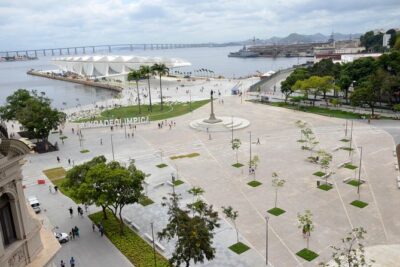
The renewed Mauá Square is the clearest modern chapter in the tour. Its redevelopment, tied to Rio’s Olympic legacy, created a new center for culture and leisure. The area includes the Rio Art Museum, the Museum of Tomorrow, and the large Cobra murals.
You may see the Museum of Tomorrow from outside rather than spend time inside. The tour summary says see the modern museum, not enter it, so you should not book this experience expecting a museum visit. The same applies to the Rio Art Museum unless your guide makes a special adjustment.
The Cobra mural is a strong outdoor stop. Its scale gives the area energy without requiring an indoor ticket or long visit. If you want to explore the museums properly, you will need extra time after the tour or a separate visit.
This part of the route also shows why a guide helps. The waterfront renewal is easy to read as a collection of new buildings, but a guide can connect it to changes in downtown life and the city’s Olympic-era redevelopment. The contrast with São Bento makes the story much easier to remember.
More walking tours in Rio:
- Rio de Janeiro: Rocinha Favela Walking Tour with Local Guide
★ 4.8 · 3,052 reviews - Rio De Janeiro: Half-Day Rocinha Favela Walking Tour
★ 4.7 · 2,272 reviews - Sunrise and Sunrise Walk Two Brothers with Local Guide
★ 5.0 · 193 reviews - Rio de Janeiro: Little Africa Heritage Walking Tour
★ 4.9 · 177 reviews
Praça XV and the imperial center
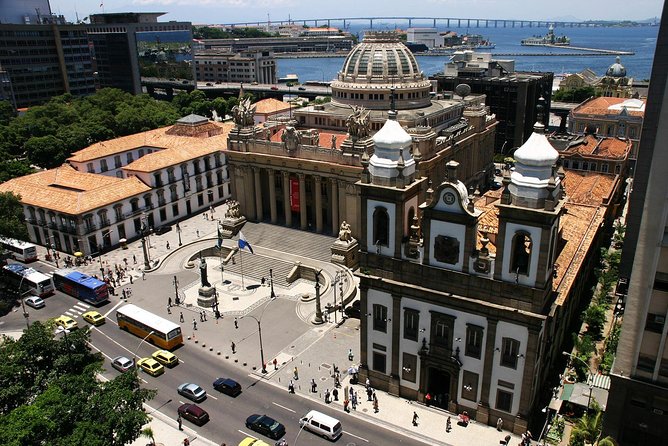
The route continues through Praça XV do Novembro, one of the key squares in Rio’s political history. Brazil’s emperors were crowned here in the 1800s, and the square has witnessed other major events in the country’s past.
The Paço Imperial, or Imperial Palace, is another important stop. Built in the 1700s, it served as a residence and workplace for Brazil’s rulers. It was also the residence of the Portuguese royal family when it arrived in Brazil, giving the building a direct link to the transfer of Portuguese power across the Atlantic.
The architecture here is more restrained than the interior of São Bento, but the historical setting matters. I find this part most useful when the guide explains who used each building and why the square mattered. Without that context, you may simply see another old façade.
The itinerary also includes the Tiradentes Palace from outside. This adds another political layer, though it is a brief viewing rather than a full visit. The tour’s strength is the way it joins these sites together, not the amount of time spent inside any single one.
Market streets, cultural centers, and everyday downtown
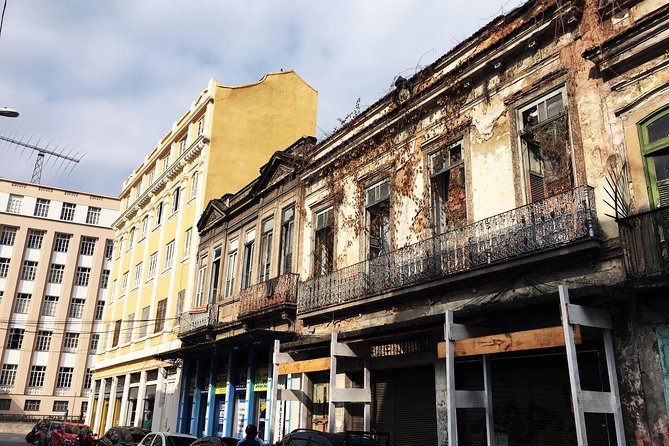
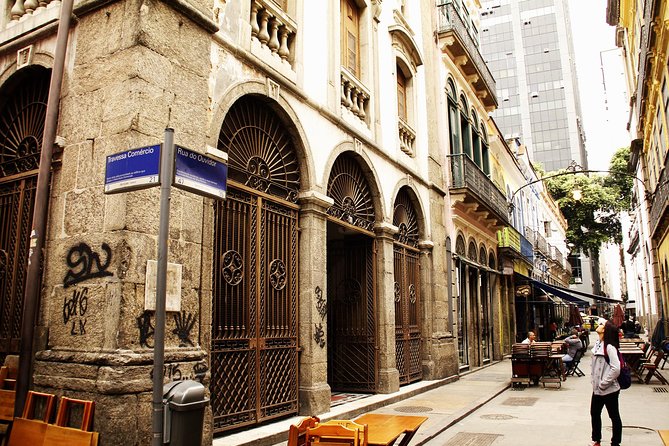
Between the grand buildings, you pass through famous market streets in Rio’s downtown. This is where the tour becomes less formal and more connected to present-day city life.
The pace can vary. One guide may keep you moving to cover more ground, while another may allow extra time to browse or answer questions. Small groups have led to very flexible outings, including route changes around places already visited and extra attention to individual interests.
The itinerary also includes one of Rio’s important cultural centers. The exact building is not specified, so I would treat this as a general cultural stop rather than book the tour for one particular center. The point is to see how old commercial and civic buildings now support art and public life.
This stretch is also where sensible street awareness matters. One guide was praised for helping visitors feel protected from pickpockets. That does not remove the need to watch your belongings, but a local escort can make busy downtown streets easier to manage.
Confeitaria Colombo, a grand pause in the walk
Confeitaria Colombo is scheduled for about 20 minutes. You see and visit the famous bakery, but food and drinks are not included.
This is more than a simple snack stop. Its ornate setting gives you a glimpse of Rio’s café culture and the polished side of old downtown. The building can be a welcome pause after several churches and squares, particularly during a warm afternoon.
There is a tradeoff. Twenty minutes is enough to look around, but not enough for a relaxed meal. One account described a longer tea-shop stop that reduced time available for other sights. If you care more about street exploration than a historic café interior, ask how long the stop will be and whether you can shorten it.
You may also want to save your appetite for an independent meal afterward. The tour ends near Carioca Square and the Metropolitan Cathedral area, where you can continue exploring and choose your own place to eat. Food is at your expense throughout.
The Metropolitan Cathedral and Carioca Square
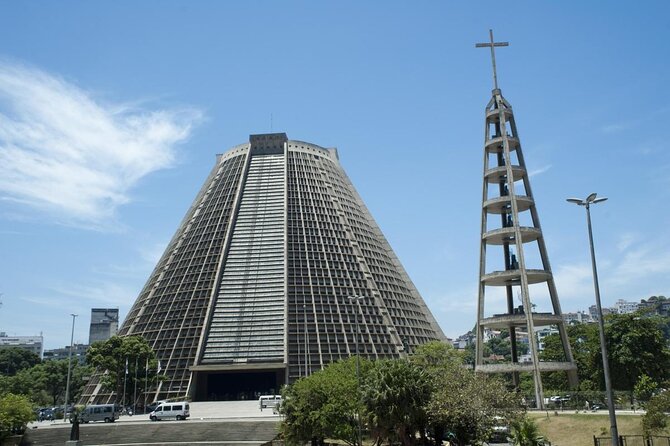
The Metropolitan Cathedral of Saint Sebastian is one of Rio’s most unusual buildings. Its conical form is very different from the colonial churches earlier in the route, and its interior diameter is listed at 96 meters, with an external diameter of 106 meters and an overall height of 75 meters.
You have about 10 minutes to see it. The short visit is enough to understand the cathedral’s huge scale, but you will want more time if you are interested in details, photographs, or quiet reflection.
The tour concludes in this area, near Carioca Square. This ending is practical because you are free to continue on foot, visit nearby sights, shop in the market area, or arrange the included return ride if available for your hotel. Some accounts suggest the route can end just short of certain nearby attractions, so clarify the final stop with your guide before the group breaks up.
If you want to see more of central Rio afterward, this is the moment to do it. The tour gives you orientation, then lets you decide how long to stay.
The guides make the biggest difference
The strongest part of this experience is the guide. JB, also known as Juan Bautista, has been praised for his energy, clear English, love of Rio, and ability to explain buildings during the drive as well as during the walk. André was described as punctual, attentive, and willing to add places that matched the group’s plans.
Melanie has also received strong praise for her friendly manner and ability to move between Spanish and English when caring for a mixed group. Other guides have been described as pleasant and well informed, though one guide was criticized for texting and rushing through the route.
That range matters. A guided city walk depends heavily on the person leading it, and this tour is no exception. The best guides treat the plan as a framework, answer questions, and adjust the time spent at each stop. The weakest version becomes a hurried list of buildings.
If you have specific interests, say so at the beginning. You might prefer architecture, imperial history, religious art, museums, shopping, or food. When the group is small, the guide may be able to adapt the route, but that flexibility is not guaranteed with a full group of up to 35 people.
Walking, transfers, timing, and group size
The scheduled start time is 1 p.m., with the experience lasting about four hours. The route includes hotel pickup and drop-off for most hotels in São Conrado, Leblon, Ipanema, and Copacabana.
That transfer is useful because downtown Rio is not next door to the beach districts. It also adds a practical benefit for anyone who would rather not work out the route by taxi or public transport on the first day.
The tour requires moderate physical fitness. You will walk through central streets and spend time standing in churches, squares, and public areas. One detailed account described a much longer outing, so the actual day may run beyond the advertised estimate depending on traffic, pickup arrangements, group size, and guide choices.
Traffic has caused problems on at least one occasion, with more driving and less walking than expected. A separate pickup problem involved the vehicle going to the wrong hotel at the wrong time. To reduce the chance of confusion, wait inside your hotel reception if you are meeting the guide at a hotel where you are not staying, and confirm the pickup details in advance.
The maximum group size is 35. In practice, the tour may sometimes be much smaller or even operate as a private outing, which gives the guide room to adjust the pace. You should not count on that, but it is a pleasant possibility.
Is $60.77 a fair price?
At $60.77, this is a mid-priced introduction to downtown Rio. You are paying for more than entry tickets, since most listed stops have no admission charge included or required. The main purchase is the guide’s interpretation, the planned route, and transport between your hotel district and the center.
I think the price works best for a first or second day in Rio. You will learn the layout quickly, identify places worth revisiting, and get advice about local food, markets, and further sightseeing. It is less compelling if you are already comfortable navigating downtown or mainly want extended free time inside museums.
The tour also offers value for visitors who want a structured afternoon without committing to a full-day excursion. You see a broad range of places, from Candelária to Mauá Square and the cathedral, without needing to arrange several separate visits.
Who should book this city walk?
I would choose this tour if you are visiting Rio for the first time, enjoy architecture and city history, and want an organized introduction to central Rio. It is also a good fit if you are staying in Copacabana, Ipanema, Leblon, or São Conrado and value hotel transfers.
You should be comfortable walking at a moderate pace and standing for short visits. If you want a slow museum day, a long lunch, or detailed time inside every church, this route will feel rushed.
Book it early in your stay if possible. The tour is often reserved about eight days in advance, and its orientation value is greatest before you have formed your own map of Rio.
Free cancellation is available up to 24 hours before the start time. Changes or cancellations inside that window are not refunded, and poor weather or too few bookings can lead to a new date, another experience, or a full refund.
Should you book it?
Book this tour if you want the broad downtown picture: São Bento’s dazzling interior, imperial squares, market streets, Olympic-era Mauá Square, Confeitaria Colombo, and the dramatic Metropolitan Cathedral. The combination is unusual and gives you a clearer sense of Rio than a beach-focused itinerary alone.
Skip it if you want extensive independent walking or full museum admissions. The experience is at its best with a flexible guide such as JB, André, or Melanie, and its weakest when traffic, pickup mistakes, or a rushed guide take over. At $60.77, it is a sensible orientation tour, but your expectations should center on guided context and variety rather than long visits at each stop.
FAQ
How long does the Rio city walking tour last?
The advertised duration is approximately four hours. The actual time may vary because of traffic, hotel pickups, group size, and the guide’s pacing.
What time does the tour start?
The stated start time is 1 p.m.
Which sights are included?
The route includes Candelária Church, São Bento Monastery, Mauá Square, the Museum of Tomorrow from the outside, a major Rio cultural center, Praça XV do Novembro, Paço Imperial, downtown market streets, Tiradentes Palace from the outside, Confeitaria Colombo, the Metropolitan Cathedral, and Carioca Square.
Is hotel pickup included?
Yes. Pickup and drop-off are included for most hotels in São Conrado, Leblon, Ipanema, and Copacabana.
Are food and drinks included?
No. Food and drinks are not included. The tour visits Confeitaria Colombo, but any purchase there is your responsibility.
How large can the group be?
The maximum group size is 35 people. The group may be smaller, and some departures have operated with only a few participants or as a private tour.
What happens if I need to cancel?
You can receive a full refund if you cancel at least 24 hours before the local start time. Cancellations or changes made less than 24 hours before the experience are not refunded. If bad weather or insufficient bookings causes the operator to cancel, you will be offered another date or experience, or a full refund.
More History Walks in Rio
- Rio de Janeiro: Historic Rio and Santa Teresa Half-Day Tour
★ 4.4 · 228 reviews - Explore Little Africa : Unveiling Afro Heritage in Rio de Janeiro
★ 5.0 · 97 reviews - Learn the History of Rio with an Unforgettable City Center Walking Tour
★ 5.0 · 82 reviews - Rio: Olympic Boulevard, Museum of Tomorrow & History Tour
★ 4.1 · 47 reviews
Just added around Rio
- Rocinha Jeep Tour: A Journey into the Soul of the Favela!★ 3.8 · 3 reviews
- Tijuca National Park and all its wonders!★ 5.0 · 3 reviews
- Rio: Best Dive Experience All Inclusive Scuba Diving Package★ 5.0 · 3 reviews
- Rio de Janeiro: Doors-off 30-min helicopter tour★ 5.0 · 3 reviews
- Rio de Janeiro: Hang gliding adventure★ 3.7 · 3 reviews
- Pedra Bonita Trail: The easiest trail with a beautiful view of Rio★ 4.6 · 3 reviews
- Rio de Janeiro Secluded Beaches: Hike+Swim Prainha & Grumari★ 5.0 · 3 reviews
- Unforgettable Boat Party★ 5.0 · 3 reviews
Rio Olympic & Port District Tours, compared.
Olympic Boulevard, Museum of Tomorrow & Historical Rio
Read our review →
Olympic Boulevard, AquaRio and Museum of Tomorrow Tour
Read our review →
Aqua Rio + Olympic Boulevard Tour – Rio de Janeiro by Pepe Rio Tours
Read our review →
Olympic Boulevard, Museum of Tomorrow & History Tour
Read our review →
Museum of Tomorrow Guided Tour, Admission & Transfer
Read our review →

Browse the lists this tour appears in