
Reviewed · WALKING TOURS
Rio de Janeiro: Downtown Walking Tour
Rio’s historic center packs five centuries of Brazilian history into a walk of about four hours. You move from imperial buildings and winding colonial lanes to grand republican institutions, then finish among the theaters and museums of Cinelandia.
I like the clear route from XV de Novembro Square to Colombo’s Bakery, and I like that the tour explains both famous buildings and smaller details such as the dos Teles Arch. The main drawback is that this is a walking tour in central Rio, so it is not suitable for wheelchair users or people with mobility limits. High-season crowds and traffic can also stretch the timing.
In This Review
- Key points to know before booking
- Why Downtown Rio deserves a walking tour
- Starting at XV de Novembro Square
- The dos Teles Arch and Rio’s older lanes
- Candelária Church and the religious heart of the route
- CCBB, where an old building meets current culture
- From old Rio to Cinelandia Square
- A snack at Colombo’s Bakery
- Ending by the subway in Downtown Rio
- Guides and the importance of language
- Who should book this four-hour walk?
- Should you book the Downtown Rio walking tour?
- FAQ
- How long does the Downtown Rio walking tour last?
- Where does the tour meet?
- How early should I arrive?
- Which languages are available?
- Is hotel pickup included?
- Is the subway ticket included?
- What should I bring?
- Is the tour suitable for wheelchair users?
Key points to know before booking
- A compact history lesson: Follow Brazil’s story from monarchy to republic through Rio’s old streets and public buildings.
- Architecture changes block by block: Imperial facades, religious buildings, cultural centers, and modern city views all appear in one route.
- A multilingual guide leads the walk: Tours are offered in Portuguese, Spanish, English, Italian, and French.
- The finish is practical: The walk ends at a downtown subway station, leaving you free to return to your hotel or keep exploring.
- Colombo’s Bakery adds a local pause: A snack stop brings a welcome break near the end of the route.
- Pack light and wear good shoes: Large bags are not allowed, and the tour runs rain or shine.
Why Downtown Rio deserves a walking tour
Many visitors see Rio through its beaches, Sugarloaf Mountain, and Christ the Redeemer. Those sights are essential, but they tell only part of the city’s story. Downtown gives you the political, religious, commercial, and cultural backdrop behind modern Rio.
This tour works because the route is arranged as a progression. You begin in an area shaped by the monarchy, pass churches and government buildings, then reach the grand cultural district around Cinelandia. Instead of treating the center as a collection of unrelated photo stops, the guide can show how Rio changed as Brazil changed.
I especially like the contrast between old stone streets and formal modern buildings. The route does not focus on one period alone. You see the royal past, the early republic, and the city’s later cultural ambitions in a relatively short time.
The experience costs $47 per person. That is fair value if you want a guide to explain the buildings and connect them into a clear story. You are paying for four hours of company, interpretation, and route planning, not admission to a series of paid attractions. Food, drinks, and subway tickets are extra, so budget a little more for the snack and transport if needed.
More walking tours in Rio:
- Rio de Janeiro: Rocinha Favela Walking Tour with Local Guide
★ 4.8 · 3,052 reviews - Rio De Janeiro: Half-Day Rocinha Favela Walking Tour
★ 4.7 · 2,272 reviews - Sunrise and Sunrise Walk Two Brothers with Local Guide
★ 5.0 · 193 reviews
Starting at XV de Novembro Square
The tour begins at the Atlantico Business Hotel on Rua Senador Dantas, 25, in Centro. You should arrive 15 minutes early. The guide calls you by name at the meeting point, which makes the start less awkward than waiting for a large group to guess who belongs together.
From there, the route heads to Downtown Rio and the area around XV de Novembro Square. This is the right place to begin because it brings Brazil’s colonial and imperial past close to the surface. The surrounding roads and buildings reflect major changes from the monarchy through the creation of the republic.
The square gives the guide room to explain how power was organized in old Rio. You can expect attention to the architecture and the role of the buildings around you, rather than only a quick photo stop.
Several important structures appear here:
- The ALERJ building: This connects the walk to Rio’s political life and the continuing role of public institutions.
- Paço Imperial: The former imperial palace helps place the monarchy within the city itself.
- Carmo Convent: This adds a religious and architectural layer to the square’s civic setting.
The value of this opening section depends heavily on the guide. Some guides have a gift for linking dates, buildings, and small human stories. The strongest feedback about this tour centers on patient explanations, careful answers, and enthusiasm for Brazilian culture. Guides named Angelica, Lavinha, Antonio, and Renato have been singled out for clear language, warmth, and strong historical or cultural commentary.
That said, the level of detail can vary. One less enthusiastic assessment found the historical explanations too light, especially for dates and events tied to particular buildings. If you are a serious architecture or history student, ask questions as you walk. A good guide can make the tour much more rewarding when you show interest.
The dos Teles Arch and Rio’s older lanes
The route then passes beneath the dos Teles Arch and into its winding alleyways. This is one of the more atmospheric parts of the walk because the scale changes. Large civic buildings give way to narrower passages and older urban forms.
I like this stop because it helps you picture Downtown Rio as a lived-in historic district, not just a line of official monuments. The arch and lanes offer a change of pace, and the guide’s small stories can add more than a standard description from a plaque.
Do not expect a long independent exploration here. This remains a guided city walk, and the group continues through the center on foot. Comfortable shoes matter from the first hour onward. Since the tour operates rain or shine, a light rain layer is sensible, especially if the forecast is uncertain.
The operator does not permit luggage or large bags. That rule makes sense on narrow streets, but it also means you should leave suitcases at your hotel or use another secure arrangement before arriving. Bring a passport or ID card, and a copy is accepted.
Candelária Church and the religious heart of the route
Candelária Church is the next major stop. The guide explains its importance to Rio and places it within the wider story of the city. The church is not treated as an isolated religious building. It forms part of the center’s civic and architectural identity.
This section suits you if you enjoy learning how religious buildings fit into urban life. The route gives you time to look at the exterior and hear why the church matters, while the guide provides context that you would miss by passing through the area alone.
The tour information does not promise a private interior visit or extended time inside each site. Think of the experience as an architectural and historical walk through Downtown, not a sequence of formal museum admissions. That keeps the price simple, but it means you should not book this expecting long indoor visits at every stop.
A different side of the city, same few days:
- Rio de Janeiro: 6-Stop Highlights of Rio with Lunch
★ 4.4 · 5,157 reviews - Christ the Redeemer Entry Ticket by Corcovado Train
★ 4.4 · 4,476 reviews - Rio: Christ the Redeemer, Sugarloaf, Selaron & BBQ Lunch
★ 4.5 · 2,428 reviews - Rio de Janeiro: Angra dos Reis and Ilha Grande Full-Day Tour
★ 4.6 · 1,673 reviews
CCBB, where an old building meets current culture
After Candelária, you discover the Brazil Bank Cultural Center, commonly called CCBB. This stop shows how an older building can take on a present-day cultural role.
I enjoy this kind of stop because it breaks the usual pattern of looking only backward. The tour connects the architecture of the building with the city’s current cultural life. You get a sense of how Downtown Rio continues to use its older structures rather than treating them as frozen relics.
The wording of the experience points to architectural details and lesser-noticed features here. Your guide may draw attention to parts of the building you would otherwise walk past. The precise emphasis can vary by guide, but the route is designed to make you look closely.
If you want to spend substantial time inside CCBB’s exhibitions, plan to return on your own. The walking tour moves onward to the next district, and its main goal is interpretation along the route.
From old Rio to Cinelandia Square
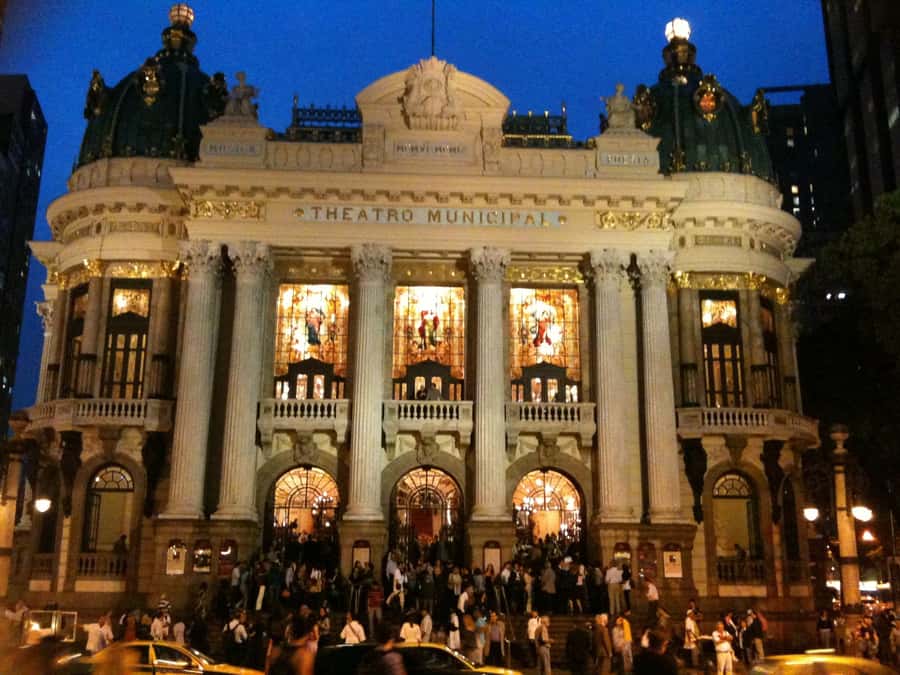
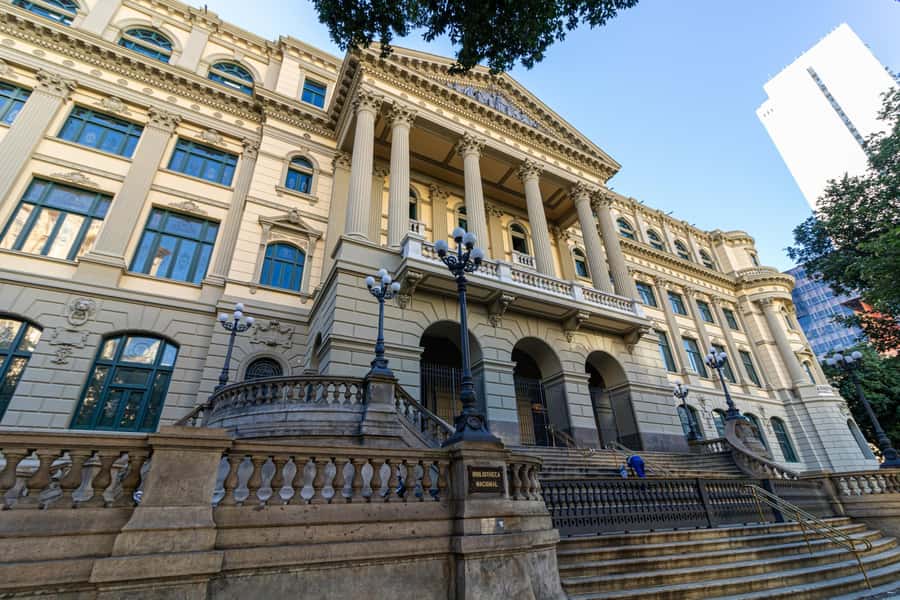
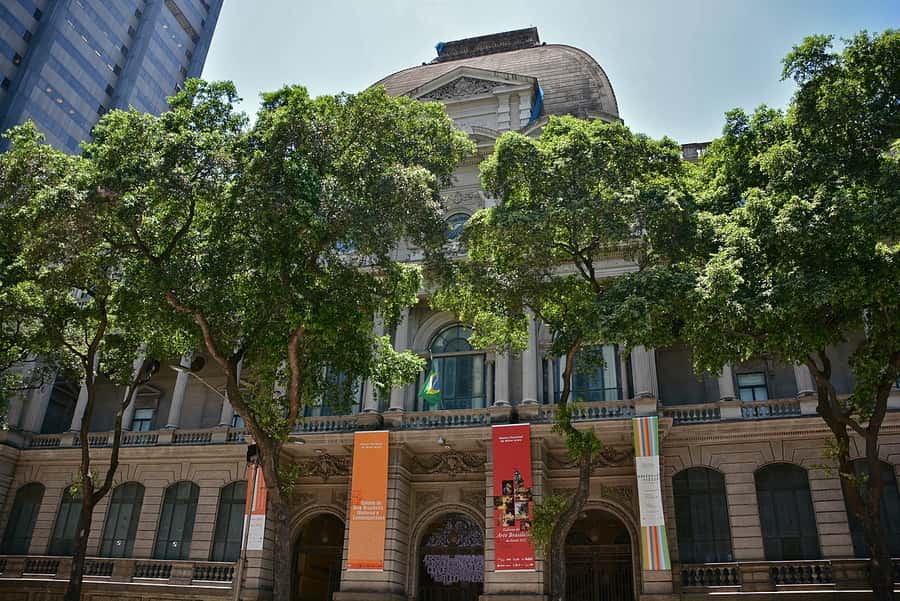
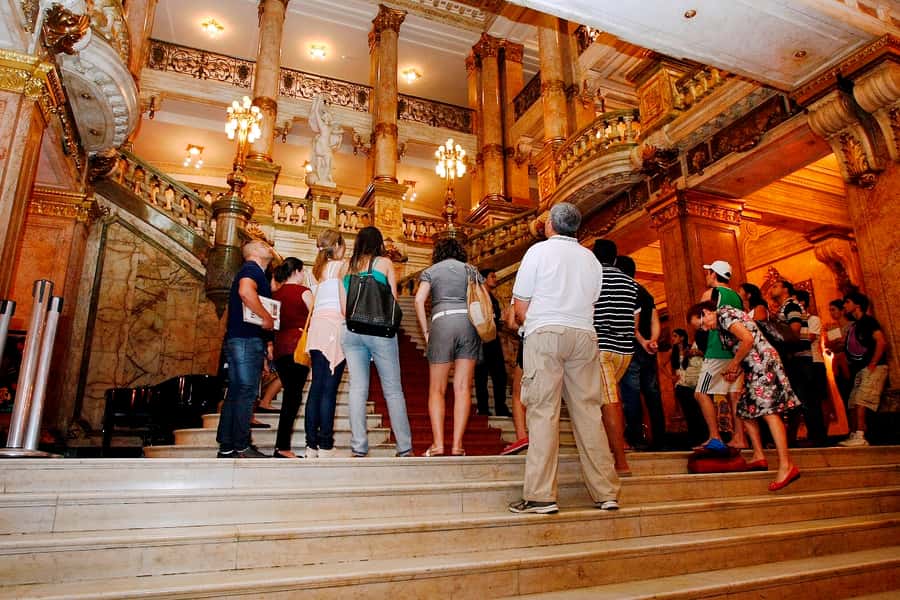
The walk continues toward Cinelandia Square, where the architectural mood changes. This is one of the tour’s best transitions. Rather than presenting old and new Rio as separate worlds, the route lets you see the contrast on foot.
Cinelandia brings together major political and cultural buildings:
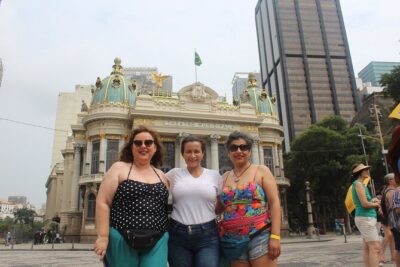
- Municipal Theater of Rio de Janeiro
- National Library of Brazil
- National Museum of Fine Arts
- City Council of Rio de Janeiro
These buildings give the square a grand, formal character. They also show the ambitions of a city that wanted public culture, learning, government, and the arts to have a powerful place in the urban center.
I like this part for travelers who want more than colonial streets. You can compare the older imperial setting around XV de Novembro Square with the monumental civic architecture of Cinelandia. The shift helps explain why Downtown can feel visually mixed: the city grew in layers, and each period left its own style.
The square can also be one of the busier parts of the walk. High season may bring more people and slower movement through the center. Traffic can affect the overall schedule as well, even though most of the route is on foot. Keep your afternoon plans flexible rather than scheduling an important timed ticket immediately after the tour.
A snack at Colombo’s Bakery
The route includes a stop at Colombo’s Bakery, one of Rio’s best-known landmarks. You have a chance to admire the architecture and have a snack.
This is a useful design choice. Four hours on foot is long enough for your attention and energy to dip, especially in warm weather. A short food stop gives you a break while keeping the focus on the city.
Food and drinks are not included in the $47 price, so you pay for your own snack. That gives you control over what you order, but remember to bring money or a suitable payment method. The available information does not specify the snack menu, so do not book this expecting a fixed meal.
The bakery also works as a final reminder that Rio’s heritage is not limited to palaces, churches, and government buildings. Commercial spaces can be part of a city’s identity too. Look up from the table and take in the interior details before the tour moves to its final point.
Ending by the subway in Downtown Rio
The tour ends at a subway station in Downtown Rio. From there, you can return to your hotel or continue exploring the area independently.
This finish gives the experience practical value. You are not left at an unfamiliar attraction with no clear next step. You can use the station as a transport link, though a subway ticket may be necessary. The listed cost is BRL 15 roundtrip per person, and that is not included in the tour price.
You may also want to keep exploring nearby cultural buildings after the group walk ends. If a particular museum, church, or cultural center caught your attention, the end point makes it easy to continue your own route, subject to that site’s opening arrangements. The tour itself does not include entry tickets.
Guides and the importance of language
The tour is offered in Portuguese, Spanish, English, Italian, and French. That range is a major advantage for a history-focused walk because you want to catch names, dates, and explanations without struggling through a second language.
The most praised part of the guiding is the personal approach. Angelica has been described as attentive and especially strong in Italian. Lavinha has been noted for patience and extensive explanations. Antonio has received praise for making the walk welcoming and for connecting the places to wider cultural ideas. Renato has been recognized for punctuality, Spanish fluency, and historical, architectural, and cultural commentary.
Those details give you a useful expectation: the guide can shape the day as much as the route does. You may get a lively story-filled walk, or a more basic overview. Ask questions, especially at the ALERJ building, Paço Imperial, Candelária Church, and the buildings around Cinelandia. The available feedback includes both strong praise for detailed explanations and one complaint that some building histories lacked enough dates and events.
Who should book this four-hour walk?
I would choose this tour if you want an organized first look at Downtown Rio and prefer to understand what you are seeing. It is especially suitable for:
- First-time visitors who have already planned the city’s major viewpoints and want historical context.
- Architecture fans who enjoy comparing imperial, religious, civic, and modern styles.
- Museum and culture lovers who want to identify places to revisit independently.
- Visitors who speak Portuguese, Spanish, English, Italian, or French and want a guided walk in one of those languages.
- Independent explorers who like ending near public transport rather than returning to the starting point.
I would think twice if you dislike walking for four hours, need step-free access, or want a tour built around long indoor visits. It is also not the best match if you prefer a tiny specialist tour focused only on architectural dates. The route covers a lot, and the guide’s exact level of detail can differ.
Bring comfortable shoes, a small bag, identification, and protection from rain. Leave luggage and large bags behind. Since the tour runs in all weather and may take longer during high season, dress for the conditions and avoid a tight appointment afterward.
Should you book the Downtown Rio walking tour?
Book it if you want a clear introduction to Rio’s historic center, with a guide who can connect imperial buildings, churches, cultural institutions, and republican architecture. The route is well shaped, the language options are generous, and the subway ending makes the rest of your day easy to plan.
The $47 price is worthwhile when personal explanation matters to you. Just keep your expectations realistic: food, drinks, transport, and admission fees are extra, the walk is not designed for limited mobility, and the quality of the commentary depends on the guide assigned.
For a first visit to Downtown Rio, I would book this early in your stay. It can give you the background to make later solo visits to CCBB, Cinelandia, Colombo’s Bakery, or other central sights more meaningful.
FAQ
How long does the Downtown Rio walking tour last?
The tour lasts four hours. High-season traffic and large crowds may make it take longer.
Where does the tour meet?
The meeting point is the Atlantico Business Hotel at Rua Senador Dantas, 25, Centro, Rio de Janeiro.
How early should I arrive?
Arrive 15 minutes before the scheduled start. The guide will call you by name at the meeting point.
Which languages are available?
The tour is offered in Portuguese, Spanish, English, Italian, and French.
Is hotel pickup included?
No. Hotel pickup and drop-off are not included, so you need to reach the meeting point yourself.
Is the subway ticket included?
No. If you need one, the listed cost is BRL 15 roundtrip per person.
What should I bring?
Bring comfortable shoes and a passport or ID card. A copy of the identification document is accepted.
Is the tour suitable for wheelchair users?
No. The tour is not suitable for wheelchair users or people with mobility impairments.
Just added around Rio
- Rocinha Jeep Tour: A Journey into the Soul of the Favela!★ 3.8 · 3 reviews
- Tijuca National Park and all its wonders!★ 5.0 · 3 reviews
- Rio de Janeiro: Doors-off 30-min helicopter tour★ 5.0 · 3 reviews
- Rio de Janeiro: Hang gliding adventure★ 3.7 · 3 reviews
- Rio: Best Dive Experience All Inclusive Scuba Diving Package★ 5.0 · 3 reviews
- Pedra Bonita Trail: The easiest trail with a beautiful view of Rio★ 4.6 · 3 reviews
- Rio de Janeiro Secluded Beaches: Hike+Swim Prainha & Grumari★ 5.0 · 3 reviews
- Unforgettable Boat Party★ 5.0 · 3 reviews
Walking Tours, compared.

Sunrise and Sunrise Walk Two Brothers with Local Guide
Read our review →
Learn the History of Rio with an Unforgettable City Center Walking Tour
Read our review →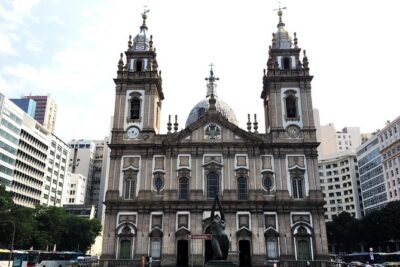
Rio’s city walking tour: a glimpse of history and olympic legacy
Read our review →
Walking tour of the bohemian neighborhoods of Santa Teresa and Lapa
Read our review →
Browse the lists this tour appears in