
Reviewed · HISTORICAL TOURS
Explore Little Africa : Unveiling Afro Heritage in Rio de Janeiro
Rio’s Little Africa tour places you in the port district where Afro-Brazilian history is not tucked away in a distant museum. You walk through streets, squares, archaeological sites, and cultural centers tied to the forced arrival, survival, faith, music, and political life of Black communities in Rio. I especially like the decolonial approach and the way the route connects the past to present-day Rio.
I also like the small-group limit of 20 people, the included museum admission, and the short VLT ride that links the opening and closing parts of the route. The main drawback is the walking. Three and a half hours can feel long in the heat, and the tour is not recommended for people with disabilities. Comfortable shoes are essential.
In This Review
- Key points about Rio’s Little Africa tour
- Why Little Africa deserves time in Rio
- Santa Rita begins the story in the city center
- Pretos Novos Institute confronts a buried past
- MUHCAB links memory with living culture
- Valongo Wharf makes the port’s role clear
- Pedra do Sal brings religion and music into view
- Largo da Prainha is a fitting final stop
- The short VLT ride adds local texture
- What the $82.53 price really covers
- Guide quality shapes the whole experience
- Who should book, and who should think twice
- Practical planning before you go
- Should you book Rio’s Little Africa tour?
- FAQ
- How long is the Little Africa tour?
- How much does the tour cost?
- Where does the tour begin?
- Where does the tour end?
- Is public transportation included?
- Which admission ticket is included?
- Is lunch included?
- Is the tour available on Sundays?
- When are the museums closed?
- How many people can join the tour?
- Can I cancel for a full refund?
Key points about Rio’s Little Africa tour
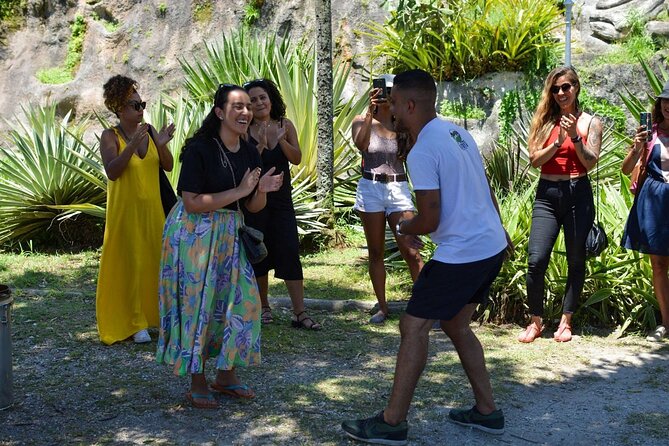
- Six meaningful stops: Visit Santa Rita, the Pretos Novos Institute, MUHCAB, Valongo Wharf, Pedra do Sal, and Largo da Prainha.
- A serious look at slavery: The tour explains Brazil’s slave trade and its continuing effect on Black life and inequality.
- Excellent guide-led storytelling: Guides including Carolina, Rafael, Raphael, Malu, Val, and Carol have been praised for warmth, clarity, and strong command of the subject.
- Museum admission included: Your price covers entry to the Pretos Novos Institute, with other listed sites visited free of charge.
- Afternoon timing: The usual start is at 2 p.m., which avoids Rio’s worst midday heat but can mean weaker light near the final stops.
- Easy to combine with other plans: The tour ends at Largo da Prainha, close to the port district rather than back at the starting point.
Why Little Africa deserves time in Rio
Many first-time visits to Rio focus on Christ the Redeemer, Sugarloaf Mountain, beaches, and samba. Those places matter, but they do not explain how Rio was shaped by the African peoples brought to Brazil, nor how Black communities built religious, musical, and social life under brutal conditions.
This tour takes you into the port district often called Little Africa. The name refers to a zone where Black residents, customs, work, worship, and resistance became central to the identity of the area. You are not simply looking at old buildings. You are following a route where archaeology, memory, religion, music, and present-day culture meet.
The subject is painful. The tour deals directly with enslavement, death, forced migration, and institutional inequality. At the same time, it gives space to survival and creativity. That balance matters. You are asked to face the violence without reducing Afro-Brazilian life to suffering alone.
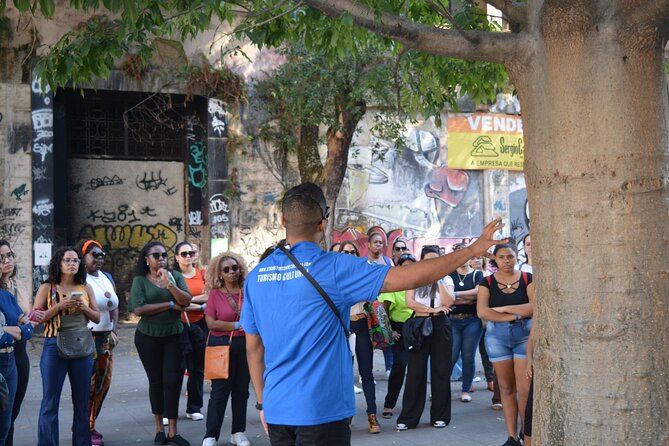
The experience has a top rating of 5 out of 5 from 97 ratings, with 99 percent of participants recommending it. The praise is strongest for the guides. Carolina, Rafael, Raphael, Malu, Val, and Carol are all singled out in feedback for their preparation, energy, patience, and ability to make difficult material understandable.
More history walks in Rio:
- Rio de Janeiro: Historic Rio and Santa Teresa Half-Day Tour
★ 4.4 · 228 reviews - Rio de Janeiro: Little Africa Heritage Walking Tour
★ 4.9 · 177 reviews - Learn the History of Rio with an Unforgettable City Center Walking Tour
★ 5.0 · 82 reviews
Santa Rita begins the story in the city center
The tour starts at the Sanctuary of Santa Rita, at Largo de Santa Rita in central Rio. The external visit lasts about 20 minutes and uses the church and its surroundings to introduce the area’s religious and social past.
This is a good opening because it sets up the tour’s method. You are not being led through a list of dates. Instead, the guide uses the built environment to explain how Black presence shaped this part of Rio and how traditional accounts can leave out important voices.
The stop also introduces the tour’s decolonial viewpoint. That means the guide makes an effort to question old versions of Brazilian history that treated enslaved people as background figures rather than as individuals, families, workers, worshippers, and agents in their own lives.
You will not enter this stop as part of the listed visit, so your attention is on the guide’s explanation and the setting itself. I would arrive ready to listen rather than expecting a conventional church tour.
Pretos Novos Institute confronts a buried past
The Instituto de Pesquisa e Memória Pretos Novos, usually called IPN, is one of the most important stops. The visit lasts around 40 minutes, and admission is included in the tour price.
The institute is connected to an archaeological site associated with the Pretos Novos, the name given to Africans who died soon after arrival in Brazil. The site forces a hard question: what happened to people who were transported across the Atlantic and did not survive the first stage of enslavement in Rio?
This is not a light sightseeing stop. You may find the material confronting, but it gives the tour much of its weight. The archaeology makes the subject physical and specific. Instead of discussing the slave trade only in terms of numbers, the institute helps you consider the people whose lives were cut short.
Allow the guide to set the pace here. The best part of the visit is the explanation around the site, not rushing through it to take photographs. Some of the most praised guides, including Carolina and Rafael, are especially effective at placing this difficult material within the wider story of Brazil and the African diaspora.
MUHCAB links memory with living culture
The MUHCAB, or Museum of Afro-Brazilian History and Culture, is a territory museum in the Gamboa area. The visit takes about 40 minutes, and admission is listed as free.
The phrase territory museum is useful here. The museum is not treated as an isolated building full of objects. Its purpose is tied to the surrounding area, where Afro-Brazilian history remains part of the neighborhood’s identity.
Expect this stop to widen the story beyond enslavement. The guide discusses cultural practices, community life, and the ways Black people shaped Rio’s customs and public identity. The contrast with the Pretos Novos Institute is important. One stop deals with death and forced arrival. The next helps you see the long cultural life that followed.
The quality of this part depends heavily on the guide. Guides have been praised for explaining both painful and celebratory parts of Afro-Brazilian experience without flattening either one. You may also encounter people connected with the museum, although that is not promised and should not be treated as part of the scheduled program.
Museum schedules can change. From December 16 through January 5, and during Carnival season, all museums on this tour are closed. The Pretos Novos Institute is also closed on Sundays.
A different side of the city, same few days:
- Rio de Janeiro: 6-Stop Highlights of Rio with Lunch
★ 4.4 · 5,157 reviews - Christ the Redeemer Entry Ticket by Corcovado Train
★ 4.4 · 4,476 reviews - Rio de Janeiro: Rocinha Favela Walking Tour with Local Guide
★ 4.8 · 3,052 reviews - Rio: Christ the Redeemer, Sugarloaf, Selaron & BBQ Lunch
★ 4.5 · 2,428 reviews
Valongo Wharf makes the port’s role clear
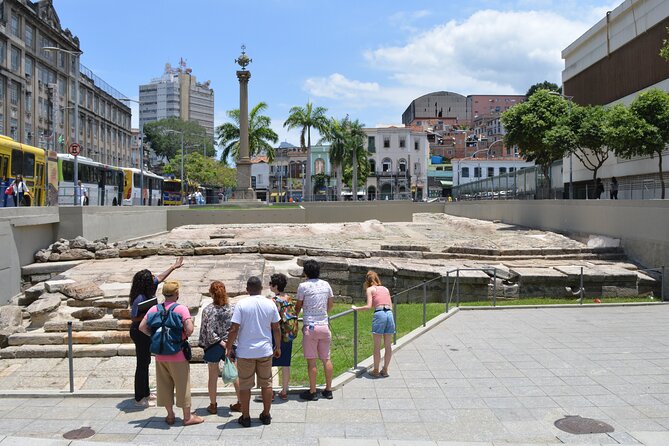
Cais do Valongo is a former wharf in Rio’s port district, between present-day Coelho e Castro and Sacadura Cabral streets. The stop lasts about 30 minutes and is visited from outside, with no separate admission charge.
This is one of the route’s most significant places because it connects the city directly to the Atlantic slave trade. The port was a point of arrival for Africans brought to Brazil by force. Standing in this area gives physical shape to a story that can otherwise feel distant.
The visit is also a reminder that Rio’s development was tied to labor extracted through slavery. The port was not an accidental backdrop. It was part of the machinery that brought people into the country and fed the growth of the city.
You should expect a guided explanation rather than a large museum presentation. That can be an advantage because the guide can connect the site to the previous stops and to the streets around you. It also means the experience is less structured than a traditional indoor attraction, so listen closely and ask questions.
Pedra do Sal brings religion and music into view
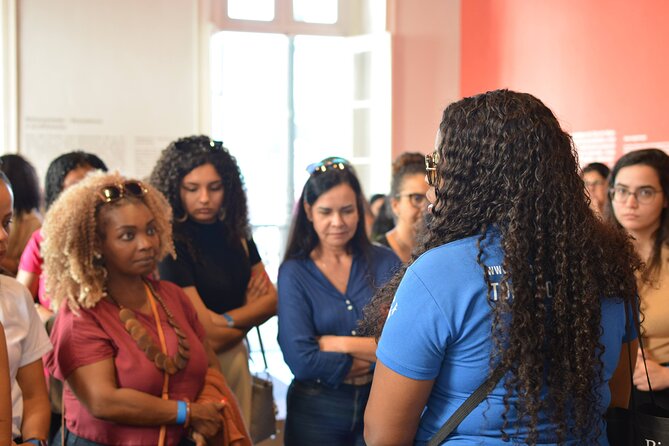
The route continues to Pedra do Sal in the Saúde neighborhood, near Largo da Prainha. The external visit lasts about 25 minutes.
Pedra do Sal is both a historical and religious landmark. Its importance helps show that Afro-Brazilian heritage in Rio is not limited to archaeological remains. Faith, community gatherings, music, and shared memory are also part of the story.
This is where the tour can feel more connected to present-day Rio. The guide explains the meaning of the site and its place in Black cultural life. The setting itself is memorable, but the value comes from understanding why it matters.
Since this is another outdoor stop, weather affects the experience. The tour requires good weather, and poor conditions can lead to a new date or a full refund. Bring water and wear shoes with a firm sole. The route includes enough walking that sandals with little support may become uncomfortable.
Largo da Prainha is a fitting final stop
The tour ends at Largo São Francisco da Prainha after about 20 minutes there. This square was once a symbolic part of Little Africa, marked by Black presence and the zungus, communal spaces associated with Black life.
Today the square is also known as one of Rio’s more fashionable spots. That contrast gives the final stop extra interest. The area has changed, but its older meaning has not disappeared. A good guide helps you see both the current public face of the square and the Black history beneath it.
This is a useful place to finish because the tour ends in an active neighborhood rather than at a parking lot or hotel. The listed end point is Rua São Francisco da Prainha, 7, in Saúde. You can make your own plans afterward, but no meal is included, so arrange lunch or a later meal separately.
The late afternoon timing has a tradeoff. Starting around 2 p.m. keeps you from walking during the hottest part of the day, which can be severe in Rio. On the other hand, the light may fade toward the end, making photographs less attractive. If pictures matter most to you, a private morning option may be worth asking about.
The short VLT ride adds local texture
The tour includes a brief ride on Rio’s VLT public transport, and the fare is already included in the price. This is a small detail, but it helps the route feel like a city experience rather than a private vehicle transfer between attractions.
The ride also breaks up the walking. You still need to be prepared for a considerable amount of time on foot, but the VLT gives your legs a short rest and lets you move through the port area as local public transport users do.
The tour begins at Largo de Santa Rita and ends at Largo da Prainha. It does not return you to the starting point. Keep that in mind when planning dinner, a transfer, or another activity.
What the $82.53 price really covers
At $82.53 per person, this is not the cheapest way to spend three and a half hours in Rio. Its value comes from the focus and the guide rather than from a long list of expensive admissions.
The price includes all fees and taxes, admission to the Pretos Novos Institute, and the VLT ride. The other listed stops are free or viewed externally. Lunch and tips are not included.
I think the price makes sense if you want serious context and a guide who can connect the sites. Without that interpretation, several stops could look like ordinary streets, squares, or outdoor ruins. The guide is what turns the route into a coherent account of Rio’s Afro-Brazilian past.
If you mainly want grand views, major monuments, or an easy ride with little walking, this is not the best use of your money. If you want to understand a part of Rio that standard sightseeing often misses, the cost is more defensible.
The average booking time is 24 days in advance. That suggests you should reserve ahead, especially if your dates are fixed or you want a particular language or departure day.
Guide quality shapes the whole experience
The strongest part of this tour is the human explanation. Carolina is praised for her warmth, detail, and ability to adjust the pace for older relatives. Rafael and Raphael are praised for making the subject clear and enjoyable. Malu is described as pleasant and well informed, while Val is noted for speaking English well enough to teach the material clearly.
Guide assignments can change, so you should not book expecting one specific person unless the provider confirms it. Still, the range of positive comments points to a strong team culture.
The experience also works well for people who want to ask questions. The subject can raise comparisons with Black history in the United States and other parts of the African diaspora. A thoughtful guide can explain similarities without pretending the histories are identical.
English-language delivery deserves a practical note. One past departure required rescheduling while an English interpreter was arranged, and another participant found a guide’s English fully adequate even though it was the guide’s second language. If precise English interpretation is essential to you, confirm the language arrangements before booking.
Who should book, and who should think twice
I recommend this tour for you if:
- You want more than Rio’s usual postcard attractions.
- You are interested in Afro-Brazilian culture, slavery, religion, archaeology, or the African diaspora.
- You value a strong guide more than a large number of admissions.
- You are comfortable walking for several hours.
- You want a serious but approachable history experience.
I would think twice if you have limited mobility, dislike emotionally difficult subjects, or need a fully indoor activity. The tour is specifically not recommended for disabled people, although one guide adjusted the pace so an older family member could still take part. That positive example does not replace a direct accessibility check before booking.
Most people can participate, and service animals are allowed. The group can contain up to 20 people, so it is small enough for a personal feel but not necessarily intimate.
Practical planning before you go
Wear comfortable walking shoes and bring water. The route includes several outdoor stops, and the port district can be hot even when the afternoon timing makes the heat easier to manage.
Plan for about three and a half hours, but do not schedule something immediately afterward if you want time to ask questions or stop for food. The tour does not include lunch.
Sunday is not a good day for this experience because the Pretos Novos Institute is closed. Museums are also closed from December 16 to January 5 and during Carnival season.
Your reservation confirmation is provided at booking. Free cancellation is available up to 24 hours before the start time for a full refund. Changes or cancellations inside that window are not accepted for a refund. If bad weather cancels the tour, you are offered another date or a full refund.
Should you book Rio’s Little Africa tour?
Book it if you want to understand Rio through the lives and culture of the people who helped build it. The route is thoughtful, the subject is important, and the guides bring unusual care to material that is often simplified or ignored.
The best reason to go is not the number of stops. It is the connection between them: Santa Rita introduces the setting, the Pretos Novos Institute confronts the human cost of slavery, MUHCAB shows cultural memory, Valongo Wharf explains the port’s role, and Pedra do Sal and Largo da Prainha carry the story into living community space.
Skip it if your ideal Rio tour means minimal walking, light subject matter, or dramatic scenery at every turn. For everyone else, this is one of the more worthwhile half-day additions to a Rio visit, especially when booked early and taken with comfortable shoes.
FAQ
How long is the Little Africa tour?
The experience lasts approximately 3 hours and 30 minutes.
How much does the tour cost?
The listed price is $82.53 per person.
Where does the tour begin?
It begins at Santuário de Santa Rita, Largo de Santa Rita, in central Rio de Janeiro.
Where does the tour end?
The tour ends at Largo da Prainha, at Rua São Francisco da Prainha, 7, in the Saúde neighborhood.
Is public transportation included?
Yes. The tour includes a short ride on Rio’s VLT public transport, and the fare is included in the final price.
Which admission ticket is included?
Admission to the Pretos Novos Institute is included. The other listed stops have free admission or are visited externally.
Is lunch included?
No. Lunch is not included in the tour price.
Is the tour available on Sundays?
The Pretos Novos Institute is closed on Sundays, so this tour is not available in its usual form on that day.
When are the museums closed?
All museums are closed from December 16 through January 5 and during Carnival season.
How many people can join the tour?
The group size is limited to a maximum of 20 people.
Can I cancel for a full refund?
Yes. You can cancel at least 24 hours before the start time for a full refund. Cancellations or changes made less than 24 hours before the experience are not accepted for a refund.
Just added around Rio
- Rocinha Jeep Tour: A Journey into the Soul of the Favela!★ 3.8 · 3 reviews
- Tijuca National Park and all its wonders!★ 5.0 · 3 reviews
- Rio: Best Dive Experience All Inclusive Scuba Diving Package★ 5.0 · 3 reviews
- Rio de Janeiro: Doors-off 30-min helicopter tour★ 5.0 · 3 reviews
- Rio de Janeiro: Hang gliding adventure★ 3.7 · 3 reviews
- Rio de Janeiro Secluded Beaches: Hike+Swim Prainha & Grumari★ 5.0 · 3 reviews
- Pedra Bonita Trail: The easiest trail with a beautiful view of Rio★ 4.6 · 3 reviews
- Unforgettable Boat Party★ 5.0 · 3 reviews
Historical Tours, compared.
Learn the History of Rio with an Unforgettable City Center Walking Tour
Read our review →
Rio’s city walking tour: a glimpse of history and olympic legacy
Read our review →
Olympic Boulevard, Museum of Tomorrow & Historical Rio
Read our review →
Olympic Boulevard, Museum of Tomorrow & History Tour
Read our review →
Petropolis Bohemia: Historic tour and visit to the Bohemian Brewery
Read our review →
Centro Historico and Lapa – Santa Teresa Walking, Historical and Bohemian Tour
Read our review →Browse the lists this tour appears in