
Reviewed · HISTORICAL TOURS
African Heritage: Gastronomy and Musicality Experience
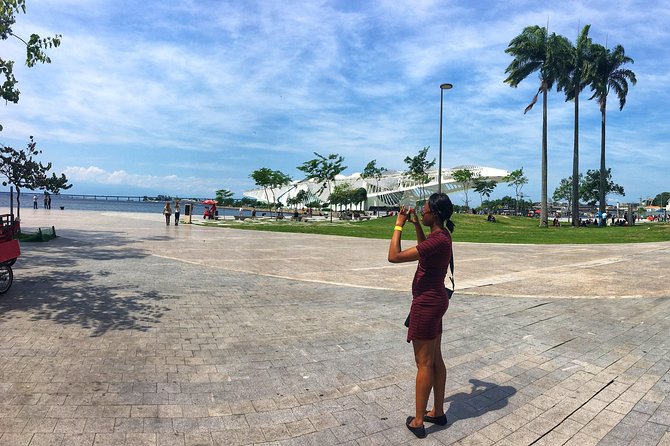
Rio’s African story comes alive in the city’s port district, where art, archaeology, food, samba, and memory all meet. This five-hour private experience takes you from Museu do Amanhã to Largo de São Francisco da Prainha, with its main focus on the Black heritage of Rio and the people who preserved it.
I like two things right away: the route connects major historical sites instead of treating them as isolated sights, and the food and percussion session turn a history lesson into something you can hear, taste, and take part in. Guides such as Isabella and Jaíse bring a personal Afro-diasporic viewpoint to subjects that are often left out of standard city tours.
The main consideration is the food. The experience is not suitable for people with food restrictions, and drinks are not included. You should also expect serious subject matter, including slavery, archaeological remains, and the lasting effects of racism and inequality.
In This Review
- Key points to know before booking
- Why this route matters in Rio’s port district
- Morrinho at MAR: a different view of favela life
- IPN and the physical evidence of slavery
- Cais do Valongo and the meaning of Little Africa
- Pedra do Sal: food, faith, and percussion
- Largo de São Francisco da Prainha at day’s end
- How much value do you get for $110?
- Who should book this Afro-Brazilian heritage tour?
- Final verdict: a strong choice for serious cultural context
- FAQ
- Where does the tour start?
- Where does the tour end?
- How long does the experience last?
- Is this a private tour?
- What food is included?
- Are drinks included?
- Is the IPN admission included?
Key points to know before booking
- See Rio beyond the postcard: The route focuses on the port district, Little Africa, and Afro-Brazilian cultural survival.
- Morrinho challenges favela stereotypes: A detailed miniature model shows daily life in Pereira da Silva favela through art.
- Cais do Valongo carries heavy historical weight: This former landing site is central to understanding Brazil’s forced African migration.
- Food and music are part of the lesson: You taste Afro-Brazilian and Yoruba dishes, then join a percussion workshop.
- The tour is private: Only your group takes part, which allows room for questions and a more personal pace.
- You finish in a lively local square: Largo de São Francisco da Prainha offers music, old Portuguese-style buildings, bars, snacks, and outdoor seating.
Why this route matters in Rio’s port district
Rio’s port area is one of the best places to understand how African culture shaped Brazil. The itinerary links places connected to memory, resistance, artistic expression, and everyday life. That gives you a fuller picture than a tour focused only on monuments or colonial architecture.
The experience begins at Museu do Amanhã, Praça Mauá, at 10:00 a.m. The museum itself is the meeting point rather than the main subject of the tour. From there, the route moves through nearby cultural sites and ends at Largo de São Francisco da Prainha in Saúde.
This part of Rio is especially useful for visitors who want context. You are not just being told that African culture influenced Brazil. You are shown where that influence survives, how it was shaped by forced migration, and how it appears in music, food, religion, art, and community life today.
The private format helps here. Since only your party takes part, you can ask about subjects that interest you, from favela life to Yoruba traditions or the social development of Rio. Past descriptions of guides Isabella and Jaíse suggest a teaching style that is personal, direct, and easy to follow.
More history walks in Rio:
- Rio de Janeiro: Historic Rio and Santa Teresa Half-Day Tour
★ 4.4 · 228 reviews - Rio de Janeiro: Little Africa Heritage Walking Tour
★ 4.9 · 177 reviews - Explore Little Africa : Unveiling Afro Heritage in Rio de Janeiro
★ 5.0 · 97 reviews
Morrinho at MAR: a different view of favela life
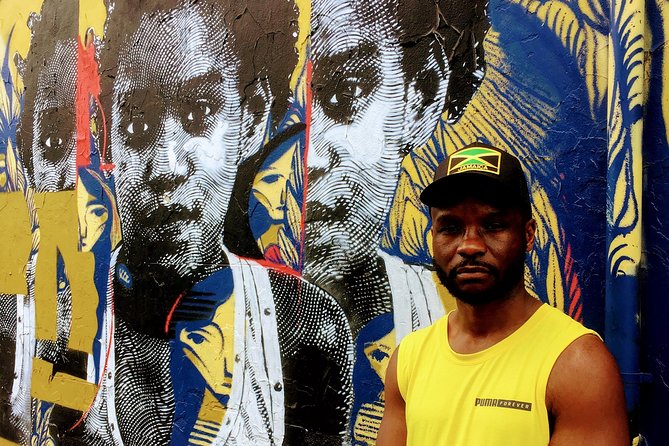
The first major stop is the Morrinho Project, permanently displayed at the Museu de Arte do Rio, known as MAR. The installation recreates the Pereira da Silva favela in miniature, including its streets, residents, and details of daily life.
This is a smart opening because it pushes back against the usual outsider image of favelas as places defined only by danger. The model presents them as lived-in communities with creativity, social ties, and their own rhythms. It gives you a way to think about favelas as complex neighborhoods rather than simple symbols.
You have about 25 minutes here, and admission is listed as free. That is enough time for an introduction and a focused look at the model, though not enough for a broad visit to the entire art museum. If you want a full MAR visit, plan a separate stop rather than expecting this experience to cover the museum.
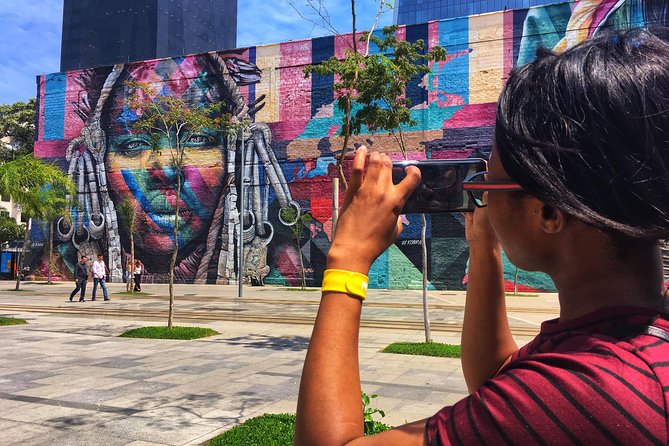
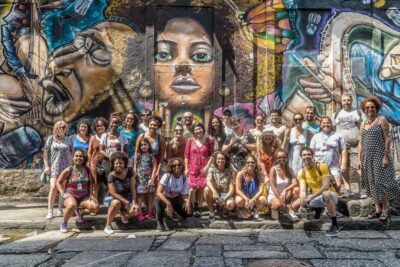
The itinerary also includes a look at Eduardo Kobra’s graffiti mural, described as the largest mural of its kind in the world. Its imagery honors ancestral ethnic groups and ancient cultures connected, directly and indirectly, to Brazil’s past. This adds a strong visual element after the miniature favela model.
The contrast is useful. Morrinho shows a community from close range, while Kobra’s mural makes a large public statement about ancestry and identity. Together, they show how contemporary Brazilian artists reclaim space and tell stories that official monuments have often ignored.
IPN and the physical evidence of slavery
The Instituto de Pesquisa e Memória Pretos Novos, or IPN, is one of the most serious stops. You spend about 40 minutes at the archaeological site and permanent exhibition, where bones of Africans were found.
The site changes the scale of the story. Dates and statistics can feel distant. Human remains make the violence of the slave trade immediate and difficult to avoid. The visit also helps explain why Afro-Brazilian culture cannot be separated from both suffering and resistance.
The IPN is not a light sightseeing stop. Give it your full attention, and expect the subject to affect the mood of the rest of the tour. The tour includes the IPN ticket, and the site is one of the strongest reasons to choose this experience if you want more than a casual introduction to Brazilian culture.
The educational value is also broader than the site itself. Brazil received more enslaved Africans than any other country in the Americas, and the forced movement of people shaped its language, faiths, food, music, labor systems, and social divisions. The guide’s role is important here, since this is where clear explanation and human context matter most.
Cais do Valongo and the meaning of Little Africa
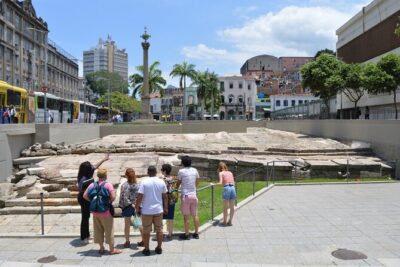
At Cais do Valongo, you visit the remains of the historic pier where enslaved Africans arrived. The stop lasts about 15 minutes, so it is brief, but its place in the route is essential.
The pier is part of the area called Little Africa, a name linked to the concentration of African culture and community around Rio’s old port. Here, the tour connects the archaeological site to traditions that survived despite forced displacement and harsh conditions.
Do not expect a long museum visit at the quay. This is a site visit and history talk, not a large attraction with many exhibits. Its value comes from standing in the place and understanding its connection to the people, families, religions, and cultural practices that later shaped Rio.
For me, the sequence works well: first you see art that presents community life, then physical evidence of slavery, then the actual landing site. The route does not soften the past, but it also does not leave the story there. The next stop turns toward cultural survival.
A different side of the city, same few days:
- Rio de Janeiro: 6-Stop Highlights of Rio with Lunch
★ 4.4 · 5,157 reviews - Christ the Redeemer Entry Ticket by Corcovado Train
★ 4.4 · 4,476 reviews - Rio de Janeiro: Rocinha Favela Walking Tour with Local Guide
★ 4.8 · 3,052 reviews - Rio: Christ the Redeemer, Sugarloaf, Selaron & BBQ Lunch
★ 4.5 · 2,428 reviews
Pedra do Sal: food, faith, and percussion
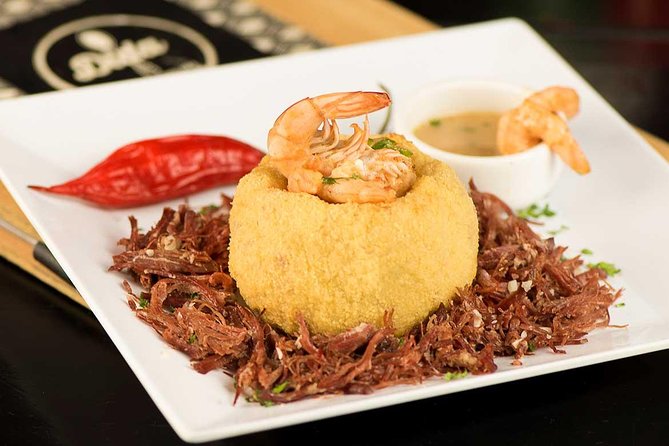
Pedra do Sal is the heart of the experience. You spend about three hours here, far longer than at the earlier stops. This is where the tour shifts from observing places to taking part in cultural practices.
The area is tied to the remaining community of Quilombo Pedra do Sal, an important center of Afro-Brazilian resistance and heritage. Cariocas gather here for weekly outdoor samba sessions, and the place remains closely linked to music and Black cultural identity.
The gastronomy portion includes a tasting of typical Afro-Brazilian and Yoruba dishes. These foods are connected to the daily practice of religions of African origin, so the meal is presented as more than a snack. It gives you a practical way to understand how African traditions remain part of ordinary life in Brazil.
The included tasting is a clear value point in a $110 experience. You are paying for a private, five-hour program that combines guiding, heritage sites, food, and music rather than a simple walking tour. Drinks cost extra, so bring room in your budget for anything you order alongside the meal.
The food restriction warning deserves attention. The experience is specifically described as unsuitable for people with food restrictions. If you have allergies, religious dietary rules, or a strict eating plan, ask the operator before booking rather than assuming substitutions will be available.
After the meal, you join a percussion workshop with an instructor and drummer from the African continent. This is one of the most distinctive parts of the afternoon. Instead of only hearing that African rhythms influenced Brazilian music, you get a direct introduction to percussion and the continuing connection between African and Brazilian musical traditions.
The workshop should appeal to you even if you are not a musician. It is designed as a cultural activity, not a performance test. Still, the exact instruments, teaching format, and level of participation are not specified, so do not book it expecting a particular style of class.
Pedra do Sal also changes with the day and the local event calendar. Weekly samba sessions are part of the area’s identity, but the tour details do not promise a live samba performance during your specific booking. You will learn about the music and take part in percussion, which is different from attending a scheduled concert.
Largo de São Francisco da Prainha at day’s end

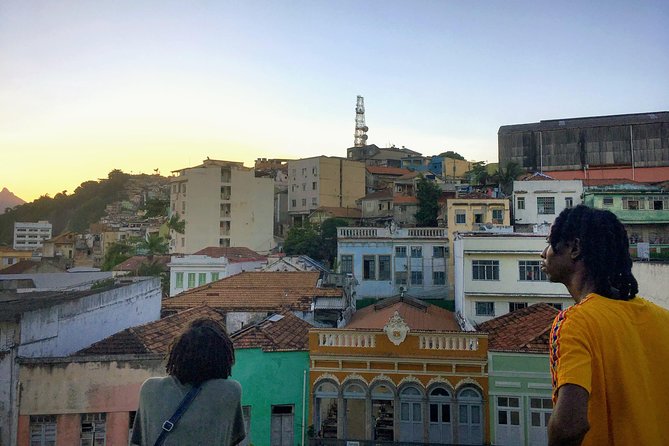
The final stop is Largo de São Francisco da Prainha, a square in Saúde surrounded by old buildings with Portuguese architecture. The planned visit lasts about 15 minutes, but the square itself is a place where you might want to linger if your schedule allows.
At sunset, the area can fill with samba, funk, jazz, and chorinho. Outdoor tables, cold beer, and snacks from local bars make it a natural place to continue the evening. The tour ends here, so you are well placed to decide if you want to stay for more music or make your own way onward.
This ending is well chosen. After the weight of IPN and Cais do Valongo, the square shows the port district as a living part of Rio rather than a preserved history lesson. The past remains visible in the buildings and cultural traditions, while the present comes through in music, food, and social life.
The experience does not include drinks, so any beer or other beverage at the square is your responsibility. The tour also does not specify a return transfer. Since the stated end point is Largo de São Francisco da Prainha, plan your onward transport from there.
How much value do you get for $110?
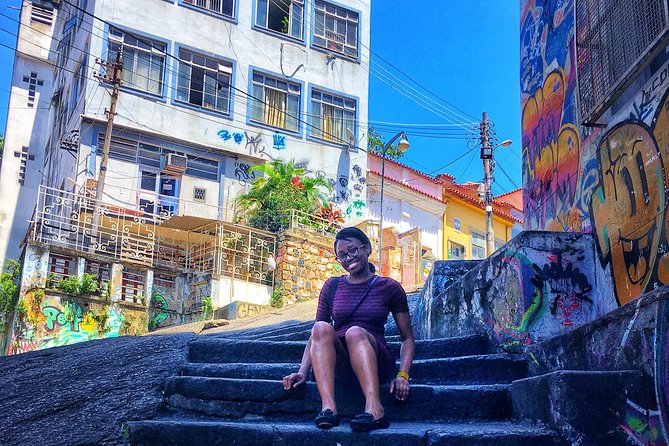
At $110 per person, this is not the cheapest way to spend five hours in central Rio. Its value depends on how much you want a focused cultural program rather than a general city walk.
You receive a private guide, a full half-day route, the IPN ticket, an Afro-Brazilian food tasting, and a percussion workshop. The free admission at several stops helps keep the price focused on the guide’s time and the organized cultural activities.
I see the strongest value in the range of subjects covered. In one morning and afternoon, you move from favela representation to public art, archaeology, slavery, Little Africa, quilombo heritage, food, Yoruba traditions, and percussion. Recreating that route alone would take research, careful planning, and a willingness to approach serious sites without much context.
The private setup matters too. A solo visitor or couple can ask direct questions and spend more time on subjects that matter to them. Families or small groups may also appreciate the flexibility, especially when discussing Black identity, Brazilian inequality, or the links between Africa and Brazil.
The trade-off is that the schedule is dense. Several stops last only 15 minutes, and the five-hour duration includes movement between locations. You get breadth and a strong central theme, but not an in-depth museum visit at every site.
Who should book this Afro-Brazilian heritage tour?
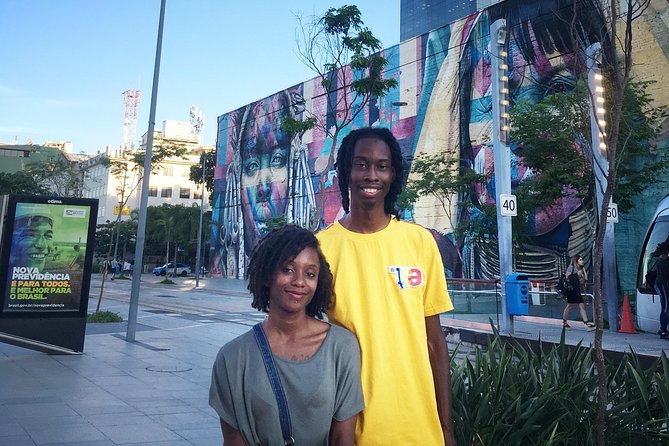
I would recommend it to you if you want to understand Rio through Black Brazilian culture and memory, not only through beaches, viewpoints, and famous landmarks. It is especially suitable for visitors interested in African diaspora history, sociology, food traditions, music, religion, and community life.
It also works well for solo visitors. The private format can make a big difference when you want to ask personal questions or discuss how race and identity are understood in Brazil. The experience has also been praised for making difficult subjects accessible without stripping them of their seriousness.
You should think twice if you want a relaxed food tour with only light cultural commentary. The itinerary deals directly with slavery, human remains, social inequality, and the challenges faced by Black communities. Food is included, but gastronomy is one part of a wider historical and cultural program.
You should also reconsider booking if you have food restrictions unless the operator confirms that your needs can be met. Drinks are extra, and poor weather can affect the experience. If the minimum number of participants is not met, the operator may offer another date or experience, or provide a full refund.
The tour offers free cancellation up to 24 hours before the start time. Changes or cancellations made inside that window are not refunded, and poor weather may lead to a new date or full refund.
Final verdict: a strong choice for serious cultural context
Book this experience if you want Rio explained through its African roots and present-day communities. The best parts are the thoughtful progression from Morrinho to IPN and Cais do Valongo, followed by the food and percussion session at Pedra do Sal.
The price is fair for a private five-hour program with food, a workshop, and a central historical focus. Just arrive ready for difficult material, confirm the food situation if needed, and do not expect every stop to be a long museum visit.
If you want the standard Rio checklist, choose another tour. If you want to understand how African heritage shapes the city’s art, streets, meals, music, and identity, this is one of the more purposeful half-day choices in Rio.
FAQ
Where does the tour start?
The experience starts at Museu do Amanhã, Praça Mauá, 1, Centro, Rio de Janeiro. The start time is 10:00 a.m.
Where does the tour end?
The tour ends at Largo de São Francisco da Prainha, in the Saúde area of Rio de Janeiro.
How long does the experience last?
The experience lasts approximately five hours.
Is this a private tour?
Yes. Only your group takes part in the private activity.
What food is included?
The tour includes a tasting of typical Afro-Brazilian and Yoruba dishes.
Are drinks included?
No. Drinks are not included in the price.
Is the IPN admission included?
Yes. The experience includes the IPN ticket. Admission is listed as free for several other stops, including the Morrinho Project at MAR.
Just added around Rio
- Rocinha Jeep Tour: A Journey into the Soul of the Favela!★ 3.8 · 3 reviews
- Tijuca National Park and all its wonders!★ 5.0 · 3 reviews
- Rio: Best Dive Experience All Inclusive Scuba Diving Package★ 5.0 · 3 reviews
- Rio de Janeiro: Doors-off 30-min helicopter tour★ 5.0 · 3 reviews
- Rio de Janeiro: Hang gliding adventure★ 3.7 · 3 reviews
- Pedra Bonita Trail: The easiest trail with a beautiful view of Rio★ 4.6 · 3 reviews
- Rio de Janeiro Secluded Beaches: Hike+Swim Prainha & Grumari★ 5.0 · 3 reviews
- Unforgettable Boat Party★ 5.0 · 3 reviews
Historical Tours, compared.
Explore Little Africa : Unveiling Afro Heritage in Rio de Janeiro
Read our review →
Learn the History of Rio with an Unforgettable City Center Walking Tour
Read our review →
Rio’s city walking tour: a glimpse of history and olympic legacy
Read our review →
Olympic Boulevard, Museum of Tomorrow & Historical Rio
Read our review →
Olympic Boulevard, Museum of Tomorrow & History Tour
Read our review →
Petropolis Bohemia: Historic tour and visit to the Bohemian Brewery
Read our review →Browse the lists this tour appears in